Some Revit Stuff
August 19, 2014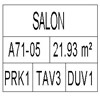
We are back! Here are some Revit components I’ve created for a project. These and other cool downloads can be found at revitcity.com T_Room Tag T_Parking Space T_Door Tag A Door

We are back! Here are some Revit components I’ve created for a project. These and other cool downloads can be found at revitcity.com T_Room Tag T_Parking Space T_Door Tag A Door
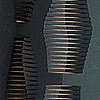
Third and the final outcome of the Animate Patterning workshop is coordinated by Mehmet Ali. Students tried to develop a kirigami-like surface animation (which is also a good solution to my one-servo question) while they studies numerous variations. They ended up with this panel, ready…
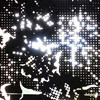
Here is another student project from the three-day workshop we conducted together with Fulya Akipek and Mehmet Ali Altın. Briefly, the idea was to develop a system of cogwheels that spin together to animate an entire pattern. It was about to develop a kinetic system…
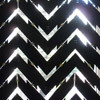
This is one of the works of the three-day workshop at Eskişehir Anadolu University, called “Animate Patterning“. This project is based on our previous folding experiment posted here, while students advanced it, testing a folding style called “Miura”. They built a 2.5m x 1m folding pattern, explained…
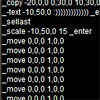
It seems that our first-year students of architecture, interior design, and industrial design take Rhino’s macro functionality very seriously. This encourages us to study algorithmic techniques more and more in the freshman year Design Computing class. Below are some of the results of this week’s assignment. They…
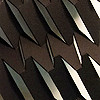
Inspired by this cut-fold pattern, we developed a prototype with Fulya Akipek. The first experiments were made from 3mm thick foamboards and they worked very well with 50×70 plates. However, when the project gets bigger and bigger, we needed to add a joint detail and use…
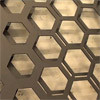
This is one of the ideas we’ve tested for the workshop “Animate Patterning“. Inspired by this work, Apart from the pattern that turns around, the torque, rotation radius and speed of the servo, weight, connection detail, and a number of foamboards become important inputs for…
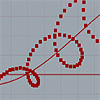
This is a Cycloid-like family of curves, generated by its classical description: a rolling circle. I had several other studies on similar topics before. In this cycloid experiment, I used Grasshopper in which, we don’t need to roll the circle. Instead, we can divide a…
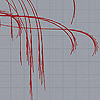
While testing Anemone components for Grasshopper, I accidentally generated these branches by looping. In fact, I was trying to develop the definition that mimics the well-known “Arch SED” component method. This method uses the tangent vectors for the endpoints of the arcs. Then, it iterates…
Here is the simple Grasshopper definition [GHX: 0.9.0072] that activates Rhinoceros’ camera by given parameters. Camera position is determined by the “point-oriented” method here. This means that you have to have a target point for the camera first. In fact, I was trying to find a suitable…
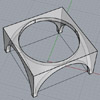
It is Baldequin (or Baldachin) in English, Baldeken, or Baldöken in Turkish. I don’t know which one is correct, but it is the name of a structural system of arches and pendentives that carry a dome. Sinan experimented with square, hexagonal, and octagonal variations in…
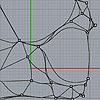
I’ve been searching for a way to implement edge bundling on Grasshopper. It is an effective visualization technique that you can use in connectivity diagrams. There are a couple of different approaches to this problem. It is a nice way to analyze common paths within…
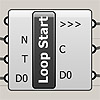
Anemone is a simple but effective plug-in for Grasshopper that enables loops. It has been a while since Hoopsnake succeeded in extending the dataflow capacities of Grasshopper with recursion. However, Anemone is much more user-friendly and easy to use. Below is my first test, yes…
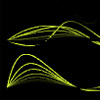
Here is a test of the optical flow component of Firefly. You can check the Firefly add-on to Grasshopper here. As an ongoing research project, I’ve been searching for a suitable platform to study responsive geometric patterns. This initial study focuses on one particular effect…
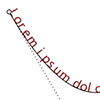
Currently, Rhinoceros does not offer the capability for an aligned text onto a curve, to the best of my knowledge. However, Grasshopper, with its latest version, provides a solution for such tasks by offering a range of text components. For my current project, I am…
Lokma is the name of a pastry made of fried dough soaked in sugar syrup or honey and cinnamon, typically shaped into a ring or ball. Unfortunately, it is not the “Lokma” we’ll study here. In Turkish, there is another meaning of the same word…
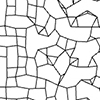
In this fun experiment, points rock and roll! It should be based on a sound input of course but this is only a test to see if I can handle a timer and graph input at the same time. I’ll modify this definition to actuate with…
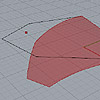
Bending is an easy operation in Rhino and Rhinoscript, however, Grasshopper did not include that particular transformation (along with cage editing) yet. I tried to simulate the bending transformation by using native Grasshopper components. First, surface projections and pulls did not work at all, because…
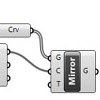
In today’s drawing class, we taught methods of drawing basic transformations by hand. Mirror was one interesting subject of that. However, then I opened Grasshopper and Rhino to test the effects of curved mirror planes. Unfortunately, I realized that there is already a curved mirror…
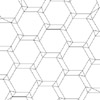
I’ve come across this nice website about the short history of tilings and tessellations. In this post, I am regenerating a tiling of Dürer rhombii. Albrecht Dürer sounds like one of the pioneers of some of the concepts of today’s emerging field of architectural geometry….
Enjoying designcoding? Support its future with a small donation on Patreon. Thank you!
