designcoding
About Table of Contents Keywords Monthly Archive
Support designcoding!

March 2015

12 posts

ARCH362 Midterm

March 27, 2015
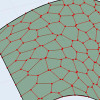
About to finish the well-defined section of this year’s Parametric Modeling course, here are the mid-term questions I’ve asked; First question checks if the curve < > point conversions are well understood in Grasshopper. Evaluating a parametric curve and generating the closest point from another curve. This also requires a basic understanding of the use of the Grasshopper interface. The second question was testing a basic and classical use of attractors on grids of objects. Students generated their own grids…

Leveling in Dataflow

March 26, 2015

This is a great book, explaining very familiar concepts of dataflow diagrams for designers firsthand. Leveling is an interesting chapter there, I’m not sure if it completely fits with the use of “Clusters” in Grasshopper but it is obvious that the complex systems should be well organized not only to be perceptually “better” ones but also to develop a way to use parts of definitions again and again in different situations. …How do you actually DO the leveling of DFDs? The…

Site Modeling

March 26, 2015

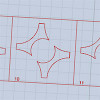
Site models could be calculated for laser cutting easily using Grasshopper’s native components. This definition was a practical one we created in the Parametric Modeling course to see that Grasshopper could also be utilized to prepare fabrication documents not generating design outcomes. However, this definition is a draft one and could be improved more by putting labels inside of each cut piece, trimming the edges properly and so on. It is good news for students at least that they have a…

Delaunay Triangulation on Surface

March 26, 2015

This is a useful tip both to solve some of the problems with custom surface subdivisions, and to explain the uses of parametric surface evaluations (the U, V, W thing) and the practical use of data lists. Step 1: Put your points inside 0,0,0 and 1,1,0 so that the resulting coordinates can easily be converted to U and Vs. In the example, we are putting some random points between 0,0 and 1,1 using the Populate2d component. Step 2: Then make whatever you…

Image Sampler Revisited

March 17, 2015

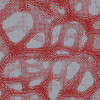
Image Sampler of Grasshopper saves life if used responsibly. While explaining the component to this year’s ARCH362 students, I used this simple example that generates numbers from a beautiful picture of “metal foam” and uses it to generate lots of circles: Metal foams are lightweight but strong materials, that are typically produced by injecting gas into the liquid metal. Of course, it becomes easier to teach something when you manage to attract the attention of students.

Force Fields in Grasshopper

March 17, 2015

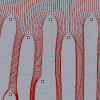
Finally, I had a chance to test and understand the force fields tab in Grasshopper. It creates a continuous vector field inside of a given boundary. Therefore, it is very useful if you want to create an effect of the continuous presence of a force, such as gravity. The Wikipedia definition of a vector field is very basic and understandable: In vector calculus and physics, a vector field is an assignment of a vector to each point in a subset of space. For instance, a vector field in the…

ARCH362 Basics

March 17, 2015

Another tutorial we’ve analysed together with ARCH362 students last week was the one that mimics Zaha Hadid’s Kartal Masterplan. Although the project of Zaha Hadid was pretty much controversial among Turkey’s architectural critics (and most people also), we’re not dealing with how successful or “ugly” it is, but the most simple version of the technique that generated such forms. We have a term “çakma” in Turkish that means “conscious imitation, possibly full of errors”. But however, this “çakma Kartal Project” example has…

Force Fields in ARCH362

March 17, 2015

This year’s Parametric Modeling class starts with some of the very basic use of Grasshopper concepts. This definition is a practical start-up of using force fields in the architectural design process. However it does not compute any physical phenomena (such as circulation of people, wind, or anything else), but shows a simple way to tell Grasshopper about walls that push the field, and points that pull the field. I’ll post more of this kind of basics, hopefully along with some student…

Contouring Update

March 17, 2015

After this tutorial, we are still working on the basic ways of making contouring easier in Grasshopper. This is the updated version of the 2-year-old contouring definition in Grasshopper, with some additional functionality. It produces a flat and properly numbered output for each section. However, it does not include optimized nesting to reduce material use.

Gaudi Column Macro

March 7, 2015

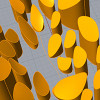
Gaudi-like columns are generated as part of the “boolean” classes of Design Computing. The most inspiring, beautiful, and ugly variations are often done by boolean intersection, as this operation is the surprising one of the three brothers. While the class deals with the concept of emergence once again via solid and void relationships, constructive solid modeling techniques are introduced. Although it is widely used as a spatial analysis approach in architecture, there are some examples of using boolean algebra in…

1 2 »
  • Chapters

    • Algorithms
    • Discourses
    • Fabrications
    • Studios
  • Explore

    • All Keywords
    • Table of Contents
    • Monthly Archive
    • #nesting
    • #fractal
    • #sphere
    • #art
    • #weaire-phelan
    • #muqarnas
    • #vbnet
    • #hotwire-cutting
    • #3d-model
    • #octahedron
    • #grid
    • #b-spline
    • #rhombus
    • #regulations
    • #paper
    • #concrete
    • #laser-cutting
    • #linear-algebra
    • #cairo-pentagonal
    • #solar-analysis
  • Search

  • Support designcoding!

  • Enjoying designcoding? Support me on Patreon to keep it growing. Thank you!

  • copyright 2026 designcoding.net | about | privacy policy | end user license agreement