designcoding
About Table of Contents Keywords Monthly Archive
Support designcoding!

November 2013

11 posts

Deviation

November 21, 2013
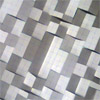
Basic Design I exercise called “Cut and Fold: Deviation” explores diversity within relationships and material behavior. It is initially introduced by Salih Küçüktuna as a simple but effective exercise platform. Below are some students’ works on this one-week exercise. The term “deviation” has many uses in a range of fields from medicine to sociology. However, it is frequently used in statistics with an interesting evocation to design computing: In mathematics and statistics, deviation is a measure of difference between the…
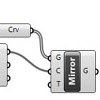
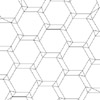
Mirror by Curve

November 21, 2013

In today’s drawing class, we taught methods of drawing basic transformations by hand. Mirror was one interesting subject of that. However, then I opened Grasshopper and Rhino to test the effects of curved mirror planes. Unfortunately, I realized that there is already a curved mirror component in Grasshopper :( This might be one of the simplest ways of introducing generative deformations for design geometry.

Dürer Rhombii

November 19, 2013

I’ve come across this nice website about the short history of tilings and tessellations. In this post, I am regenerating a tiling of Dürer rhombii. Albrecht Dürer sounds like one of the pioneers of some of the concepts of today’s emerging field of architectural geometry. Here is a phrase from that website about Dürer; “…Like Kepler, regular polygons and polyhedra fascinated Dürer… A large section of the Painter’s Manual is dedicated to practical ways to construct various curves and regular polygons with…

A Tip About Using Pipe Component

November 18, 2013

While looking at the student works of my 2009 class, I realized that in some cases, the “pipe” component takes a considerable amount of time to execute even on fast computers. Students mostly create pipes to model structural frame systems such as canopies and facade frames. Therefore, the path of the pipe is usually linear (not curved). I decided to calculate the performances of three approaches that could be used to make pipes in Grasshopper. One was the good old…

Pattern Deformations Student Works

November 18, 2013

Below is some student works from this year’s Architectural Geometry / Pattern Deformations assignment. Students developed their own pattern deformation sequences mostly on regular tessellations. Based on the classical Parquet Deformation exercise, we tried to implement a rule-based approach in order to explore emergent patterns. The exercise seems to reveal endless improvisation potential. The exercise requires students to design a pattern deformation on a 28cm by 28cm area. It should include at least 100 cells. First, we explained several classical…

Force Fields Revisited

November 2, 2013

Force fields might be one of the most influential component sets of Grasshopper. Thus it also becomes a de-facto standard design approach like the Voronoi subdivision. There are beautiful examples of this mathematical solution. Here is a good explanation of mathematics underneath, and here are my previous studies. I tried to use the Grasshopper’s force field components and see how it looks like when animated. Thus, multiple spin forces are merged together in this definition. Therefore, the overall effect of field…

Rhino Print Dialog

November 2, 2013

Here is a simple description of Rhinoceros’ Printing dialog. It is the same with version 4.0, nothing changed in layout and printing dialogs in 5.0. Significantly our Architectural Geometry classes should benefit from this explanation. Most of these options should be tested with a plotter (e.g. pencil widths) before final print-outs. Also, you may try creating a PDF file of your homework from this dialog.

Bits and Pieces

November 2, 2013

Below are some of the student works from the 4th-week exercise Bits and Pieces of this semester’s Basic Design studio. The gestalt notion of “figure-ground phenomenon” refers to the characteristic organization of perception into a figure that ‘stands out’ against an undifferentiated background. What is figural at any one moment depends on patterns of sensory stimulation. And on the momentary interests of the perceiver. Thus, the figure-ground relationship is an important element of the way we organize reality in our…

Karyokinesis

November 2, 2013

While searching for a way to work with random points and growing populations, this idea appeared accidentally. I wasn’t trying to mimic the behavior of Karyokinesis of biological cells (in fact I’m in serious doubt about biomimicry in general). The trick is to use a timer + data recorder + a knob for the arbitrary user input. It starts to breed when you start the timer, but to change the evolution speed, just roll the knob!  Of course, the knob…

Circle from Three Points

November 1, 2013

I learned this method from the open math resources website. I couldn’t help myself repeat it in Rhinoceros. It was quite fun to solve circle tangency problems in 2D, this is one of them: drawing the circle that passes three given points, not using ready-made commands but only geometric tools of the circle (compass) and ruler (line). Here is the sequence of it: First of all, we need to know that the circle we are looking for is centered somewhere…

1 2 »
  • Chapters

    • Algorithms
    • Discourses
    • Fabrications
    • Studios
  • Explore

    • All Keywords
    • Table of Contents
    • Monthly Archive
    • #firefly
    • #3d-printing
    • #unity
    • #solar-analysis
    • #permaculture
    • #noise
    • #sphere
    • #dual
    • #parametric-curve
    • #buckminster-fuller
    • #hotwire-cutting
    • #ice-ray
    • #cairo-pentagonal
    • #lissajous
    • #aluminium
    • #tiling
    • #metaball
    • #voronoi
    • #icosahedron
    • #linear-algebra
  • Search

  • Support designcoding!

  • Enjoying designcoding? Support me on Patreon to keep it growing. Thank you!

  • copyright 2026 designcoding.net | about | privacy policy | end user license agreement