
Bend
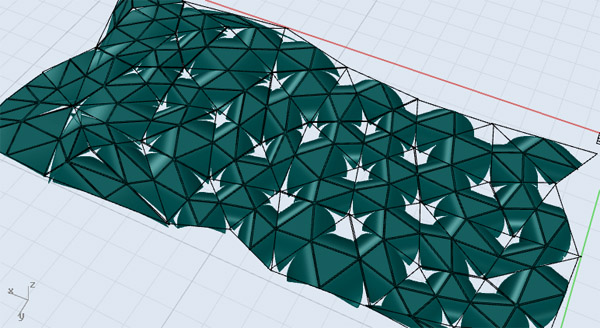
Bending is an easy operation in Rhino and Rhinoscript, however, Grasshopper did not include that particular transformation (along with cage editing) yet. I tried to simulate the bending transformation by using native Grasshopper components. First, surface projections and pulls did not work at all, because I wanted to simulate a real bending effect without changing the surface area or edge lengths. Then, the Surface Morph component seemed to handle this issue, but it became an interesting challenge to put the correct inputs into it. Finally, I managed to implement the effect with a reasonable outcome (but without complete success if you look at the surface areas).
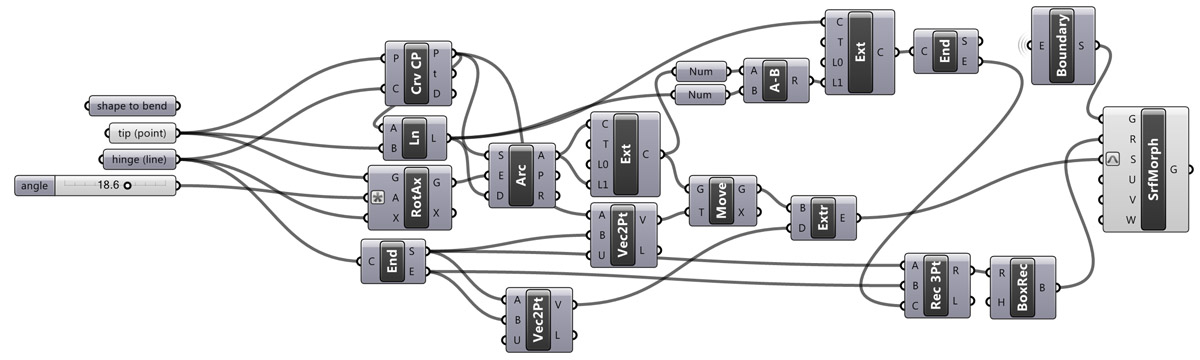
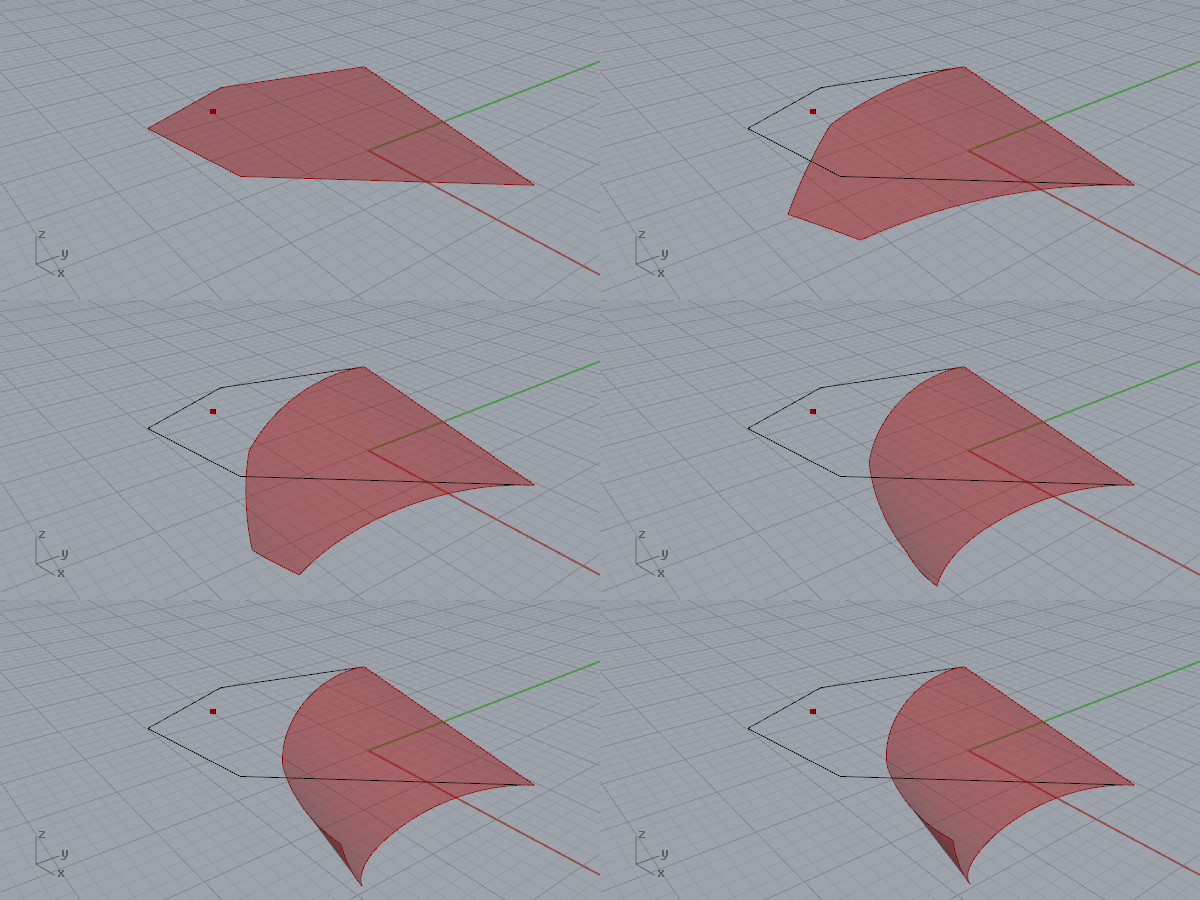
You should feed the shape to be bent, a line resembling the hinge axis of the operation, then the point to be used to measure the angle of bending. You can play with the definition to alter its input styles. The definition is suitable to work with multiple outputs. Below is a simple test of such multiplicity on a regular grid:
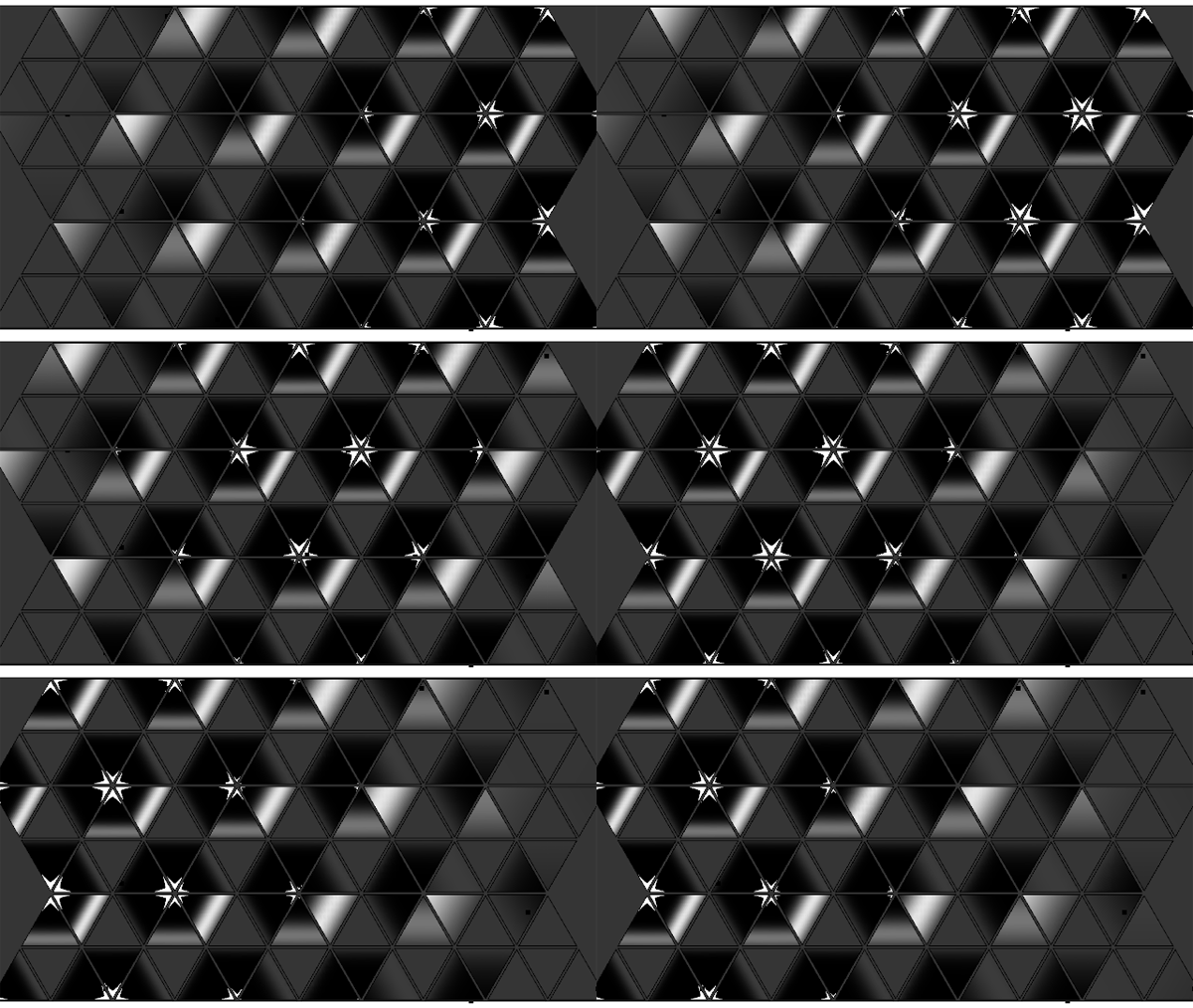
A two-fold one:
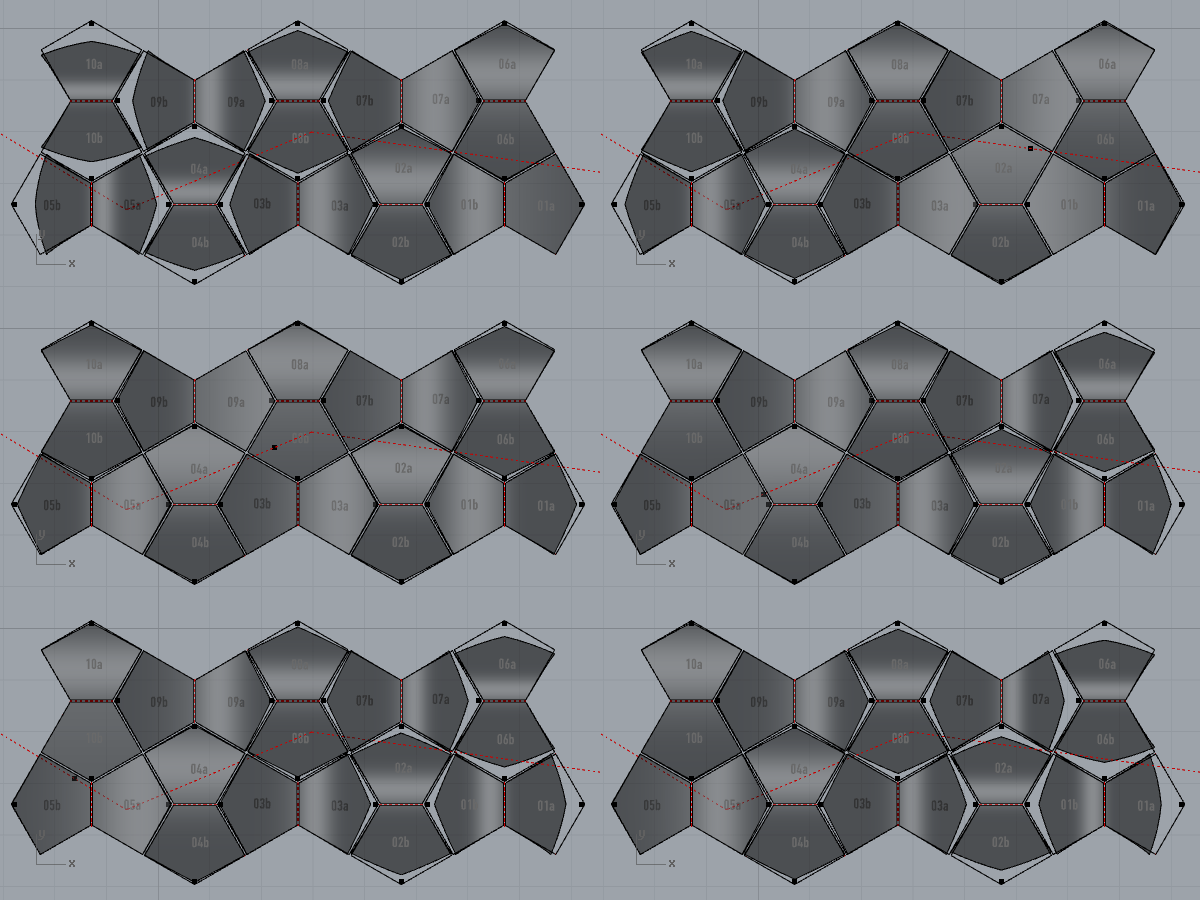
An irregular test with random points: (however leaves start to collide at certain distances)
Cite this post
Related Posts
Tensile Fabric with Kangaroo
September 25, 2026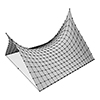
How much work we did last year for first-year architectural education! The tensile fabric study we carried out using Grasshopper Kangaroo in “Design Computing”, a first-year course I coordinated alongside my colleague Serkan Uysal, served as a baseline for the material research addressed in the Basic Design studio at that time. Such geometric optimizations in Kangaroo are no longer surprising or novel to anyone. However, experiencing these tools and possibilities in architectural education in the very first year offers a…
Interlocking Structure with Boolean
August 23, 2026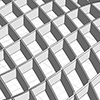
You are seeing the last of the interlocking system trials that I have previously tested in two exercises. If you remember, in our first trial, we were drawing interlocking joinery details on cross-sections using closed curves, without any solid modeling. And here is the most advanced one, I guess. In this exercise, however, we are creating a solid model that incorporates these interlocking details. This time, we will look at how to construct the same system using Boolean operations. Boolean…
Slope Map on Terrains
August 18, 2026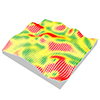
I previously shared the Grasshopper definition for terrain generation that we used in last year’s studio midterm. One of the goals of this project was to take the first step toward developing students’ skills in understanding, processing, and utilizing terrain data as a design input. To support this objective, we provided them with small supplementary tools. One of these tools was the slope map. As you can see, this is quite a simple Grasshopper definition. It computes the slope of…
Terrain Generator
August 13, 2026
Last year, for the midterm assignment in our first-year basic design studio, we gave our students a range of different, randomly generated contexts to work with. For this purpose, I developed a small Grasshopper tool that makes the graph of a function look as much like a terrain model as possible. This tool is not really a procedural terrain generator. I would genuinely like to build one, someday. What we have here is simply a function surface. At the inputs,…
Wave Generator
April 17, 2024
Here is a wave generator code I developed using Grasshopper and Python. While searching for a solution to the realistic water simulations, I came up with the Gerstner Waves. I tried to implement it. However, I came up with this final result, which is not a Gerstner Wave generator, but a much simpler one. It combines many user-fed wave components and calculates the resulting single wave. I played with this code for hours with different components. So, it is worth…