designcoding
About Table of Contents Keywords Monthly Archive
Support designcoding!

May 2023

8 posts

Virtual Environments in Design Studios

May 30, 2023
There are cognitive, technological, and pedagogical ideas and experimental studies on architectural design education in virtual environments. In the existing literature; new software tools were developed, add-ons to existing software were developed, or software prototypes were developed and tested on various platforms such as game engines. In the distance education model, currently, there is no stand-alone software, specifically developed for the needs of architectural design studios. Similarly, there is no generally accepted pedagogical approach in this field yet. Virtual Environments…
Point Waves

May 29, 2023

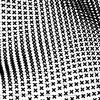
Here is another basic exercise in Grasshopper. This exercise “Point Waves” creates wave-like deformations on the grids of points. The major function of the definition is to calculate the distances from every point of a grid to an attractor point, with the help of Distance (Dist). Then it sorts them from the smallest to the largest (= closest to farthest) with the Sort List (Sort) component. This component takes and matches two lists of the same size, called key (K)…

Animated Tree Growth

May 26, 2023

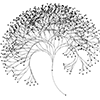
The Animated Tree Growth is an interesting study for Grasshopper. First, I developed a regular tree generation definition similar to those I studied earlier, here, here, and here. In component group 1, I develop an initial generator arc. Then, in group 2, I generate the fractal tree by using iteration. I did this with the help of the Anemone add-on. The interesting and original part of this definition is group number 3. Here I am trying to trace the growth…

Modeling The Gyroid

May 16, 2023

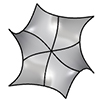
Here is the method I used for approximately modeling the Gyroid, a triply-periodic minimal surface. It is very popular in architecture because the symmetrical solids and voids it generates are interesting. I modeled this for the Common-action Wall project we exhibited together with Fulya Akipek in 2017. After several attempts to generate it in Grasshopper, I decided to model it in Rhino. There are some sources on the internet, explaining the geometric modeling process. However, none of them was giving…

Star Lattice

May 15, 2023

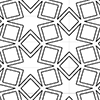
This is the six-pointed star lattice definition in Grasshopper. The definition is generating CNC or laser-ready results as seen below. In this code, first, I developed a common star pattern by exploding a hexagonal grid. The tricky part of this definition is the last part. There, you can see how you can use the Region Union (RUnion) component to add thickness to a pattern we have drawn before. The operation here will require trimming and extending commands under normal conditions….

Calatrava Door

May 12, 2023

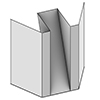
Santiago Calatrava, a celebrated Spanish architect, structural engineer, sculptor, and painter, is renowned worldwide for his groundbreaking and futuristic designs, which frequently fuse architecture with engineering and artistry. Among his many notable works is the door design at Ernsting Warehouse in Coesfeld, Germany, constructed in 1985. I call this Calatrava Door because this design showcases Calatrava’s keen sense of functionality and geometry, with aluminum slats arranged vertically and connected along a curved line using hinges. When you raise the frame,…

Parquet Deformations add-on

May 4, 2023

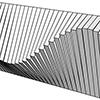
This is my first experiment on developing add-ons for Grasshopper. There are two components in the “Parquet Deformations” add-on. These are the ghuser files coded in Python. So, they can work by just dragging and dropping to the Grasshopper canvas. These first two components of the toolset are more like helpers while designing Parquet Deformations. I introduced some of my re-generations of classical parquet deformations here and here and in a book chapter here. The Loft Component of Parquet Deformations…

3D Voronoi Puzzle

May 3, 2023

Here, our aim is to generate a 3D Voronoi puzzle ready for 3D printing. Below is the step-by-step explanation of this Grasshopper algorithm: The 3D Voronoi Puzzle Step number one is the application we saw earlier in the Voronoi diagrams. We obtain random polyhedra within a given volume quickly. The basic features we need for the puzzle are: (1) When we solve the puzzle the final volume should be a cube. (2) We should control the dimensions of the total…

  • Chapters

    • Algorithms
    • Discourses
    • Fabrications
    • Studios
  • Explore

    • All Keywords
    • Table of Contents
    • Monthly Archive
    • #truncated
    • #golden-ratio
    • #music
    • #processing
    • #relief
    • #vbnet
    • #stellated-solid
    • #exhibition
    • #descartes
    • #moebius
    • #hexagon
    • #terrain
    • #phenomenology
    • #graph-mapper
    • #wittgenstein
    • #3d-max
    • #anemone
    • #buckminster-fuller
    • #metaball
    • #growth
  • Search

  • Support designcoding!

  • Enjoying designcoding? Support me on Patreon to keep it growing. Thank you!

  • copyright 2026 designcoding.net | about | privacy policy | end user license agreement