
Modeling the Weaire-Phelan Structure
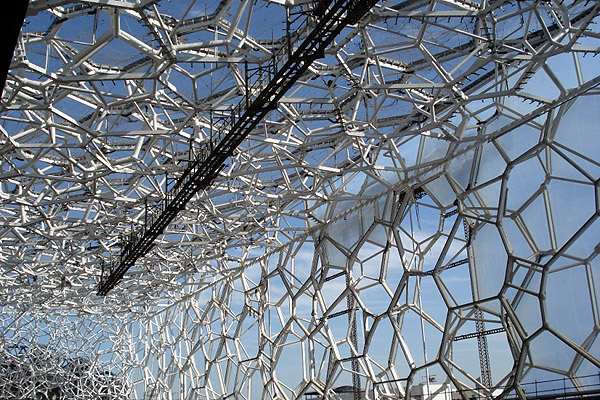
Becoming popular after the Beijing 2008 Olympics National Aquatics Centre‘s facade (which is believed to be a Voronoi subdivision, as an epic mistake), the Weaire Phelan structure is a solution of equal volumes with minimal surface area. This nice website briefly explains the phenomenon. There is also an implementation on Grasshopper by Jon Mirtschin. Here, I will be modeling the Tetrakaidecahedron of the Weaire-Phelan structure.

First, we define the overall size by drawing a 20×10 rhombus.
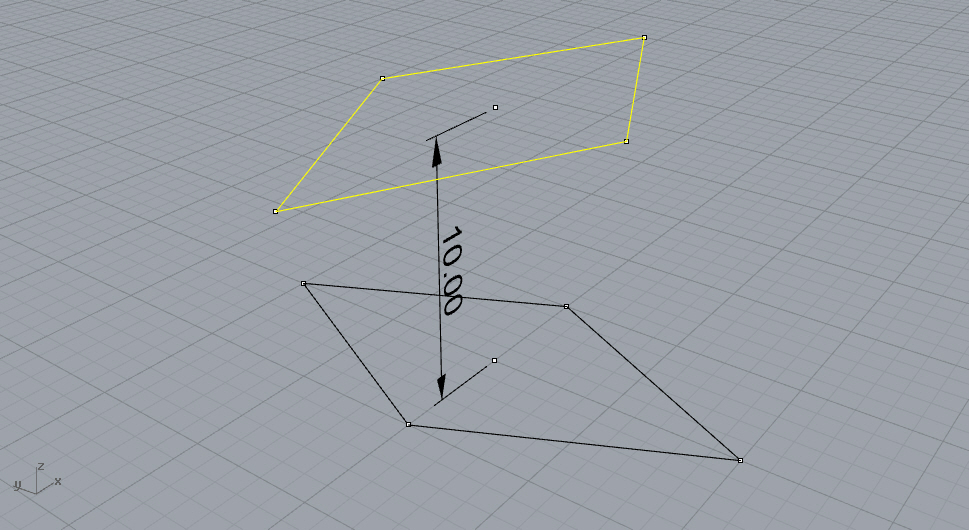
Copy the rhombus by 10 upwards, and rotate 90 degrees.
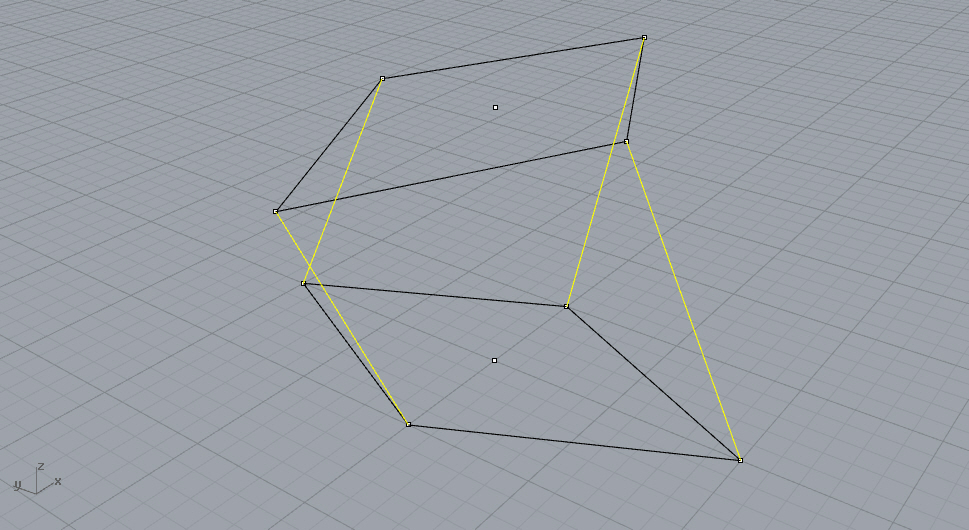
Connect the vertices.
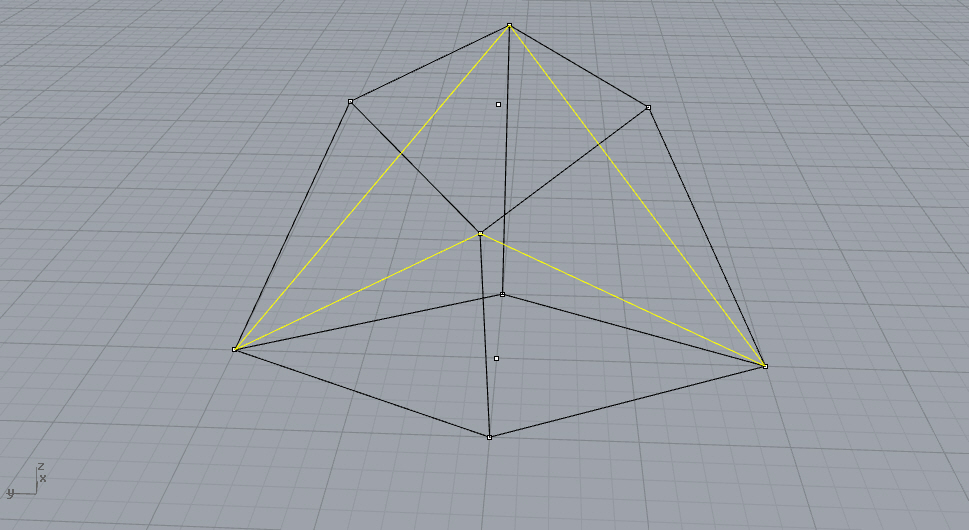
Also, connect the vertices sideways to create equal triangles. Then, create a 10-sided polyhedron, as shown below:
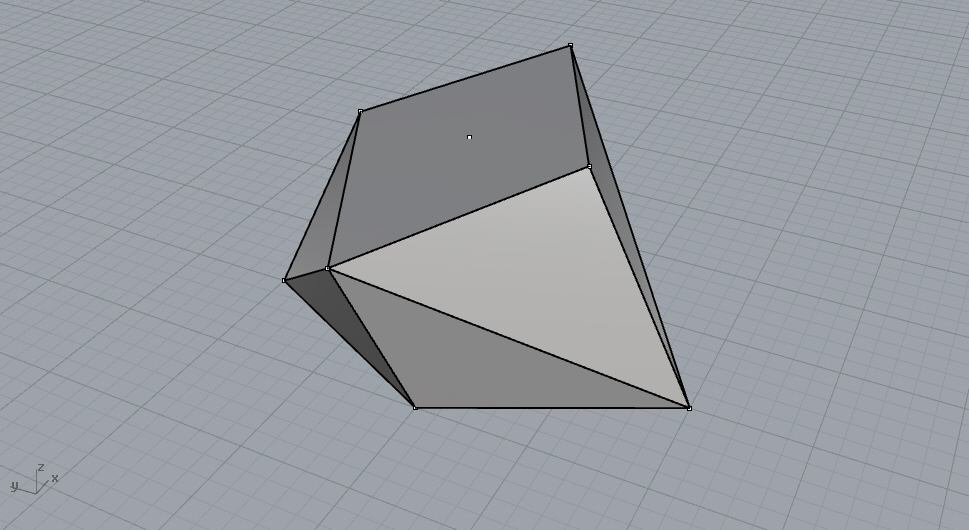
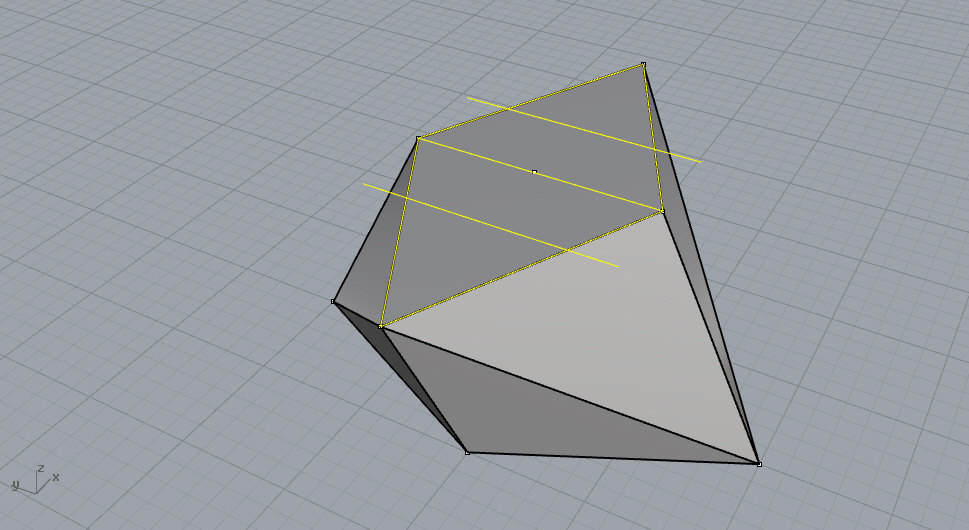
Continue by drawing the short diagonal of the rhombus and copy it to 3.7 units (for 10) in both directions. It is interesting to think about how this 3.7 would work, really.
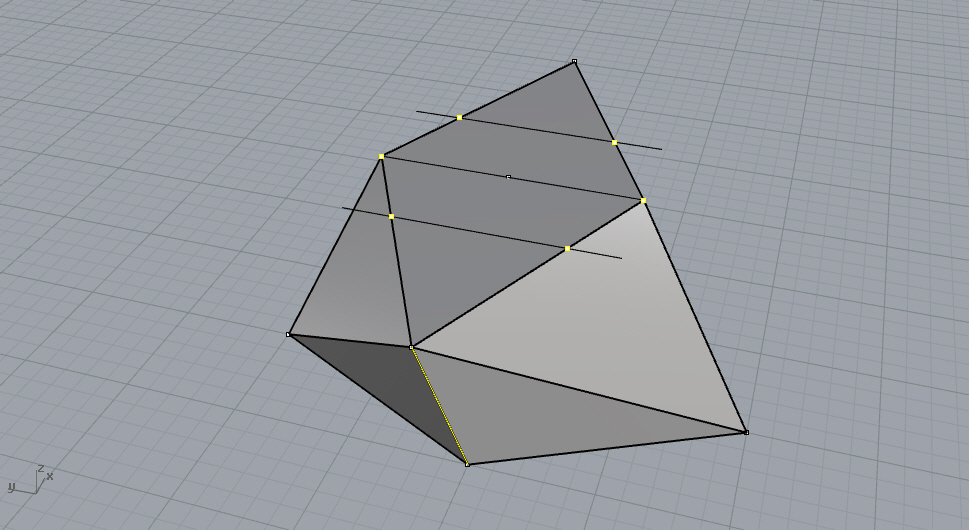
These intersections will create the irregular hexagon of the polyhedron. We’ll transfer the edge lengths at the far corners of the rhombi.

Put two spheres centered at the far vertices of the rhombi, by pointing to the new (3.7) intersections to define radii. You will transfer these radii like this;

Select the edges shown above and intersect the spheres to get those points.

You will use these three points to define cutting planes. But now, you’ll have to repeat the above steps for the second rhombus as shown below.

Finally, you’ll get something like this;

Then, trim all four sharp corners.
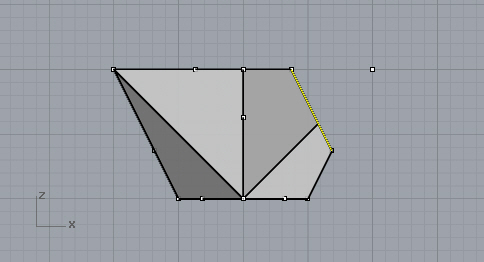
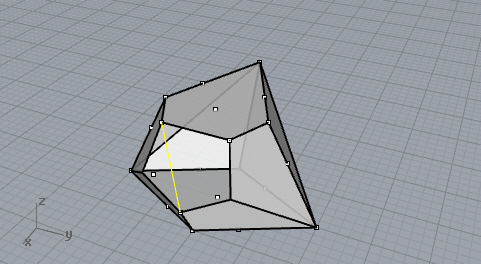
First cut,
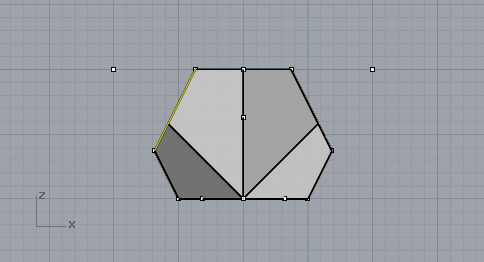
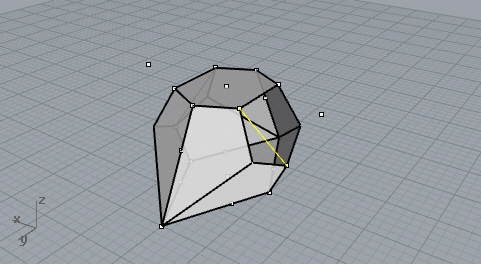
Second cut.
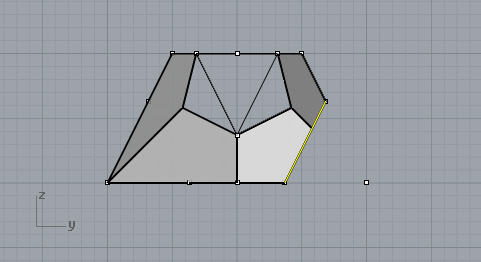
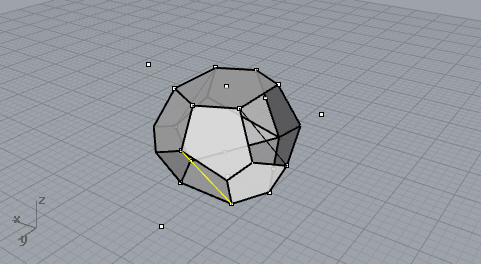
Third cut.
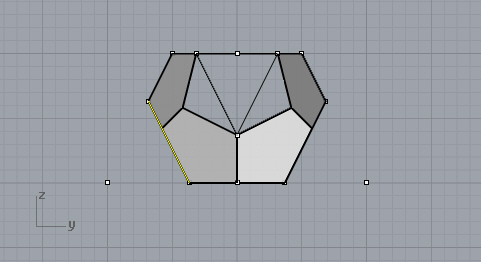
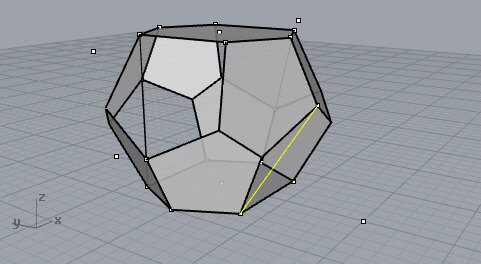
The fourth and final cut. Cap the solid and finish the Tetrakaidecahedron.

If you had the patience to go this far, just pack them all with regular dodecahedra, and rotate 3d them.
Cite this post
Related Posts
Weaire-Phelan Space-filling Structure
December 20, 2023
The Weaire-Phelan structure is an optimal solution to the problem of partitioning space into equal volumes with the least surface area. Denis Weaire and Robert Phelan discovered it in 1993. This structure gained attention due to its efficiency in filling space, offering a configuration that achieves a more balanced distribution of volume and surface area compared to other known structures at the time. Here is my model for the Weaire-Phelan space-filling structure. The Weaire-Phelan structure consists of two different shapes:…
Urban Polyhedra
October 11, 2018
This is a competition entry on the innovative uses of natural stone. Urban Polyhedra aims to organize the natural stone usage, especially on the shores. In the current implementation of this system, random blocks are placed to prevent landslides on the urban coastal areas, but restrict the interaction of the citizens with the shore, and destroy the spaces for sea creatures, and vegetation. Thus, this random placement makes it difficult to interfere with a design/arrangement. Citizens try to reach the…
Modeling Excavated Dodecahedron
December 15, 2024
In geometry, the excavated dodecahedron is a star polyhedron that looks like a dodecahedron with concave pentagonal pyramids in place of its faces. In this short tutorial video, I am modeling an excavated dodecahedron in the Rhinoceros software. I use basic drawing and modeling commands. I aim to introduce this skill to beginner-level architects and designers. As the name suggests, this process includes the construction of the dodecahedron first. Then, the pentagonal faces of this polyhedron were “excavated” to the…
Modeling and Unrolling Dodecahedron
December 12, 2024
A dodecahedron is a three-dimensional polyhedron with twelve flat, regular pentagonal faces, twenty vertices, and thirty edges. It is one of the Platonic solids and is highly symmetrical, with each face being a regular pentagon. The dodecahedron’s shape is unique among the Platonic solids because its faces are polygons with five sides, unlike the others which have triangular faces. Due to its symmetry, the dodecahedron has been used in various applications, including as a model in geometry and in certain…
Modeling a Rhombicosidodecahedron
July 17, 2024
Modeling a rhombicosidodecahedron requires exploding and extending the faces of a dodecahedron and an icosahedron of the same edge length. We begin with both polyhedra centered at the same point. Then, we explode the faces of the dodecahedron and icosahedron outward from the center. We extend their planes while maintaining their orientation and shape. As these faces extend, they intersect and form new polygonal regions. Triangular and pentagonal faces emerge naturally from the extended faces of the dodecahedron and icosahedron,…