designcoding
About Table of Contents Keywords
Support designcoding!

#design-education

74 posts

New Year Lanterns 2018

January 9, 2018

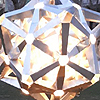
This year’s Computation-based Basic Design Studio finals were very successful. Below are some of our student’s design works, and lanterns that light the campus area at İstanbul Bilgi University. It was a great experience for them to seek a design system between the domains of material computation and architectural geometry. 28 first-year students of architecture, interior design, and industrial design completed their projects in groups of 4. Students: Aleyna Demirkök, Aleyna Yıldız, Ali Hayder Ali Al Obaidi, Ara Yerlikaya, Aybike Sarıgül, Ayşe…

Gosper-Peano Fractal Curves

January 8, 2018

Introducing the new YouTube channel for designcoding! The architectural Geometry playlist will contain video tutorials on several topics of basic geometry exercises for designers. Below are the introductory exercises of polyline drawing and some planar transformations such as scale and rotation. It is also an interesting plane-filling fractal you know I like it very much.

Escher Patterns in the Classroom

August 22, 2017

Here is one of the exercises I tested with a few students in Architectural Geometry. The exercise is about creating Escher-like patterns. It is an introductory topic on the designerly utilization of regular tessellations. We use square, hexagonal, or triangular tessellations as underlying structures of complex patterns. Below are some of the student works from this exercise. I think the black-and-white coloring helps in terms of reducing the requirements. Although the patterns designed in this exercise are not Escher patterns,…

Low-Poly Habitat

August 7, 2017

Below is a simple tutorial class we studied in Rhino in 2015 and 2016. The exercise is called “A Low-Poly Habitat”. The aim is to create simple polygon models by analyzing the overall geometric topology of an animal body. First-year design students attended the exercise and they are encouraged to create these models using blueprints from www. They used simple commands such as point, line, and surface from 3 or 4 points and that’s all. Such exercises (hopefully) help them…

ARCH362 Midterm

March 27, 2015

About to finish the well-defined section of this year’s Parametric Modeling course, here are the mid-term questions I’ve asked; First question checks if the curve < > point conversions are well understood in Grasshopper. Evaluating a parametric curve and generating the closest point from another curve. This also requires a basic understanding of the use of the Grasshopper interface. The second question was testing a basic and classical use of attractors on grids of objects. Students generated their own grids…

ARCH362 Basics

March 17, 2015

Another tutorial we’ve analysed together with ARCH362 students last week was the one that mimics Zaha Hadid’s Kartal Masterplan. Although the project of Zaha Hadid was pretty much controversial among Turkey’s architectural critics (and most people also), we’re not dealing with how successful or “ugly” it is, but the most simple version of the technique that generated such forms. We have a term “çakma” in Turkish that means “conscious imitation, possibly full of errors”. But however, this “çakma Kartal Project” example has…

Force Fields in ARCH362

March 17, 2015

This year’s Parametric Modeling class starts with some of the very basic use of Grasshopper concepts. This definition is a practical start-up of using force fields in the architectural design process. However it does not compute any physical phenomena (such as circulation of people, wind, or anything else), but shows a simple way to tell Grasshopper about walls that push the field, and points that pull the field. I’ll post more of this kind of basics, hopefully along with some student…

Design Geometry Final Works

February 2, 2015

Classical folding methods were subjects to be tested and studied in this semester’s design geometry classes. This has been very useful in introducing first-year students to 3d euclidean constructions and using physical objects as references to a digital model. Groups of students studied different folding methods and made both physical and digital models. Two of these methods were dominant in the class however, one of them was the variations of Miura-Ori, and the other one was Ron Resch’s famous folding pattern. Below…

Landscape Extensions Final: Digital Sketch

February 1, 2015

This is the final Grasshopper sketch of our graduate studio conducted together with Fulya Akipek at Yıldız Technical University Computational Design Unit. The project was about designing parametric “Landscape Extensions” at Kabataş Park. I hope I’ll be able to post the actual student works and the material system, but now; only the final result of the digital sketch we’ve developed together with students is presented here. This was a kind of “sketchy” definition that came up as an investigation about…

Seamless Patterns Revisited

January 2, 2015

Again, we revisited the seamless patterns exercise this semester. This is one of the main exercises of architectural geometry class. We expected to improve students reasoning on generative patterning while they explain their processes step by step. The key element of this exercise is the usage of compass and ruler constructions. However, we didn’t keep this rule limiting their creativity too much. In this activity, we tasked students with developing a personalized method to create custom tessellations, drawing inspiration from “Islamic patterns“….

« 1 2 3 4 5 6 7 8 »
  • Chapters

    • Algorithms
    • Discourses
    • Fabrications
    • Studios
  • Explore

    • #laser-cutting
    • #deformation
    • #polygon
    • #kuka-prc
    • #animation
    • #buckminster-fuller
    • #rhombicosidodecahedron
    • #phyllotaxis
    • #graph-mapper
    • #kangaroo
    • #art
    • #geodesic
    • #vector-field
    • #rubber
    • #packing
    • #regulations
    • #hexagon
    • #bezier-curve
    • #pvc-hose
    • #robot
    • All Keywords
    • Table of Contents
    • Monthly Archive
  • Search

  • Patreon

    Support designcoding!

    Enjoying designcoding? Support its future with a small donation on Patreon. Thank you!


    copyright 2026 designcoding.net | about | privacy policy | end user license agreement