designcoding
About Table of Contents Keywords
Support designcoding!

#design-education

74 posts

3D Pattern Deformation

December 12, 2012

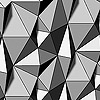
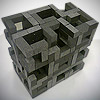
These are examples of 2.5D exercises in the design geometry course in my freshman year of architecture. We asked students to create extruded or referenced solids referenced from their previous exercise of pattern deformations, (examples are here and here). We also started to inject some of the most used concepts of design computing here, by perceiving each tessellation cell as the variation of a predefined algorithm, such as a relationship with an attractor object (a distance value with a point)….

Seamless Patterns

November 23, 2012

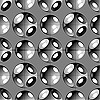
In this exercise, we asked students to develop a method to produce custom tessellations. This is based on the analysis of what is called “Islamic patterns”. We have discussed Eric Brough‘s famous book “Islamic Geometric Patterns”, regarding geometric relationships and linear connectivities via underlying tessellations (such as regular square and hexagonal). Thus, this geometry and drawing exercise is called “Seamless Patterns” in the Design Geometry course at İstanbul Bilgi University. We gave the following recipe to enable the exploration: Lately,…

Tangent Circles Exercise

November 19, 2012

The first-year Architectural Geometry course includes Euclidean constructions as a study of associative geometry. We have exercised the below questions to study this topic. These are three mutually tangent circles, that can be drawn using only a compass and ruler, without built-in tangency functions in Rhino. Such exercises are expected to improve students’ reasoning. We believe architectural geometry education should encourage a conception that allows students to think about what they are doing and control their process, rather than just…

Pattern Deformations Exercise

November 17, 2012

Last week, the first-year architectural geometry course was about pattern deformations. Students are expected to familiarize themselves with 2d drawing, transformation, and control point editing commands while trying to design a deformation. After studying regular and semi-regular tessellations of the plane, they are expected to develop reasoning on the rule-based and iterative processes. This also constructed an underpinning for Basic Design’s “Metamorphosis” study, where they have discussed more conceptual frameworks derived from such systems. Below are some of the results…

Parquet Deformation Handmade

October 31, 2012

This is not to explain the method of the Parquet Deformation but to see the potential. After we’ve studied regular, semi-regular, dual, and truncated tessellations with students, the Architectural Geometry course expects them to develop a Parquet Deformation handmade such as those shown below. I call them Parquet Deformation handmade. Because they are manually designed but drawn using traditional CAD. The samples you see below are from this website. It is a good source for other topics of tessellation as well….

Pedagogical Pattern Languages

July 24, 2012

Joseph Bergin‘s pedagogical patterns for computer science education returned my attention to teaching methods I’ve searching for almost five years. Here is a phrase from a paper submitted to pedagogical pattern language project: Most educators and trainers are not taught how to teach. Rather, they often find themselves teaching by accident. Typically, a person with a skill that is in demand, such as a particular programming language, will be asked to teach it. People assume that if the person is good in this…

Revisiting the Cartesian House

July 18, 2012

The logical structure of computer-aided architectural design tools is based on object orientation. New design methodologies named Building Information Modeling or Virtual Building aim to improve this structure by synchronizing the digital object classes with real architectural products. Therefore, CAD becomes smart and parametric. But from the design educator’s point of view, most commercial CAD tools are not useful and too complicated to implement basic spatial concepts. This is the introduction to the above conceptions using a short-term design exercise….

Paneling a Surface Manually

May 11, 2012

Digging out with Grasshopper, Rhinoscript, and Paneling Tools, everything seems to be more and more automated and fast. However my colleagues Mete, Benay and Elif reminded me that, we can always do much with those high-end architectural geometry tools, but we still have to understand and follow the roots, probably best described by the “manual ways”. Sometimes using these methods would be much more intuitive as they are SLOW enough for designers to think about what is going on there……

Paramod 2011 Mid-term

April 12, 2012

Today, we’ve finished first phase, the introduction to dataflow management in visual programming environments; and conducted “well defined” part of the mid-term examination. First two questions were designed to test technical skills of data matching, geometric evaluation. First one was a simple algorithm that calculates the area of ANY triangle in real-time. Tricky part of this problem was to research and find ways of calculating area and implementing it in Grasshopper. Most obvious formula, “a x h / 2” is…

Paramod 2011 Student Examples

April 4, 2012

Here are some results of fourth homework. An animate design sketch of a roof structure. Yağız, Deniz and Sacha created animated results; Derya and Sacha proposed conventional approaches to create “openings” by animating geometries. However, that does not meet the requirement of structural (and logical) intentions of the design problem. Unless some very high-tech materials were introduced to design. On the other hand, Yağız tried to create a structure that looks more like real. This exercise showed us that in…

« 1 2 3 4 5 6 7 8 »
  • Chapters

    • Algorithms
    • Discourses
    • Fabrications
    • Studios
  • Explore

    • #buckminster-fuller
    • #koch
    • #aperiodic
    • #polygon
    • #phyllotaxis
    • #platonic-solid
    • #revit
    • #facade
    • #paneling
    • #cuboctahedron
    • #robot-tool
    • #kangaroo
    • #cairo-pentagonal
    • #fourier
    • #3d-printing
    • #tiling
    • #firefly
    • #design-competition
    • #rhombus
    • #packing
    • All Keywords
    • Table of Contents
    • Monthly Archive
  • Search

  • Patreon

    Support designcoding!

    Enjoying designcoding? Support its future with a small donation on Patreon. Thank you!


    copyright 2026 designcoding.net | about | privacy policy | end user license agreement