
Computational Design, Parametric Modeling, and Architectural Education
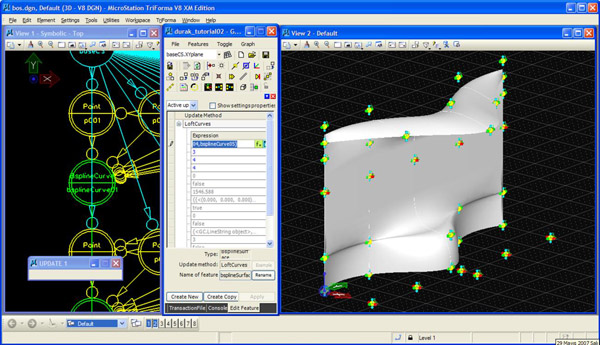
Architectural education in its relation to computational technologies is both becoming a part of these studies and having the potential of renovating itself with the knowledge of emerging technologies. This paper, in this framework, will be presenting a design research studio that aims at developing relational thinking capabilities in the computational design process. In this studio, topics of parametric design, parametric modeling, and relationality were questioned through the design process. In the 2006-2007 spring semester in the Graduate Studio II course of the Computational Design Program at Yildiz Technical University, parametric modeling software, GenerativeComponents, was introduced to question the pros and cons of parametric design in architecture. In this software, there are no ready-made geometric primitives or shapes. Point is the only ready-made drawing element to use. A geometric shape is constructed by associating elements with each other. Each geometric association can be done through several commands with different parameters. The end product is a parameter-based entity. Parameters can be changed easily, which in turn changes the whole geometric shape. In this design research studio held by 10 students, the topics of parametric design and associative thinking are questioned to explore their effect on the practices of architectural design and education.
Yalınay, Ş., Özsel, F., Yazar, T. (2008) “Computational Design, Parametric Modeling and Architectural Education”, in Ş.T. Pektaş (ed.), ARKITEKT 04-05:685-693, İstanbul
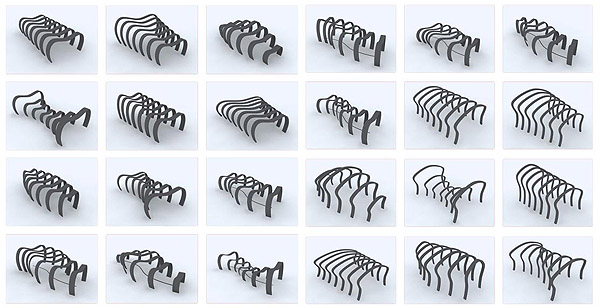
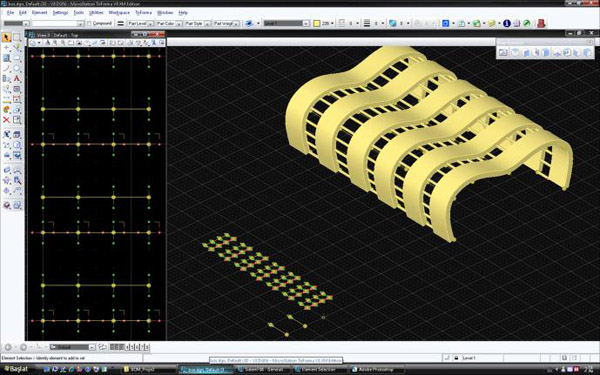
Below are some student works (Caner Kutsal and E.Sedat Özdemir) presented in the paper:
Here is the full paper, explaining the studio and the use of the tool (Generative Components): [PDF File]
Cite this post
Related Posts
Algorithm in Architectural Education Studio Works
April 30, 2013
This is an old research paper, prepared with Birgül Çolakoğlu. It is in Turkish and includes our first results in some of the Rhinoscript exercises. Here is the abstract of the paper; Recent research in architecture have focused on to understand computational methods of formal exploration and expression. Computational mechanisms have been used to readdress formal issues using new techniques and methods. Computational tools that operate on algorithmic logic are central in these explorations. Despite the proliferation of computers in architecture today, use…
Designing the Design Studio
March 5, 2013
In 2007, we conducted a computational design studio in YTU / CADU with Birgül Çolakoğlu. Below is the brief of the paper published at METU JFA Vol24 issue 2 titled “An Innovative Design Education Approach: Computational Design Teaching For Architecture”. We were dealing with how new technologies are affecting the design cycle. Rhinoscript is used as an educational tool, and various short exercises are conducted with it. After 6 years, I still think of ways how to construct a proper…
Digital Exercises in Architectural Design Studio
February 26, 2013Studio exercises are short-term and open-ended design activities that represent a constructivist learning approach by limiting design domains. They are student-centered, model and process-oriented educational tools. These qualities make studio exercises potential tools for integrating contemporary Digital Design thinking into architectural education. This research aims to reveal these potentials by defining an analytical perspective and logical connections between the pedagogical intentions of studio exercises and the theory of Digital Design. The first chapter of this research includes a definition of…
Pedagogical Pattern Languages
July 24, 2012Joseph Bergin‘s pedagogical patterns for computer science education returned my attention to teaching methods I’ve searching for almost five years. Here is a phrase from a paper submitted to pedagogical pattern language project: Most educators and trainers are not taught how to teach. Rather, they often find themselves teaching by accident. Typically, a person with a skill that is in demand, such as a particular programming language, will be asked to teach it. People assume that if the person is good in this…
Designing the Design
February 15, 2012In recent years, computational approaches in architecture started to change the scope of the architect’s work. He/she is not any more a passive tool user instead, became a casual tool developer. Conventional CAD systems that focus on geometric representation of a designed artifact, are transforming into systems in which the design is represented as a parametric process. By increasing utilization of these systems in architectural design process, parametric modeling is integrated not only as a new medium of design representation, but also as a design method. Designing the design implies…