designcoding
About Table of Contents Keywords Monthly Archive
Support designcoding!

#logic

6 posts

Frege and Logicism

November 7, 2026
Today’s Digital Culture reading was on Frege. After the historical process shaped by thinkers like Hobbes and Leibniz, and by the effects of capitalism, I thought reading Frege would provide a good foundation before moving on to Wittgenstein. Gottlob Frege (1848-1925) was a German mathematician and logician. He spent most of his academic life at the University of Jena. Regarded as one of the founders of modern logic and analytic philosophy, Frege argued that the foundations of mathematics should be…
Calculemus!

October 31, 2026

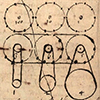
Leibniz was the topic of last week’s Readings on Digital Culture class. Although he is often presented as one of the ancestors of modern computing and digital technology, I doubt that is entirely accurate. He made big contributions to metaphysics, logic, law, and mathematics. He was also a social butterfly of his age, connected with a large number of people and writing tens of thousands of letters. From an early age, he seems to have an almost infinite desire for…

A Programmable World

October 1, 2026

The mandatory course Readings on Digital Culture in the Graduate Program in Architectural Design at Istanbul Bilgi University began with the introductory chapter of Charlie Gere’s Digital Culture. We will write a response paper every week. I have completed my response to the first reading. The reading begins with the parallel development of the Industrial Revolution and capitalism. It then follows this history up to the emergence of today’s computers. It looks at how money gradually became a more abstract…

Geography of the Unsayable

August 30, 2026

Everything starts with an image in the mind, with a cinematic dream: the great white cliffs at the end of the movie, “Atonement”. While the waves are hitting the shore, that reunion that can never happen. But the moment we take our first step, that abstract feeling of Ludwig’s hard reality smacks us: “The world is everything that is the case; it is the totality of facts, not of things.” The exact departure times on the station boards, the numbers…

Syntax, Meaning, and Wasp

August 24, 2026

The question of how form emerges in architecture has always been one of the most fundamental debate topics of computational design. When I was a graduate student, we used to examine how abstract language structures made of words and rules turned into spatial and geometric systems. In this post, starting from the reflection of linguistic theories on architecture, we will talk about the logic of discrete aggregation that we study in the first year Design Computing courses. At the same…

Why is the Hilbert Curve Beautiful?

April 8, 2025

The Hilbert Curve is one of the results of David Hilbert’s vision of mathematics as a network of symbolic systems. Defined in 1891, this curve is a fractal that fills a two-dimensional plane with a one-dimensional line in the limit. It exhibits self-similarity. It emerged from representing higher-dimensional spaces through continuous, lower-dimensional entities. A curve that grows within a bounded area remains continuous but non-differentiable. Yet it possesses infinite length. Perhaps no one will ever truly see or fully grasp…

  • Chapters

    • Algorithms
    • Discourses
    • Fabrications
    • Studios
  • Explore

    • Table of Contents
    • Monthly Archive

    • All Keywords
    • #robot
    • #optimization
    • #vector-field
    • #hotwire-cutting
    • #unity
    • #simulation
    • #deleuze
    • #enneahedron
    • #weaire-phelan
    • #kangaroo
    • #semi-regular
    • #virtual-studio
    • #exhibition
    • #parametric-wall
    • #logic
    • #geodesic
    • #pla
    • #lissajous
    • #digital-culture
    • #designcoding
  • Search

  • Support designcoding!

  • Enjoying designcoding? Support me on Patreon to keep it growing. Thank you!

  • copyright 2026 designcoding.net | about | privacy policy | end user license agreement