designcoding
About Table of Contents Keywords Monthly Archive
Support designcoding!

Semi-regular Surface Tessellation

December 20, 2011

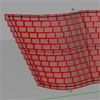
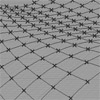
Back in 2011, one of the first posts on designcoding explored how to divide a surface in alternative ways. I called this Grasshopper definition a semi-regular surface tessellation. Although the term isn’t entirely accurate -since the pattern is neither planar nor made of equilateral shapes- it still reflects what I had in mind. Dividing surfaces into fabricable parts remains a key concept in learning parametric modeling, so I decided to revisit and update this old definition. There must be many…

Construction of Tetrahedron

December 19, 2011

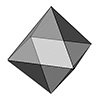
The tetrahedron is a platonic solid with four equal triangular faces (equilateral), six equal edges, and four vertices. In the construction of a tetrahedron, we will look closer at length transfers using compass-like tools in two- and three-dimensional space. To define the edge length of the first triangle, start with any two points in Cartesian space. Using a compass (arc or circle), draw two arches (or circles) using your initial points as corners and the distance between your points as…

Graph Mapping Edge Surface

December 19, 2011

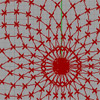
The smooth and continuous nature of the “Sine Surface” has garnered significant popularity among designers and architects alike. This captivating curved surface offers a visually pleasing aesthetic that adds an elegant touch to various design projects. Its flowing contours and gentle undulations create a sense of harmony and organic beauty. Recently, I delved into this with the help of Grasshopper’s Graph Mapping functionality, I began my artistic journey. Although I encountered some initial challenges, I managed to generate a series…

Design of Dataflow

November 14, 2011

Design scripting is initially based on secondary syntactic mechanisms that control sequential executions of code. We call this model of computation control flow programming. On the other hand, dataflow represents a widespread alternative to control flow by utilizing concurrent streams of data. Dataflow programming languages are also considered as pedagogical tools in fields where the coders are not expert computer programmers. In the last decade, new parametric modeling tools introduced this conception to design scripting, shifting its practical and educational…

Emergent Polygons

November 14, 2011

This is my first post in designcoding, dated 14.11.2011. I revisited the code and decided to re-publish it in 2024. Hello World! This is the Emergent Polygons definition, one of the first Grasshopper studies I made while learning the language. This is a very efficient programming language for designers and architects since it utilizes geometric relationships very intuitively. I think it will be more popular and widely used in the upcoming years. Last year, I started my experiments on this….

« 1 2 3 … 47 48 49 50 51 52 53 54 55 56 57
  • Chapters

    • Algorithms
    • Discourses
    • Fabrications
    • Studios
  • Explore

    • All Keywords
    • Table of Contents
    • Monthly Archive
    • #wood
    • #tetrakaidecahedron
    • #hexagon
    • #firefly
    • #tiling
    • #spiral
    • #enneahedron
    • #snub-square
    • #gosper-curve
    • #permaculture
    • #aluminium
    • #timer
    • #facade
    • #hilbert
    • #octahedron
    • #deformation
    • #designcoding
    • #packing
    • #cycloid
    • #truchet
  • Search

  • Support designcoding!

  • Enjoying designcoding? Support me on Patreon to keep it growing. Thank you!

  • copyright 2026 designcoding.net | about | privacy policy | end user license agreement