
Grid Tearing
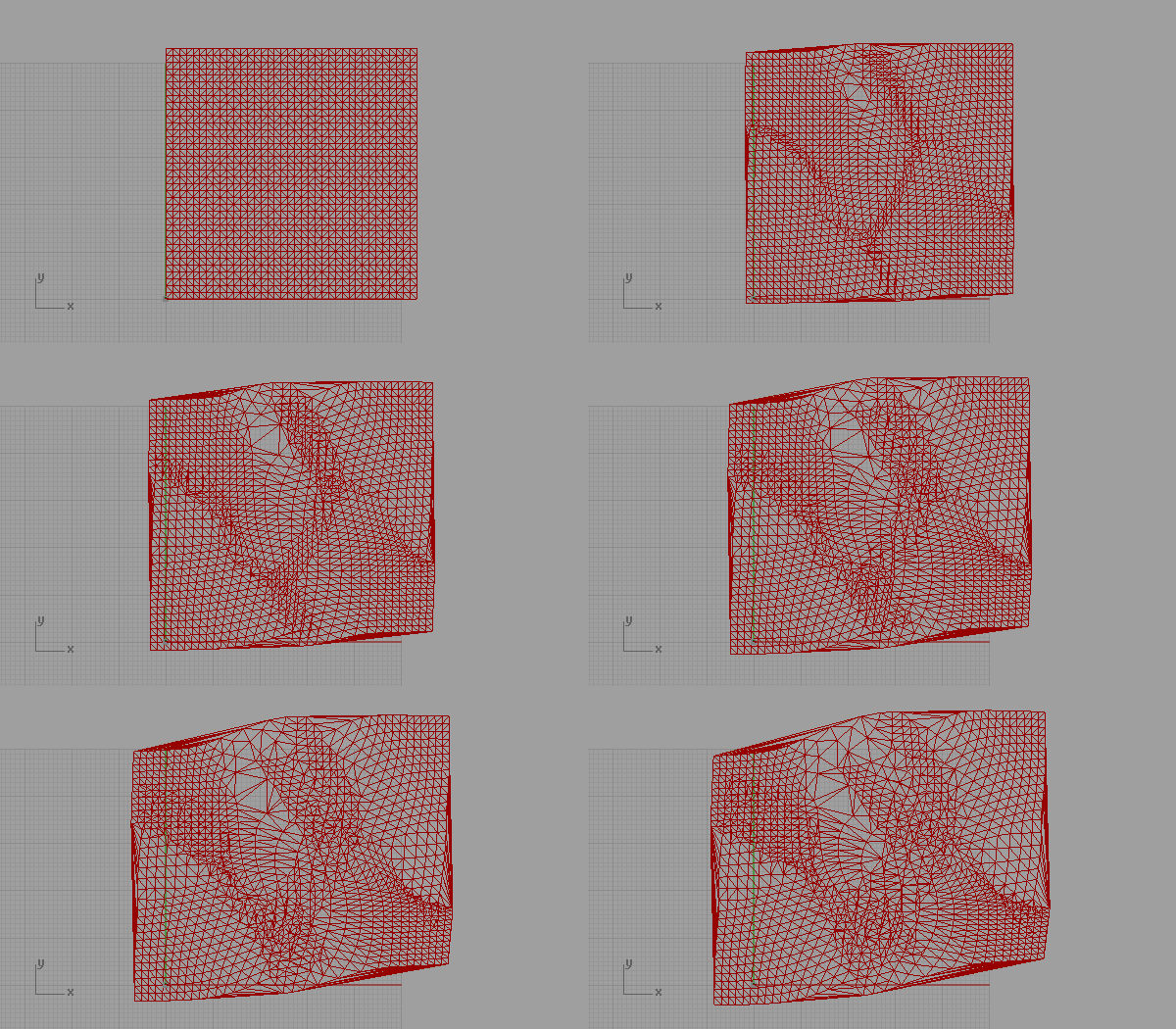
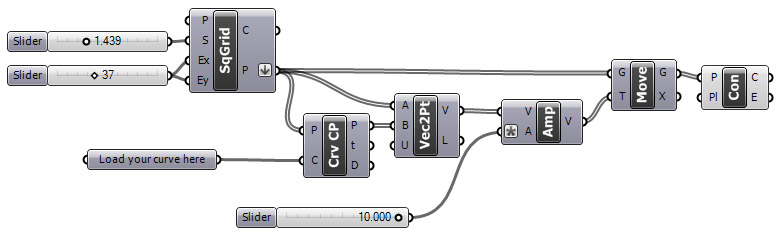
Here, I used a curve to accomplish grid tearing. It’s straightforward, and from an educational perspective, this exercise includes several potentials on vector arithmetics and graph manipulation techniques. As a design domain, this definition stresses the use of associative entities in a parametric model. Any primitive or complex entity may evoke different parameters in others. The beauty in the simplicity of these algorithms still amaze me.
Cite this post
Related Posts
Basic Grid Deformation
July 5, 2023
I am still trying to find the simplest solution to some geometric definitions. This is why I called this Grasshopper definition “Basic Grid Deformation”. Here you see the Curve Proximity (CrvProx) component in use. This component calculated the shortest distance between two curves. I think the underpinnings of this component are very interesting. I hope I can code it in Python one day. In order to see the result more clearly, the Previews of the Interpolate Curve (IntCrv) and Square…
Inflating Grids
December 28, 2012
After playing with vector fields in 2d (here) it was quite easy to create a 3d surface deformation. Here is my first experiment on a regular triangular grid’s three-dimensional behavior within a vector space, that includes a point charge of varying z coordinates. That makes field lines escape to a bounding box, instead of a bounding rectangle. Again, you may play with force decay, the number of samples, and the “grid blast” parameter, which is just a t-value evaluation of…
Point Attractors Revisited
February 29, 2012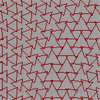
This is the basic definition of one point attractor on a grid of points. Here, the fundamentals of data tree matching can be studied. A hexagonal grid is exploded into points and new polygons are created there. Instead of a standard point distance relation to polygon size, this time the distance factor affects the rotational angle of these polygons. Although the structure of data trees is getting complicated, this has no difficulty in such definition, because the operational complexity is still very…
Vector Fields
December 28, 2012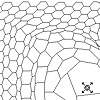
Back to the basics. I finally had time to test the vector fields components in Grasshopper. It was a couple of updates ago, a new tool group emerged in the vector tab, introducing different types of vector fields to users. Then, these fields could be merged to form more complex effects. However, I created a very simple example of how we can use those components to distort a system (such as a regular tessellation). Using attractor forces (usually in geometric…
Hoopsnake: Looping Definitions
February 3, 2012
Wow! Is this possible in Grasshopper? In order to start creating recursive algorithms in Grasshopper, I finally managed to run Hoopsnake, a special component developed by Yiannis Chatzikonstantinou. This will help me develop parametric models that include loops. The fundamental experiment here shows a surface subdivision based on iterations. We should define a starting object or data, an operation to be repeated, and a limit that will tell Hoopsnake to stop looping. In this condition, this is the area of…