designcoding
About Table of Contents Keywords Monthly Archive
Support designcoding!

Algorithms

259 posts

Baklava

January 23, 2013

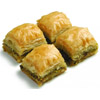
In Turkish, there is a strange word “baklava” that has many uses. According to Wikipedia: Baklava is a rich, sweet pastry made of layers of filo pastry filled with chopped nuts and sweetened with syrup or honey. It is characteristic of the cuisines of the former Ottoman Empire and those of Central and Southwest Asia. However, we should add that 150 gr. of baklava is 413 calories. Here is it (with pistachio): The other use of this word comes from…

Waterbomb Tessellation

January 23, 2013

It all started with my new passion for origami tessellations, not much of origami, but the tessellation part. I was too lazy to fold it physically, nor model them using an engine such as Kangaroo. That would also be very unnecessary (and yes, very boring) to simulate a folding effort on the computer unless we lose our connection with the real world. Instead, I tried to look at a much more abstract, silly, and basic part of it; the creasing…

Parametric Brickwork

January 7, 2013

You might recall this type of parametric brickwork from architectural classics, such as the Programmed Wall by ETH Zurich and Gramazio Kohler Research, or the facade of the Mulberry House by SHoP Architects. Initially, I explored the simplest method for placing boxes on a surface, but this approach didn’t yield the correct layout. To improve it, I introduced gaps, which not only liberated the wall’s design but also opened up exciting possibilities for manipulating the “gap” parameter and brick sizes….

Clustering

January 2, 2013

The famous “Deutsch limit” says, “you cannot have more than -say a hundred- components in a visual programming environment, that is why you cannot write an operating system with it.”; so it says, the perceptual and pedagogical advantages of visual programming are limited according to the size of your screen. However, there are two main oppositions to this argument. One of them says “textual programming environments have the same limitation, as you cannot have more than x lines of code…

Regenerating Random Numbers

January 2, 2013

Just a quick tip as I thought might be useful in some cases. Generating random numbers in architectural scripting is not a too catchy thing for designers. It is for sure, we want every parameter to be under our control (as if it were possible!). I was thinking about that in Grasshopper. A dataflow graph such as in Grasshopper regenerates whenever necessary (a change on an input value “fires” every connected component), therefore random number component requires your action (for…

Inflating Grids

December 28, 2012

After playing with vector fields in 2d (here) it was quite easy to create a 3d surface deformation. Here is my first experiment on a regular triangular grid’s three-dimensional behavior within a vector space, that includes a point charge of varying z coordinates. That makes field lines escape to a bounding box, instead of a bounding rectangle. Again, you may play with force decay, the number of samples, and the “grid blast” parameter, which is just a t-value evaluation of…

Vector Fields

December 28, 2012

Back to the basics. I finally had time to test the vector fields components in Grasshopper. It was a couple of updates ago, a new tool group emerged in the vector tab, introducing different types of vector fields to users. Then, these fields could be merged to form more complex effects. However, I created a very simple example of how we can use those components to distort a system (such as a regular tessellation).  Using attractor forces (usually in geometric…

Archimedean Spirals

December 17, 2012

In this exercise, Grasshopper draws various Archimedean spirals. It constructs polar points and maps them onto a range of angles and a number of points. The spiral’s turning speed is determined by the constant “a,” while the constant “n” gives unique names to the spirals by raising the angle variable to the power of 1/n. Wolfram Mathworld names the spiral with n = -2 as lituus, n = -1 as a hyperbolic spiral, n = 1 as a regular Archimedes…

Back to Macro

December 14, 2012

Can we go back to the beginnings of algorithmic design tools, when it was still as simple as possible (not to the binary level of course)? Most of the theorists agree about the fact that contemporary parametric design tools sometimes provide needlessly many possibilities that suppress the designer’s own creativity. The Voronoi component in Grasshopper was one of the cult examples of that (mentioned here). Throughout this blog, I always search for simple and powerful definitions to design problems, without…

Variable Voronoi Study

November 30, 2012

I’ve been searching for a method to study the Voronoi subdivision in order to manipulate it. There are well-known algorithms for that. But I thought it would be better if I use a projective approach just as I did in studying hyperbolic space (here). This is the metaphor of inflating balloons. However, I inflated cones instead of spheres. This way, it became possible to modify the algorithm. So I was able to develop a kind of variable Voronoi study here….

« 1 2 3 … 8 9 10 11 12 13 14 15 16 17 18 19 20 21 22 23 24 25 26 »
  • Chapters

    • Algorithms
    • Discourses
    • Fabrications
    • Studios
  • Explore

    • All Keywords
    • Table of Contents
    • Monthly Archive
    • #designcoding
    • #fourier
    • #sandblasting
    • #cuboctahedron
    • #hoopsnake
    • #firefly
    • #minimal-surface
    • #platonic-solid
    • #euclidean-construction
    • #sphere
    • #quad
    • #logic
    • #boolean
    • #graph-mapper
    • #galapagos
    • #delaunay-triangulation
    • #art
    • #grid
    • #computational-geometry
    • #facade
  • Search

  • Support designcoding!

  • Enjoying designcoding? Support me on Patreon to keep it growing. Thank you!

  • copyright 2026 designcoding.net | about | privacy policy | end user license agreement