designcoding
About Table of Contents Keywords Monthly Archive
Support designcoding!

Clustering

January 2, 2013

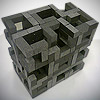
The famous “Deutsch limit” says, “you cannot have more than -say a hundred- components in a visual programming environment, that is why you cannot write an operating system with it.”; so it says, the perceptual and pedagogical advantages of visual programming are limited according to the size of your screen. However, there are two main oppositions to this argument. One of them says “textual programming environments have the same limitation, as you cannot have more than x lines of code…

Regenerating Random Numbers

January 2, 2013

Just a quick tip as I thought might be useful in some cases. Generating random numbers in architectural scripting is not a too catchy thing for designers. It is for sure, we want every parameter to be under our control (as if it were possible!). I was thinking about that in Grasshopper. A dataflow graph such as in Grasshopper regenerates whenever necessary (a change on an input value “fires” every connected component), therefore random number component requires your action (for…

Inflating Grids

December 28, 2012

After playing with vector fields in 2d (here) it was quite easy to create a 3d surface deformation. Here is my first experiment on a regular triangular grid’s three-dimensional behavior within a vector space, that includes a point charge of varying z coordinates. That makes field lines escape to a bounding box, instead of a bounding rectangle. Again, you may play with force decay, the number of samples, and the “grid blast” parameter, which is just a t-value evaluation of…

Vector Fields

December 28, 2012

Back to the basics. I finally had time to test the vector fields components in Grasshopper. It was a couple of updates ago, a new tool group emerged in the vector tab, introducing different types of vector fields to users. Then, these fields could be merged to form more complex effects. However, I created a very simple example of how we can use those components to distort a system (such as a regular tessellation).  Using attractor forces (usually in geometric…

Principles of Onticology

December 26, 2012

This started as a pragmatist search of the term “Objectile”. I was curious about the real meaning of it, while the famous 1995 works of Bernard Cache were the thing I was looking for as images. I found two things about this word. One of them is the reproductions and online marketing of those famous carved panels (I was searching for), and while the second thing was a very interesting philosophical text from Levi Bryant, this blog (then became much more important…

A Basic Design Exercise

December 23, 2012

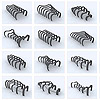
This was last year, Salih Küçüktuna had organized a one-day exercise at the first-year Basic Design studio. It was a quite successful event, both emphasizing the fundamentals of contemporary design ideas and also being very pedagogical regarding the method. We asked students to bring blank regular business cards and staples to the studio. The main idea was to design a component and multiply it to create a structure that spans a given distance. The results were very interesting regarding the…

New Years Lanterns 2012-2013

December 20, 2012

This is the second year we are experimenting with a beautiful exercise with the Computation-based Basic Design 1 students at İstanbul Bilgi University Faculty of Architecture. The exercise is based on the ideas of Benay Gürsoy and Şebnem Yalınay, who are among the pioneers of this studio. The exercise is about the design and production of new year’s lanterns to be lit in the campus garden. Here are a few photos of the projects from the 2012 and 2013 semesters,…

Archimedean Spirals

December 17, 2012

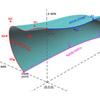
In this exercise, Grasshopper draws various Archimedean spirals. It constructs polar points and maps them onto a range of angles and a number of points. The spiral’s turning speed is determined by the constant “a,” while the constant “n” gives unique names to the spirals by raising the angle variable to the power of 1/n. Wolfram Mathworld names the spiral with n = -2 as lituus, n = -1 as a hyperbolic spiral, n = 1 as a regular Archimedes…

Back to Macro

December 14, 2012

Can we go back to the beginnings of algorithmic design tools, when it was still as simple as possible (not to the binary level of course)? Most of the theorists agree about the fact that contemporary parametric design tools sometimes provide needlessly many possibilities that suppress the designer’s own creativity. The Voronoi component in Grasshopper was one of the cult examples of that (mentioned here). Throughout this blog, I always search for simple and powerful definitions to design problems, without…

3D Pattern Deformation

December 12, 2012

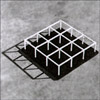
These are examples of 2.5D exercises in the design geometry course in my freshman year of architecture. We asked students to create extruded or referenced solids referenced from their previous exercise of pattern deformations, (examples are here and here). We also started to inject some of the most used concepts of design computing here, by perceiving each tessellation cell as the variation of a predefined algorithm, such as a relationship with an attractor object (a distance value with a point)….

« 1 2 3 … 32 33 34 35 36 37 38 39 40 41 42 43 44 45 46 47 48 49 50 51 52 … 55 56 57 »
  • Chapters

    • Algorithms
    • Discourses
    • Fabrications
    • Studios
  • Explore

    • All Keywords
    • Table of Contents
    • Monthly Archive
    • #dual
    • #tensegrity
    • #linear-algebra
    • #deformation
    • #metaball
    • #rhombicosidodecahedron
    • #wittgenstein
    • #design-competition
    • #polygon
    • #robot
    • #hyperbolic
    • #relief
    • #enneahedron
    • #graph-mapper
    • #archimedean-solid
    • #chaos
    • #cuboctahedron
    • #aluminium
    • #buckyball
    • #philosophy-of-language
  • Search

  • Support designcoding!

  • Enjoying designcoding? Support me on Patreon to keep it growing. Thank you!

  • copyright 2026 designcoding.net | about | privacy policy | end user license agreement