
PatGen: Islamic Pattern Generator
It was the 2008, eCAADe Presentation at Antwerp together with Birgül Çolakoğlu and Serkan Uysal. This paper presents a student work developed in the Introduction to Computational Design graduate course titled “Designing the Design” at Yildiz Technical University. The course focuses on the use of algorithms as design tools, rather than coding experiments. The course runs parallel to the shape grammar course. There, we study the basic concepts of computation through visual design exercises. So, the shape grammar course teaches rule-based logic, algorithmic thinking, and a formal approach to design. Thus, in this particular course, Islamic star patterns depict a variety of geometrical structures and constraints of Euclidean shapes. The presented work named PatGen: Islamic Star Pattern Generator is developed by Serkan Uysal as the final project for the above briefly explained courses.
Computational design education encourages design students to improve their “competitive edge” by cross-training in computational science and arts. The course presented in this paper emphasizes that computational thinking is not only programming but rather conceptualizing that operates in the multiple layers of abstraction simultaneously. It points out that computational thinking is abstract, involves problem-solving, and is a contemporary design skill. It explores new ways of teaching computational design to students. Here is the MaxScript file if you want to test (compatible with Max 2011, the menu is in Turkish):
Just select “Run script” from the MaxScript menu and point to the file. The code belongs to 2012 and it might not work anymore (note in 2023).
Cite this post
Related Posts
QuickShaper
April 5, 2012
QuickShaper (QS) an experimental computer utility for Shape Grammars. It aims to assist designers and students in creating and exploring rule-based designs. QS is first presented and published with Birgül Çolakoğlu at the 25th eCAADe Conference held at Frankfurt / Germany in September 29th, 2007. QS is a scripted utility, written in MaxScript, developed within Autodesk’s 3D Studio MAX version 9. It is not tested on earlier versions. QS works well with Max Design 2011 after modified 1.80 version. This…
N-Grid
February 28, 2013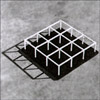
This simple tool, N-Grid resembles John Hejduk and colleagues’ famous design exercise “The Nine-Square Grid”. I developed the tool in 2009 using MaxScript. The nine-square grid is one of the most common kit-of-parts exercises in design studios for over 50 years. To explain briefly, the nine-square grid exercise is based on transforming a nine-square grid into a series of alternatives. The nine-square grid is an open-ended educational application with a limited but flexible context. It can have infinite interpretations to meet various studio objectives. Robert Slutzky, John…
Syntax, Meaning, and Wasp
August 24, 2026
The question of how form emerges in architecture has always been one of the most fundamental debate topics of computational design. When I was a graduate student, we used to examine how abstract language structures made of words and rules turned into spatial and geometric systems. In this post, starting from the reflection of linguistic theories on architecture, we will talk about the logic of discrete aggregation that we study in the first year Design Computing courses. At the same…
Chinese Ice-ray Lattices Revisited
March 25, 2013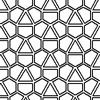
One of the cult texts in Shape Grammars theory is Stiny‘s Chinese Ice-ray Lattices Grammars. Although it is full of technical terms, it represents an analysis of a working algorithm. We can directly transfer that from the behavior of an artist. One can imagine a Chinese artisan, summoned to a building site. He brings tools and implements and a collection of finely finished sticks. Then, he begins his design by selecting a stick of the appropriate length and carefully attaching…
Maxscript Table
March 20, 2013
Maxscipt can be used to automate specific modeling tasks in a sequential-parametric way. This example, developed in 2005 shows an example of that. It creates various table designs by polygon modeling operations and asks the user various parameters. Below is the interface of the script; There are preset parameters in a dropdown box, and all other available parameters are organized in rollouts. Here are some default results of the script. It is not as fast and smart as the Grasshopper…