
Hofstadter’s Objection
After explaining the beautiful parquet deformations of William Huff, Douglas Hofstadter states his opinions about the algorithmic potentials of those patterns. Although it was 30 years ago, Hofstadter points out a fundamental discussion related to today’s parametric design tools;
…for a machine to make simple variants of a given design, it must possess an algorithm for making that design which has explicit parameters; those parameters are then modifiable, as with the pseudo-Mondrian paintings. But the way people make variations is quite different. They look at some creation by an artist (or computer), and then they abstract from it some quality that they observe in the creation itself (not in some algorithm behind it). This newly abstracted quality may never have been thought of explicitly by the artist (or programmer or computer), yet it is there for the seeing by an acute observer. This perceptual act gets you more than half the way to genuine creativity; the remainder involves treating this new quality as if it were an explicit knob: “twiddling” it as if it were a parameter that had all along been in the program that made the creation. That way, the perceptual process is intimately linked up with the generative process: a loop is closed in which perceptions spark new potentials and experimentation with new potentials opens up the way for new perceptions. The element lacking in current computer art is the interaction of perception with generation. Computers do not watch what they do; they simply do it…
Hofstadter, D.R. (1983). Metamagical themas questing for the essence of mind and pattern. New York: Basic Books. pp 191-199
I think we should listen to Hofstadter’s objection and remember to put creativity at the center of an algorithm design. This is why we are called “design”ers, not “programm”ers. And this is why there is a whole theory and pedagogy related to the term “design computing”, experimenting with the ways of designerly coding. This can not be successful if we only “engineer” an algorithm as Hofstadter suggests; but we should be in a design cycle, a “reflection-in-action” with all the parameters of a design situation including, materials, construction, perception, performance, and context.
Here is the link if you want to read the rest of the book.
Cite this post
Related Posts
On the Patterns of Digital Design
March 24, 2014
Here is a good brief explanation by Mark Garcia on how patterns re-emerged in the digital age after Modernism and Postmodernism. …In the 1980s and 1990s, Postmodernist patterns predominated, and especially those of Robert Venturi, Rem Koolhaas, Stan Allen and Sanford Kwinter (fields), along with historicist, folding, sprawl, cross-programming, high-density/proximity, non-places and other Deconstructivist and high-tech patterns. In 1992, Henri Lefebvre’s last book Rhythmanalysis: Space, Time and Everyday Life was published. Because Lefebvre’s keystone concept of ‘rhythm’ is identical to…
Patronus
May 29, 2013The exploration of the concept of “patronus – pattern” in architecture is presented in a captivating and insightful manner. This issue of AD, although older, continues to hold relevance in the contemporary realm of architectural design, covering various aspects of the conception and utilization of patterns. It’s comprehensive analysis and thought-provoking discourse shed light on the intricate relationship between patterns and architectural form, unveiling the potential for pattern-based design approaches to shape and enhance built environments. This is why this…
A Programmable World
October 1, 2026The mandatory course Readings on Digital Culture in the Graduate Program in Architectural Design at Istanbul Bilgi University began with the introductory chapter of Charlie Gere’s Digital Culture. We will write a response paper every week. I have completed my response to the first reading. The reading begins with the parallel development of the Industrial Revolution and capitalism. It then follows this history up to the emergence of today’s computers. It looks at how money gradually became a more abstract…
3D Printing Research Area
September 26, 2026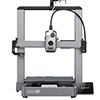
Over the past few months, I bought a cheap and affordable 3D printer, and I am quite satisfied with it. The Creality Hi model printer has advanced features and its quality is not bad at all. Compared to the Ultimaker printers we used in the past, technology has naturally evolved over the years, and certain processes have become much easier. With this occasion, I wanted to share the literature review I conducted for a project. Maybe it will be useful…
Intra)/value
August 16, 2026
The group exhibition 2 Years 10 Meters, curated by Natalia Schmidt, opened on April 24, 2024, at the Cité Internationale des Arts in Paris. My name was also included in the exhibition due to the projection graphics in Didem Yalınay’s artwork Intra)/value. This was another step in Didem’s long-term project. She hated being called a “Digital Artist.” She produced wonderful works with Seçkin Maden. I was fortunate enough to accompany her as a modest collaborator on one of her pieces….