
3D Printing Research Area
Over the past few months, I bought a cheap and affordable 3D printer, and I am quite satisfied with it. The Creality Hi model printer has advanced features and its quality is not bad at all. Compared to the Ultimaker printers we used in the past, technology has naturally evolved over the years, and certain processes have become much easier. With this occasion, I wanted to share the literature review I conducted for a project. Maybe it will be useful to someone.
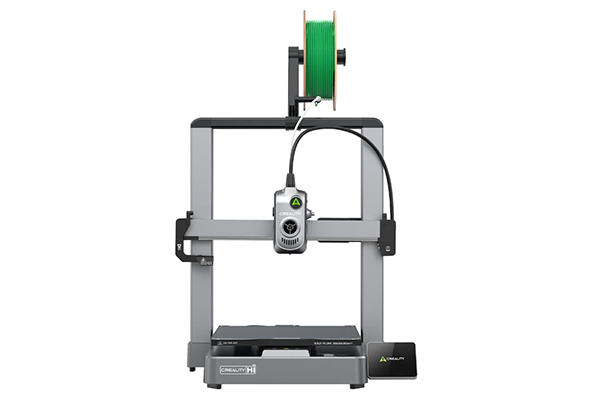
Three-dimensional (3D) printing is an additive manufacturing technique based on digital model data, carried out by depositing a fluid material layer by layer to solidify (Labonnote et al., 2016; Buswell et al., 2007). Having received its first patents in the 1980s, this technology reached a wide audience in the 2000s. Today, 3D printing is used in many different industries such as aerospace, automotive, marine, defense, healthcare, fashion, and food, and in recent years, it has started to stand out as a new research and application area in the construction sector.
Methods
3D printing methods are classified according to how the deposited material is solidified. Fused Filament Fabrication (FFF/FDM) (Aihemaiti et al., 2024; Pernet et al., 2022; Alagheband et al., 2024; Aloyaydi et al., 2020; Yeoh et al., 2020; Chacón et al., 2017; Enja et al., 2023; Lopes et al., 2023; Dudescu and Racz, 2017; Piccioni et al., 2020; Podroužek et al., 2019; Saniman et al., 2020), Selective Laser Sintering (SLS) (Abueidda et al., 2019; Gnanasagaran et al., 2024), and Selective Laser Melting (SLM) (Peng and Tran, 2020) can be counted among these production methods.
Materials
The most commonly used materials are Polylactic Acid (PLA) (Pernet et al., 2022; Alagheband et al., 2024; Aloyaydi et al., 2020; Yeoh et al., 2020; Chacón et al., 2017; Enja et al., 2023; Nguyen-Van et al., 2021; Podroužek et al., 2019; Saniman et al., 2020), Acrylonitrile Butadiene Styrene (ABS) (Agrawal et al., 2023; Peng et al., 2021; Fernandez-Vicente et al., 2016; Dudescu and Racz, 2017), Polyethylene Terephthalate Glycol (PET-G) (Enja et al., 2023; Lopes et al., 2023; Piccioni et al., 2020), Hydroxyapatite and Polylactic Acid (HA-PLA) (Aihemaiti et al., 2024), Polyamide (PA) (Abueidda et al., 2019), aluminum and steel alloys (Peng and Tran, 2020), alumina ceramic (Gnanasagaran et al., 2024), and other experimental materials (such as bamboo fibers and powders, Wong et al., 2024).
Performance
Studies examining the mechanical properties of products manufactured via 3D printing are widespread in the literature. The most frequently applied tests are compressive strength, which measures the material’s resistance to compression forces (Abueidda et al., 2019; Aihemaiti et al., 2024; Pernet et al., 2022; Aloyaydi et al., 2020; Wong et al., 2024; Podroužek et al., 2019); tensile strength, which reveals its behavior under tensile forces (Abueidda et al., 2019; Aihemaiti et al., 2024; Alagheband et al., 2024; Yeoh et al., 2020; Agrawal et al., 2023; Chacón et al., 2017; Enja et al., 2023; Fernandez-Vicente et al., 2016; Dudescu and Racz, 2017); and flexural strength, which demonstrates its resistance to bending (Aihemaiti et al., 2024; Chacón et al., 2017; Peng et al., 2021; Lopes et al., 2023; Saniman et al., 2020). In addition to these fundamental tests, properties such as fatigue strength, which evaluates material life under repeated loads (Alagheband et al., 2024); low-velocity impact response, which examines the reaction against sudden impacts (Aloyaydi et al., 2020; Agrawal et al., 2023); hardness and fracture toughness, which determine surface hardness and resistance to crack propagation (Gnanasagaran et al., 2024); and energy absorption capacity, which demonstrates the capacity to dampen kinetic energy (Abueidda et al., 2019; Peng et al., 2021; Peng and Tran, 2020), are also investigated. Alongside mechanical performance, studies examining the thermal properties of materials are also common. The measurement of thermal performances such as thermal conductivity (Lopes et al., 2023; Piccioni et al., 2020) reveals the industrial application potential of the products.
Experimental studies in this field are also supported by numerical methods. Among these methods, the Finite Element Method (FEM) comes first (Abueidda et al., 2019; Alagheband et al., 2024; Peng and Tran, 2020; Piccioni et al., 2020; Podroužek et al., 2019). Among internal structure analyses, the Scanning Electron Microscope (SEM) (Aloyaydi et al., 2020) and X-Ray Diffraction (XRD) (Gnanasagaran et al., 2024) stand out. These and similar analyses are examined together with data such as weight, amount of material used, and printing time in order to reach a final conclusion about products obtained from 3D printing. Studies focusing particularly on the strength-to-weight ratio aim to preserve the mechanical properties of the product while reducing production time and material quantity (Pernet et al., 2022). Thus, the industrial-scale applicability and sustainability of 3D printing are evaluated (Lopes et al., 2023).
This research area is essentially one with a vast number of studies, but I suppose there are still definitely innovations waiting to be explored.
References
Abueidda, D. W., Elhebeary, M., Shiang, C. S. A., Pang, S., Abu Al-Rub, R. K., Jasiuk, I. M. 2019. “Mechanical properties of 3D printed polymeric gyroid cellular structures: Experimental and finite element study”, Materials & Design, 165, 107597. https://doi.org/10.1016/j.matdes.2019.107597
Agrawal, A. P., Kumar, V., Kumar, J., Paramasivam, P., Dhanasekaran, S., Prasad, L. 2023. “An investigation of combined effect of infill pattern, density, and layer thickness on mechanical properties of 3D printed ABS by fused filament fabrication”, Heliyon, 9(6), e16531. https://doi.org/10.1016/j.heliyon.2023.e16531
Aihemaiti, P., Jiang, H., Aiyiti, W., Wang, J., Dong, L., Shuai, C. 2024. “Mechanical properties enhancement of 3D-printed HA-PLA composites using ultrasonic vibration assistance”, Virtual and Physical Prototyping, 19(1). https://doi.org/10.1080/17452759.2024.2346271
Alagheband, M., Zhang, Q., Jung, S. 2024. “Investigating the influence of infill patterns and mesh modifiers on fatigue properties of 3D printed polymers”, International Journal of Fatigue, 187, 108463. https://doi.org/10.1016/j.ijfatigue.2024.108463
Aloyaydi, B., Sivasankaran, S., Mustafa, A. 2020. “Investigation of infill patterns on mechanical response of 3D printed poly-lactic-acid”, Polymer Testing, 87, 106557. https://doi.org/10.1016/j.polymertesting.2020.106557
Buswell, R. A., Soar, R. C., Gibb, A. G. F., Thorpe, A. 2007. “Freeform construction: Mega-scale rapid manufacturing for construction”, Automation in Construction, 16(2), 224–231. https://doi.org/10.1016/j.autcon.2006.05.002
Chacón, J. M., Caminero, M. A., García-Plaza, E., Núñez, P. J. 2017. “Additive manufacturing of PLA structures using fused deposition modelling: Effect of process parameters on mechanical properties and their optimal selection”, Materials & Design, 124, 143–157. https://doi.org/10.1016/j.matdes.2017.03.065
Dudescu, C., Racz, L. 2017. “Effects of raster orientation, infill rate, and infill pattern on the mechanical properties of 3D printed materials”, Acta Universitatis Cibiniensis. Technical Series, 69(1), 23–30. https://doi.org/10.1515/aucts-2017-0004
Enja, U. M., Venkata, N. Y., Bondi, S. 2023. “Investigations of influence of infill pattern on tensile strength of 3D-printed poly lactic acid and polyethylene terephthalate glycol material using design of experiments”, Materials Today: Proceedings. https://doi.org/10.1016/j.matpr.2023.03.406
Fernandez-Vicente, M., Calle, W., Ferrandiz, S., Conejero, A. 2016. “Effect of infill parameters on tensile mechanical behavior in desktop 3D printing”, 3D Printing and Additive Manufacturing, 3(3), 183–192. https://doi.org/10.1089/3dp.2015.0036
Gnanasagaran, C. L., Ramachandran, K., Kumar, V. H., Ramachandran, V., Rangarajan, M. 2024. “Influence of infill patterns on mechanical properties of 3D printed Al₂O₃ ceramics via fused filament fabrication”, Ceramics International, 50(10), 17796–17806. https://doi.org/10.1016/j.ceramint.2024.02.269
Labonnote, N., Rønnquist, A., Manum, B., Rüther, P. 2016. “Additive construction: State-of-the-art, challenges and opportunities”, Automation in Construction, 72, 347–366. https://doi.org/10.1016/j.autcon.2016.08.026
Lopes, L., Reis, D., Paula Junior, A., Almeida, M. 2023. “Influence of 3D microstructure pattern and infill density on the mechanical and thermal properties of PET-G filaments”, Polymers, 15(10), 2268. https://doi.org/10.3390/polym15102268
Nguyen-Van, V., Wu, C., Vogel, F., Zhang, G., Nguyen-Xuan, H., Tran, P. 2021. “Mechanical performance of fractal-like cementitious lightweight cellular structures: Numerical investigations”, Composite Structures, 269, 114050. https://doi.org/10.1016/j.compstruct.2021.114050
Peng, C., Tran, P. 2020. “Bioinspired functionally graded gyroid sandwich panel subjected to impulsive loadings”, Composites Part B, 188, 107773. https://doi.org/10.1016/j.compositesb.2020.107773
Peng, C., Fox, K., Qian, M., Nguyen-Xuan, H., Tran, P. 2021. “3D printed sandwich beams with bioinspired cores: Mechanical performance and modelling”, Thin-Walled Structures, 161, 107471. https://doi.org/10.1016/j.tws.2021.107471
Pernet, B., Nagel, J. K., Zhang, H. 2022. “Compressive strength assessment of 3D printing infill patterns”, Procedia CIRP, 105, 682–687. https://doi.org/10.1016/j.procir.2022.02.114
Piccioni, V., Turrin, M., Tenpierik, M. 2020. “A performance-driven approach for the design of cellular geometries with low thermal conductivity for application in 3D-printed façade components”, Proceedings of the Symposium on Simulation for Architecture and Urban Design (SimAUD 2020), 327–344.
Podroužek, J., Marcon, M., Ninčević, K., Wan-Wendner, R. 2019. “Bio-inspired 3D infill patterns for additive manufacturing and structural applications”, Materials, 12(3), 499. https://doi.org/10.3390/ma12030499
Saniman, M. N. F., Bidin, M., Reshid, M., Mohd Shariff, J., & Harimon, M. A. 2020. “Flexural properties evaluation of additively manufactured components with various infill patterns”, International Journal of Advanced Science and Technology, 29(8), 4646-4657.
Wong, J., Aşut, S., & Brancart, S. 2024. “3D printing with bamboo: An early-stage exploration towards its use in the built environment”, Sustainability, 16(11), 4619. https://doi.org/10.3390/su16114619
Yeoh, C. K., Cheah, C. S., Pushpanathan, R., Song, C. C., Tan, M. A., & Teh, P. L. 2020. “Effect of infill pattern on mechanical properties of 3D printed PLA and cPLA”, IOP Conference Series: Materials Science and Engineering, 957, 012064. https://doi.org/10.1088/1757-899X/957/1/012064
Cite this post
Related Posts
Cura Tutorial 3D Printing
December 16, 2024
3D printing, also known as additive manufacturing, is a process of creating three-dimensional objects from a digital file by building them layer by layer. Unlike traditional manufacturing, where the material is cut or molded into shape, 3D printing adds material in successive layers. This allows for greater precision and the creation of complex geometries. In this short tutorial video, I am using Cura software to slice a simple geometry for 3D printing. This is a tutorial for a specific homework…
Growing an Architectural System
November 3, 2018
This paper covers ongoing research titled “Growing an Architectural System”. It is an interdisciplinary work relating permaculture studies with computational design and production technologies. It includes testing some issues of performance via full-scale prototypes. Growing Pots is the first study we will mention in the paper. It is about the design of a micro-permaculture system and 3d printed products realized by students of an elective course. On the other hand, in the second part of the paper, we explain the…
Robotic Path Planning for Concrete Printing
August 19, 2026
Three-dimensional concrete printing (3DCP) is an innovative digital fabrication and automation technique based on additive manufacturing that enables the creation of complex and customized structures in the architecture and construction industry. Its most notable advantages include eliminating formwork costs and labor (Buswell et al., 2020; Lyu et al., 2021; Kaliyavaradhan et al., 2022) and facilitating the fabrication of structural elements with complex curvatures, particularly in printing systems utilizing industrial robotic arms (Alabbasi et al., 2023; De Soto et al., 2018)….
Basketball Cup
June 4, 2018
This is the basketball cup that won the design contest organized in 2018 by the Turkish Basketball Federation (TBF). Nadide Ebru Yazar and Mete Yazar proposed this idea, and I modeled that in Rhino and rendered it with Neon. Among more than 150 designs, the jury chose our design due to its dynamic formal expression. Cage-editing was very efficient in creating this kind of free-form surface. However, the production phase becomes a lot challenging when we realized that metal printing…
Low-Poly Habitat
August 7, 2017
Below is a simple tutorial class we studied in Rhino in 2015 and 2016. The exercise is called “A Low-Poly Habitat”. The aim is to create simple polygon models by analyzing the overall geometric topology of an animal body. First-year design students attended the exercise and they are encouraged to create these models using blueprints from www. They used simple commands such as point, line, and surface from 3 or 4 points and that’s all. Such exercises (hopefully) help them…