
Robotic Path Planning for Concrete Printing
Three-dimensional concrete printing (3DCP) is an innovative digital fabrication and automation technique based on additive manufacturing that enables the creation of complex and customized structures in the architecture and construction industry. Its most notable advantages include eliminating formwork costs and labor (Buswell et al., 2020; Lyu et al., 2021; Kaliyavaradhan et al., 2022) and facilitating the fabrication of structural elements with complex curvatures, particularly in printing systems utilizing industrial robotic arms (Alabbasi et al., 2023; De Soto et al., 2018). In addition, it offers significant potential for reducing material waste, shortening construction time, and establishing a workflow integrated with digital design. Furthermore, life cycle assessment (LCA) studies demonstrate that 3DCP can reduce environmental impacts such as Global Warming Potential (GWP), Acidification Potential (AP), Eutrophication Potential (EP), Water Depletion (SFP), and Fossil Fuel Depletion (FFD) (Mohammad et al., 2020). One of the earliest studies in 3DCP research literature is an undergraduate project conducted by Pegna (1997) at Rensselaer Polytechnic Institute. In parallel with academic studies, experimental construction applications over the past two decades have introduced pioneering examples. Although discrepancies exist among sources reviewing the history of this field, some of the frequently cited pioneering patents and construction companies are summarized below:
Contour Crafting: A 3DCP patent reported to have been developed by Behrokh Khoshnevis at the University of Southern California in 1998 (Khoshnevis, 2001; Khoshnevis and Dutton, 1998). This method enables the construction of structures through layer-by-layer deposition of concrete using a 3D printer-like device (Buswell et al., 2022; Mohammad et al., 2020; Habibi et al., 2024; Paul et al., 2018; Labonnote et al., 2016; Lyu et al., 2021; Tu et al., 2023). In this technique, smooth surfaces are achieved through trowel-like surfaces integrated into the printhead.
D-Shape (Monolite): One of the earliest 3DCP technologies, reported to have been developed by Enrico Dini in 2005. This method enables the construction of concrete structures using large-scale printers. D-Shape involves depositing layers of a specialized concrete mixture containing sand, water, and binder materials through a nozzle onto a surface, followed by spraying a liquid binder to solidify each layer (Buswell et al., 2020, 2022; Alabbasi et al., 2023; Forcael et al., 2023; Labonnote et al., 2016; Tu et al., 2023).
WinSun: A construction company based in China reported to build large-scale 3DCP buildings. It primarily produces prefabricated concrete structures and residential units (Ramakrishnan et al., 2021; Balázs and Thajeel, 2024; Cabibihan et al., 2023; Li et al., 2023; Tu et al., 2023). Scientific publications regarding the proprietary technology remain limited. The company is reported to have been constructing buildings using 3DCP since 2014.
Apis Cor: Among the companies constructing both small- and large-scale structures using 3DCP (Tu et al., 2023; Duarte et al., 2024; De Soto et al., 2018; Cabibihan et al., 2023; Batikha et al., 2022; Ramakrishnan et al., 2021). Its most prominent feature is a mobile printer capable of constructing a residential unit in less than 24 hours.
HuaShang Tengda: A Chinese company constructing structures using 3DCP. In 2015, it reported the completion of a two-story, 400-square-meter building within 45 days (Buswell et al., 2022; Placzek and Schwerdtner, 2024; Batikha et al., 2022).
Tecla: A 3DCP residential project developed in 2019 by Mario Cucinella Architects and WASP (World’s Advanced Saving Project) (Alami et al., 2023; Duarte et al., 2024). The material utilized in this project is a clay-based natural mixture.
Additionally, various companies worldwide—such as Peri 3D (Germany), ICON (USA), and XtreeE (France)—are executing construction projects utilizing 3DCP technology (Placzek and Schwerdtner, 2024). In Turkey, research and implementations in this field are ongoing across several universities and institutions such as İSTON.
When additive construction techniques, which encompass 3DCP, are classified, five primary systems emerge: gantry (crane) systems (Heras Murcia et al., 2020; Lin et al., 2022; Zhang and Sanjayan, 2024; Marais et al., 2021; Wang et al., 2020; Dey et al., 2023), cable-suspended systems, swarm systems, robotic arm systems (De Soto et al., 2018; Balázs and Thajeel, 2024; Farahbakhsh et al., 2022; Xu et al., 2022; Alabbasi et al., 2023; Forcael et al., 2023; Duarte et al., 2024; Dielemans et al., 2021; Huang et al., 2023; Xu et al., 2020; Põldaru et al., 2023), and combined folding systems. Systems other than gantry and robotic arms remain largely experimental. For instance, an early example of cable-suspended printing systems is the C4 system developed by Bosscher et al. (2007). Aside from these experimental setups, the majority of research focuses on adapting conventional industrial robot systems to 3DCP. In terms of material deposition methods, extrusion, spraying (Dörrie et al., 2023), and particle bed (Placzek and Schwerdtner, 2024) techniques represent the most prevalent approaches.
Studies comparing 3DCP with conventional construction methods suggest substantial time and cost advantages in the structural shell construction phase, particularly for structures with complex geometries (Xu et al., 2022; De Soto et al., 2018; Buswell et al., 2020; Batikha et al., 2022; Forcael et al., 2023). In a comparative study evaluating cast steel, forged steel, reinforced concrete, 3DCP, and precast concrete construction methods, Batikha et al. (2022) argue that 3DCP ranks second in terms of duration, yet represents the most economical method when time and cost are evaluated together. The same study also indicates that 3DCP delivers the best results in terms of CO2 emissions. Investigating the impact of construction scale, Forcael et al. (2023) demonstrated that robotic-arm 3DCP is 45% faster than conventional formwork methods for small-scale construction; however, as the construction scale expands, this ratio shifts in favor of traditional methods, requiring an increase in the number of robotic arms (and associated capital cost) to maintain the time advantage.
On the other hand, despite these potential advantages, high material and equipment costs (Alami et al., 2023; Batikha et al., 2022), the requirement for specialized expertise, technical challenges hindering process standardization (ambient conditions, humidity, curing duration, chemical admixtures), potential social impacts (displacement of manual construction labor, environmental effects of certain specialized materials), and the lack of established building codes and regulatory standards (Alami et al., 2023; Alabbasi et al., 2023) negatively affect the feasibility of 3DCP and hinder its widespread adoption.
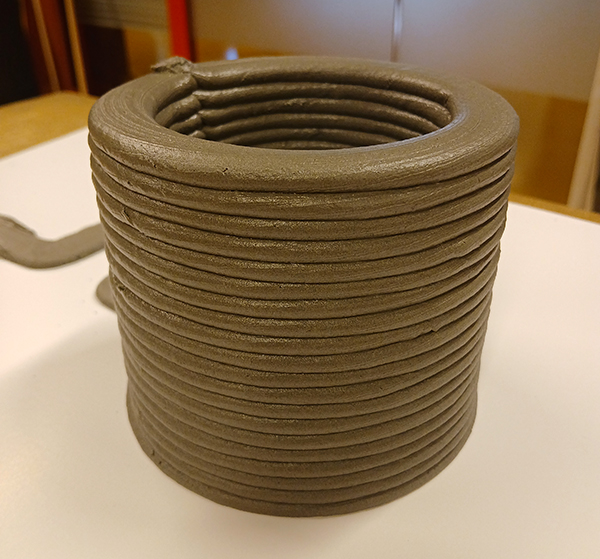
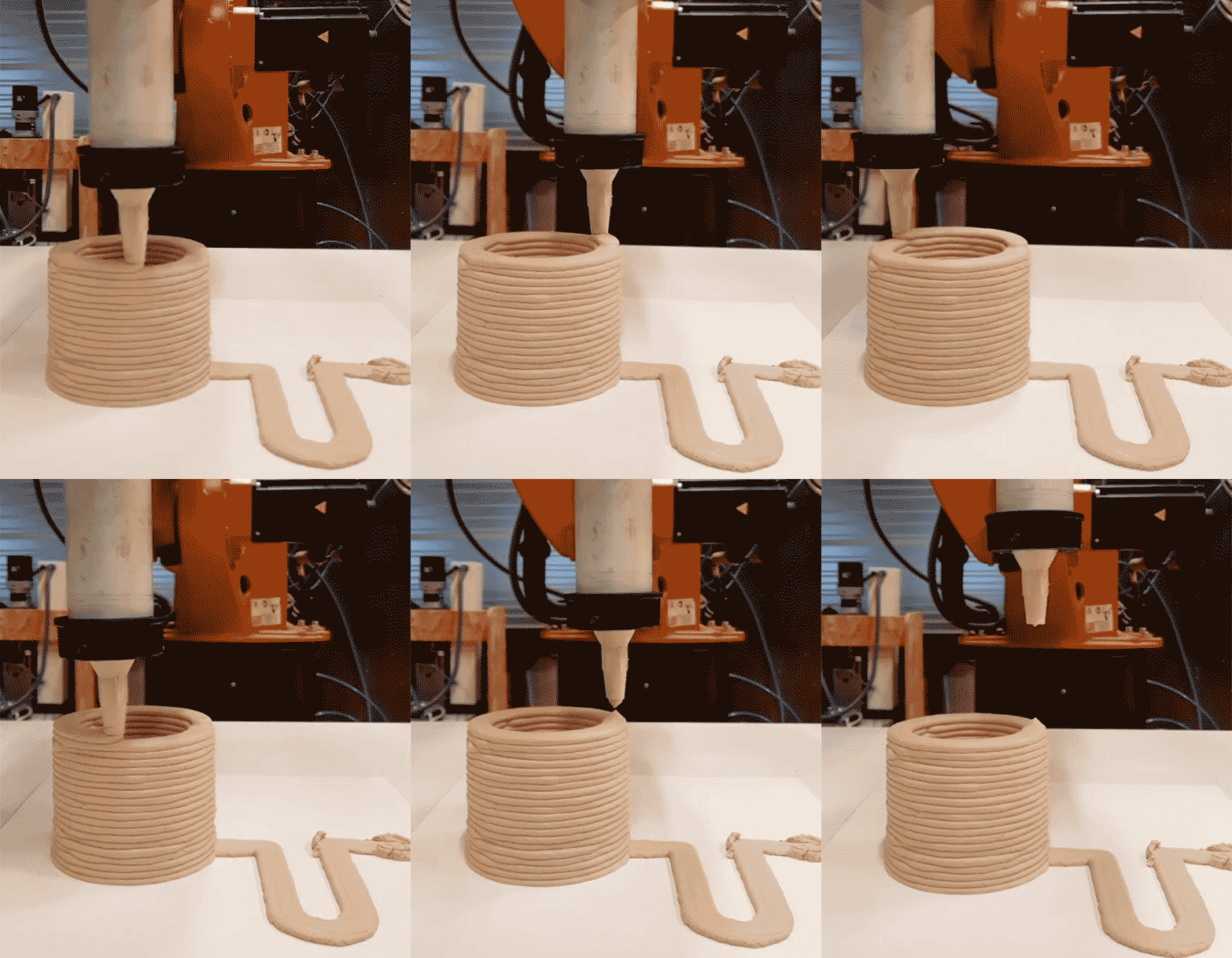
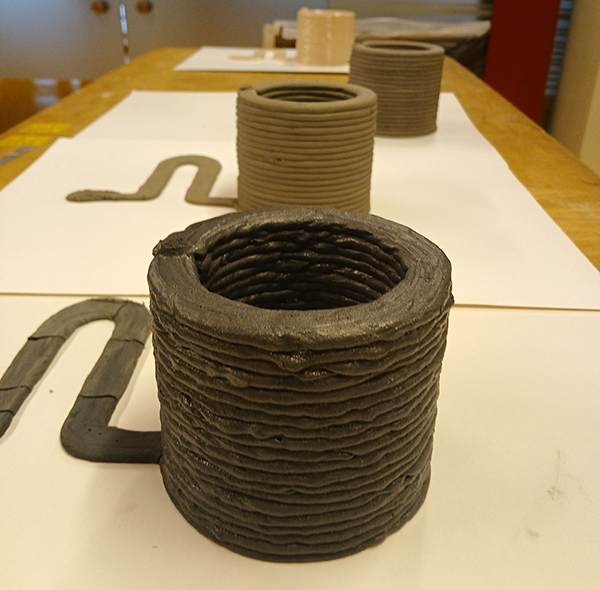
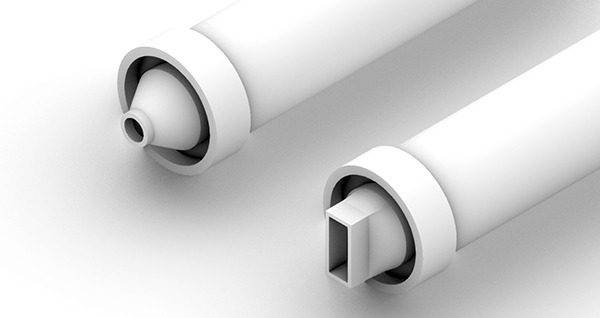
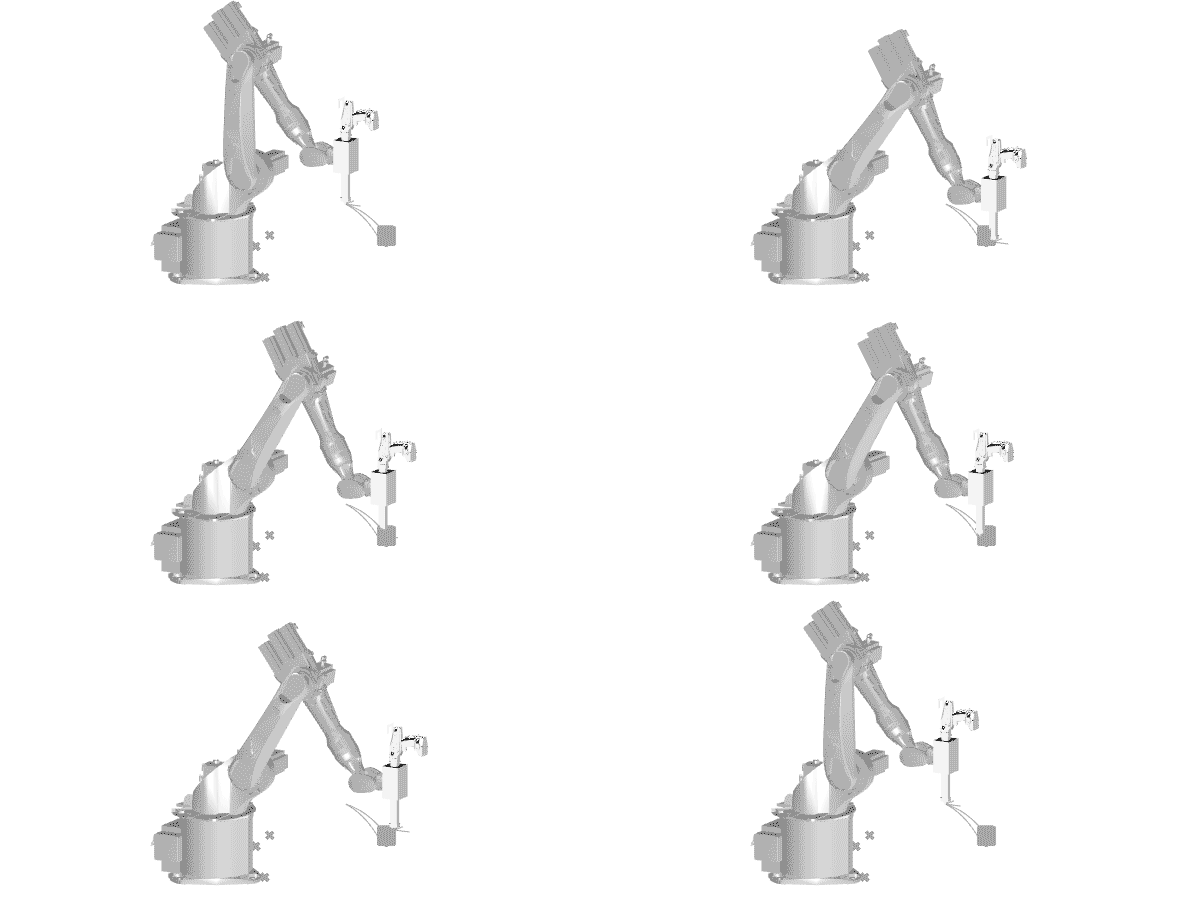
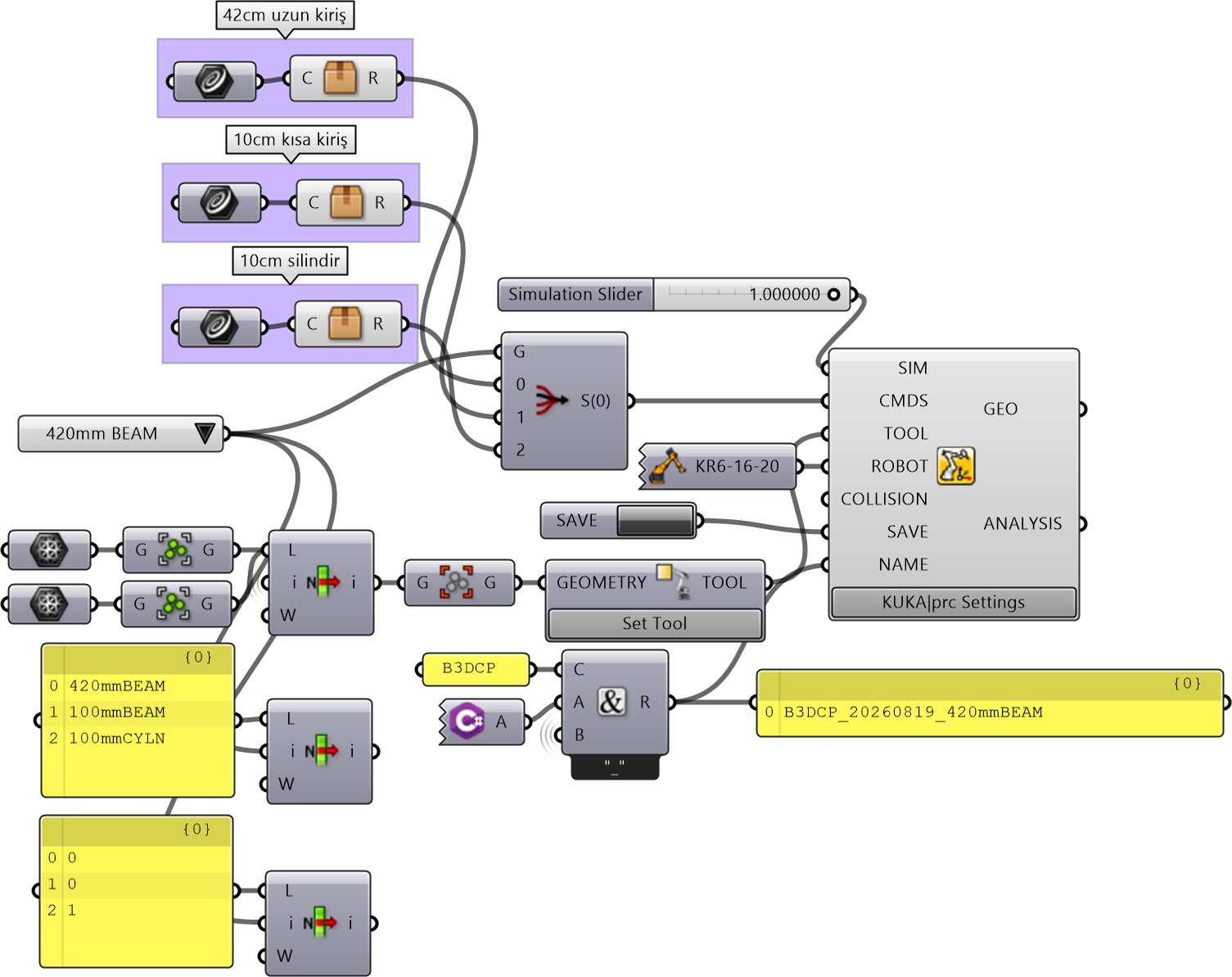
The concrete printing experiments we conduct with Assoc. Prof. Dr. Büşra Aktürk in the Department of Civil Engineering at Istanbul Bilgi University are small-scale and material science-oriented. I developed the Grasshopper Kuka-PRC code shown below for this purpose. To achieve low-cost and rapid printing without an extruder, we utilize a battery-powered caulking gun, which I observed in 2023 at the Delft University of Technology Laboratory. These guns can dispense material with a volume of 600 ml at variable speeds and allow nozzle replacement. In our experiments, we use two types of nozzle tips: circular and rectangular profiles. I have also attached the model files of these tips, which I produced with PETG on my 3D printer. The dispensing gun used in the printing process is mounted to a Kuka KR-20 robotic arm via a custom wooden housing. The Grasshopper script is capable of printing beam or cylinder specimens of specified dimensions at adjustable speeds and layer heights. We have executed numerous print runs using this code, which continues to be utilized across various publications and research projects. The latest version is shared below, illustrating the toolpath strategy and the optimal angle of approach that allows the robot to support the gun without inducing vibrations.
References
Alabbasi, M., Agkathidis, A., Chen, H. 2023. “Robotic 3D printing of concrete building components for residential buildings in Saudi Arabia”, Automation in Construction, 148, 104751. https://doi.org/10.1016/j.autcon.023.104751
Alami, A. H., Olabi, A. G., Ayoub, M., Aljaghoub, H., Alasad, S., Abdelkareem, M. A. 2023. “3D concrete printing: Recent progress, applications, challenges, and role in achieving sustainable development goals”, Buildings, 13(4), 924. https://doi.org/10.3390/buildings13040924
Balázs, G. L., Thajeel, M. M. 2024. “3D concrete printing with robot—Resulted properties”, Online Journal of Robotics & Automation Technology, 2(3). https://doi.org/10.33552/ojrat.2024.02.000540
Batikha, M., Jotangia, R., Baaj, M. Y., Mousleh, I. 2022. “3D concrete printing for sustainable and economical construction: A comparative study”, Automation in Construction, 134, 104087. https://doi.org/10.1016/j.autcon.2021.104087
Bosscher, P., Williams, R. L., Bryson, L. S., Castro-Lacouture, D. 2007. “Cable-suspended robotic contour crafting system”, Automation in Construction, 17(1), 45–55. https://doi.org/10.1016/j.autcon.2007.02.011
Buswell, R. A., Bos, F. P., Silva, W. R. L. da, Hack, N., Kloft, H., Lowke, D., Freund, N., Fromm, A., Dini, E., Wangler, T., Lloret-Fritschi, E., Schipper, R., Mechtcherine, V., Perrot, A., Vasilic, K., Roussel, N. 2022. “Digital fabrication with cement-based materials: Process classification and case studies”. RILEM State-of-the-Art Reports, 11–48. Springer International Publishing.
Buswell, R. A., da Silva, W. R. L., Bos, F. P., Schipper, H. R., Lowke, D., Hack, N., Kloft, H., Mechtcherine, V., Wangler, T., Roussel, N. 2020. “A process classification framework for defining and describing digital fabrication with concrete”, Cement and Concrete Research, 134, 106068. https://doi.org/10.1016/j.cemconres.2020.106068
Cabibihan, J. J., Gaballa, A., Fadli, F., Irshidat, M., Mahdi, E., Biloria, N., Mansour, Z., Abdulrazak, H. 2023. “A guided approach for utilizing concrete robotic 3D printing for the architecture, engineering, and construction industry”, Construction Robotics, 7(3–4), 265–278. https://doi.org/10.1007/s41693-023-00103-9
De Soto, B. G., Agustí-Juan, I., Hunhevicz, J., Joss, S., Graser, K., Habert, G., Adey, B. T. 2018. “Productivity of digital fabrication in construction: Cost and time analysis of a robotically built wall”, Automation in Construction, 92, 297–311. https://doi.org/10.1016/j.autcon.2018.04.004
Dey, D., Van, V. N., Xuan, H. N., Srinivas, D., Panda, B., Tran, P. 2023. “Flexural performance of 3D printed concrete structure with lattice infills”, Developments in the Built Environment, 16, 100297. https://doi.org/10.1016/j.dibe.2023.100297
Dielemans, G., Briels, D., Jaugstetter, F., Henke, K., Dörfler, K. 2021. “Additive manufacturing of thermally enhanced lightweight concrete wall elements with closed cellular structures”, Journal of Facade Design and Engineering, 9(1), 5418. https://doi.org/10.7480/JFDE.2021.1.5418
Dörrie, R., Freund, N., Herrmann, E., Baghdadi, A., Mai, I., Galli, F., David, M., Dröder, K., Lowke, D., Kloft, H. 2023. “Automated force-flow-oriented reinforcement integration for Shotcrete 3D printing”, Automation in Construction, 155, 105075. https://doi.org/10.1016/j.autcon.2023.105075
Duarte, G., Brown, N. C., Duarte, J. P. 2024. “Workflow for generating, simulating, and optimizing form and toolpath in 3D concrete printing of vaults”, Automation in Construction, 166, 105590. https://doi.org/10.1016/j.autcon.2024.105590
Farahbakhsh, M., Rybkowski, Z. K., Zakira, U., Kalantar, N., Onifade, I. 2022. “Impact of robotic 3D printing process parameters on interlayer bond strength”, Automation in Construction, 142, 104478. https://doi.org/10.1016/j.autcon.2022.104478
Forcael, E., Martínez-Chabur, P., Ramírez-Cifuentes, I., García-Alvarado, R., Ramis, F., Opazo-Vega, A. 2023. “Performance analysis of 3D concrete printing processes through discrete-event simulation”, Buildings, 13(6), 1390. https://doi.org/10.3390/buildings13061390
Habibi, A., Buswell, R., Osmani, M., Aziminezhad, M. 2024. “Sustainability principles in 3D concrete printing: Analysing trends, classifying strategies, and future directions”, Journal of Building Engineering, 98, 111354. https://doi.org/10.1016/j.jobe.2024.111354 (Metinde Habibi vd., 2022 olarak geçmektedir)
Heras Murcia, D., Genedy, M., Reda Taha, M. M. 2020. “Examining the significance of infill printing pattern on the anisotropy of 3D printed concrete”, Construction and Building Materials, 262, 120559. https://doi.org/10.1016/j.conbuildmat.2020.120559
Huang, S., Xu, W., Hu, H. 2023. “Space-filling and print path generation methods for large-area 3D concrete printing pavements”, Architectural Intelligence, 2, 13. https://doi.org/10.1007/s44223-023-00032-1
Kaliyavaradhan, S. K., Ambily, P. S., Prem, P. R., Ghodke, S. B. 2022. “Test methods for 3D printable concrete”, Automation in Construction, 142, 104529. https://doi.org/10.1016/j.autcon.2022.104529
Khoshnevis, B., Dutton, R. 1998. “Innovative rapid prototyping process makes large sized, smooth surfaced complex shapes in a wide variety of materials”, Materials Technology, 13(2), 53-56. https://doi.org/10.1080/10667857.1998.11752766
Khoshnevis, B., Bukkapatnam, S., Kwon, H., Saito, J. 2001. “Experimental investigation of contour crafting using ceramic materials”, Rapid Prototyping Journal, 7(1), 32-41. https://doi.org/10.1108/13552540110365144
Labonnote, N., Rønnquist, A., Manum, B., Rüther, P. 2016. “Additive construction: State-of-the-art, challenges and opportunities”, Automation in Construction, 72, 347–366. https://doi.org/10.1016/j.autcon.2016.08.026
Li, S., Nguyen-Xuan, H., Tran, P. 2023. “Digital design and parametric study of 3D concrete printing on non-planar surfaces”, Automation in Construction, 145, 104624. https://doi.org/10.1016/j.autcon.2022.104624
Lin, A., Goel, A., Wong, D. H. A., Yeo, C., Chung, J., Pang, S. D., Wang, C. H., Taylor, H., Kua, H. W. 2022. “Compressive load-dominated concrete structures for customized 3D-printing fabrication”, Automation in Construction, 141, 104467. https://doi.org/10.1016/j.autcon.2022.104467
Lyu, F., Zhao, D., Hou, X., Sun, L., Zhang, Q. 2021. “Overview of the development of 3D-printing concrete: A review”, Applied Sciences, 11(21), 9822. https://doi.org/10.3390/app11219822
Marais, H., Christen, H., Cho, S., De Villiers, W., Van Zijl, G. 2021. “Computational assessment of thermal performance of 3D printed concrete wall structures with cavities”, Journal of Building Engineering, 41, 102431. https://doi.org/10.1016/j.jobe.2021.102431
Mohammad, M., Masad, E., Al-Ghamdi, S. G. 2020. “3D concrete printing sustainability: A comparative life cycle assessment of four construction method scenarios”, Buildings, 10(12), 245. https://doi.org/10.3390/buildings10120245
Paul, S. C., Van Zijl, G. P. A. G., Tan, M. J., Gibson, I. 2018. “A review of 3D concrete printing systems and materials properties: Current status and future research prospects”, Rapid Prototyping Journal, 24(4), 784–798. https://doi.org/10.1108/rpj-09-2016-0154
Pegna, J. 1997. “Exploratory investigation of solid freeform construction”, Automation in Construction, 5, 427-437.
Placzek, G., Schwerdtner, P. 2024. “A global snapshot of 3D-printed buildings: Uncovering robotic-oriented fabrication strategies”, Buildings, 14(11), 3410. https://doi.org/10.3390/buildings14113410
Põldaru, M., Tammkõrv, K., Tuisk, T., Kiviste, M., Puust, R. 2023. “The effect of printing direction on the strength characteristics of a 3D printed concrete wall section”, Buildings, 13(12), 2917. https://doi.org/10.3390/buildings13122917
Ramakrishnan, S., Muthukrishnan, S., Sanjayan, J., Pasupathy, K. 2021. “Concrete 3D printing of lightweight elements using hollow-core extrusion of filaments”, Cement and Concrete Composites, 123, 104220. https://doi.org/10.1016/j.cemconcomp.2021.104220
Tu, H., Wei, Z., Bahrami, A., Ben Kahla, N., Ahmad, A., & Özkılıç, Y. O. 2023. “Recent advancements and future trends in 3D concrete printing using waste materials”, Developments in the Built Environment, 16, 100187. https://doi.org/10.1016/j.dibe.2023.100187
Wang, L., Jiang, H., Li, Z., & Ma, G. 2020. “Mechanical behaviors of 3D printed lightweight concrete structure with hollow section”, Archives of Civil and Mechanical Engineering, 20(1). https://doi.org/10.1007/s43452-020-00017-1
Xu, W., Gao, Y., Sun, C., & Wang, Z. 2020. “Fabrication and application of 3D-printed concrete structural components in the Baoshan pedestrian bridge project”, in J. Burry, J. Sabin, B. Sheil, & M. Skavara (Eds.), Fabricate 2020: Making Resilient Architecture (pp. 140–147). UCL Press.
Xu, W., Huang, S., Han, D., Zhang, Z., Gao, Y., Feng, P., & Zhang, D. 2022. “Toward automated construction: The design-to-printing workflow for a robotic in-situ 3D printed house”, Case Studies in Construction Materials, 17, e01442. https://doi.org/10.1016/j.cscm.2022.e01442
Zhang, N., & Sanjayan, J. 2024. “Pumping-less 3D concrete printing using quick nozzle mixing”, Automation in Construction, 166, 105609. https://doi.org/10.1016/j.autcon.2024.105609
Cite this post
Related Posts
RHWC of Convex Polyhedra
September 12, 2026
Hot-wire cutting (HWC) is a cost-effective subtractive fabrication technique used across many industries. The basic idea of HWC is to cut a block of material by melting it with a resistance-heated wire under tension. It is effective for materials with low melting temperatures, such as expanded polystyrene (EPS) and extruded polystyrene (XPS). Generally, HWC is associated with mold production in the architecture, engineering, and construction (AEC) industries. Robotic hot-wire cutting (RHWC) is a subtopic of HWC. In a standard RHWC…
Robotic Sandblasting Continued
August 17, 2026
We continued the previous week’s experiments with Efecan. Using the sandblasting tool, we started performing point and line tests. The Grasshopper script I developed for this process is below. It allows us to move the gun along defined paths or execute target shots at specific points. To mount the IBIX pressurized gun onto the Kuka KR-20 model robot, I 3D-printed a custom adapter using PETG. Although it required a bit of force, the gun fits tightly into the adapter; it…
Cycloidal Toolpath Planning for Robotic Sandblasting
August 5, 2026
Today, Efecan and I attached the sandblasting device to the robotic arm. The device sprays a special sandblasting material onto surfaces using air pressure. Thus, it is used for cleaning moldy and dirty surfaces in buildings under restoration. Under normal conditions, the sandblasting gun is controlled manually. If the cleaning is too light, it remains insufficient, but it shouldn’t be so intense as to erode the stone either. Normally, the operator performs this control visually. Here, the potential uses for…
Robotic Hotwire Cutting Polyhedra
December 20, 2018
Today, we have studied creating complex robot programs manually again. Platonic solids were the subject of this study. Students tried to create a sequence of robot moves that produces a Platonic solid out of a 17cm EPS cube. We simply call this the robotic hotwire cutting polyhedra exercise. However, the size of our hotwire cutter became one of the problems because of its risk of crashing. We crashed several times but managed to cut some polyhedra at the end of…
Robotic Milling for a Reciprocal Structure
August 7, 2026
The 2025 IAAC Istanbul Summer school was conducted at İstanbul Bilgi University last year. Yesterday, a video was published about it on YouTube. It was prepared by Arkitekt. Here is the video: This reminded me the workshop and I decided to write about my side of the study. The reciprocal structure was designed by Gamze Gündüz, where she finalized it using a Grasshopper code. Then, the timber elements were labeled and sized with the help of Grasshopper again and integrated…