
Robotic Sandblasting Continued
We continued the previous week’s experiments with Efecan. Using the sandblasting tool, we started performing point and line tests. The Grasshopper script I developed for this process is below. It allows us to move the gun along defined paths or execute target shots at specific points.
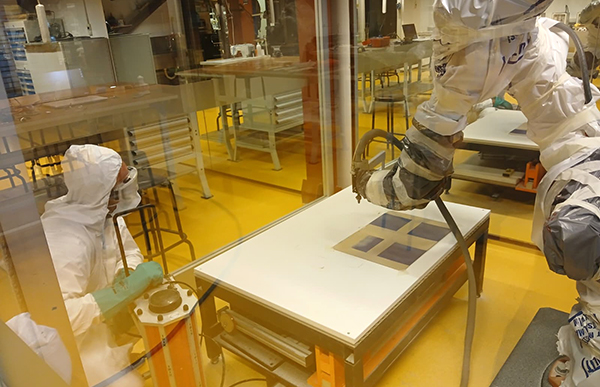
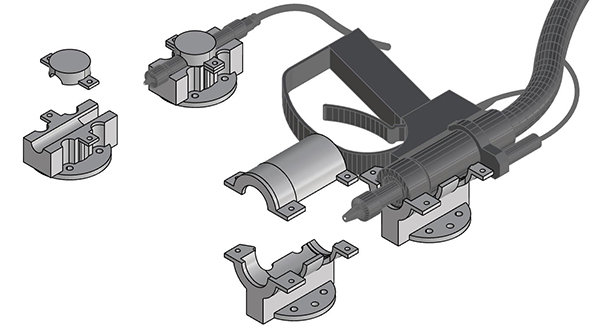
To mount the IBIX pressurized gun onto the Kuka KR-20 model robot, I 3D-printed a custom adapter using PETG. Although it required a bit of force, the gun fits tightly into the adapter; it is fixed to the robot with four bolts and clamped down using three bolts and nuts. The smaller gun we use is a standard nano gun, and its adapter was produced using the same method. You can find the 3D models of the adapters below. I plan to refine the adapter design further in the future. As you can see in the photo, since the material being used is abrasive, we wrapped both the robot and ourselves thoroughly for protection. Working with robots, especially when paired with unconventional end-effectors makes their full potential even more evident. The R&D application of this technology in the field of architectural restoration seems to be a very new domain. We plan to push this research further. It is always a pleasure to help researchers from different disciplines.
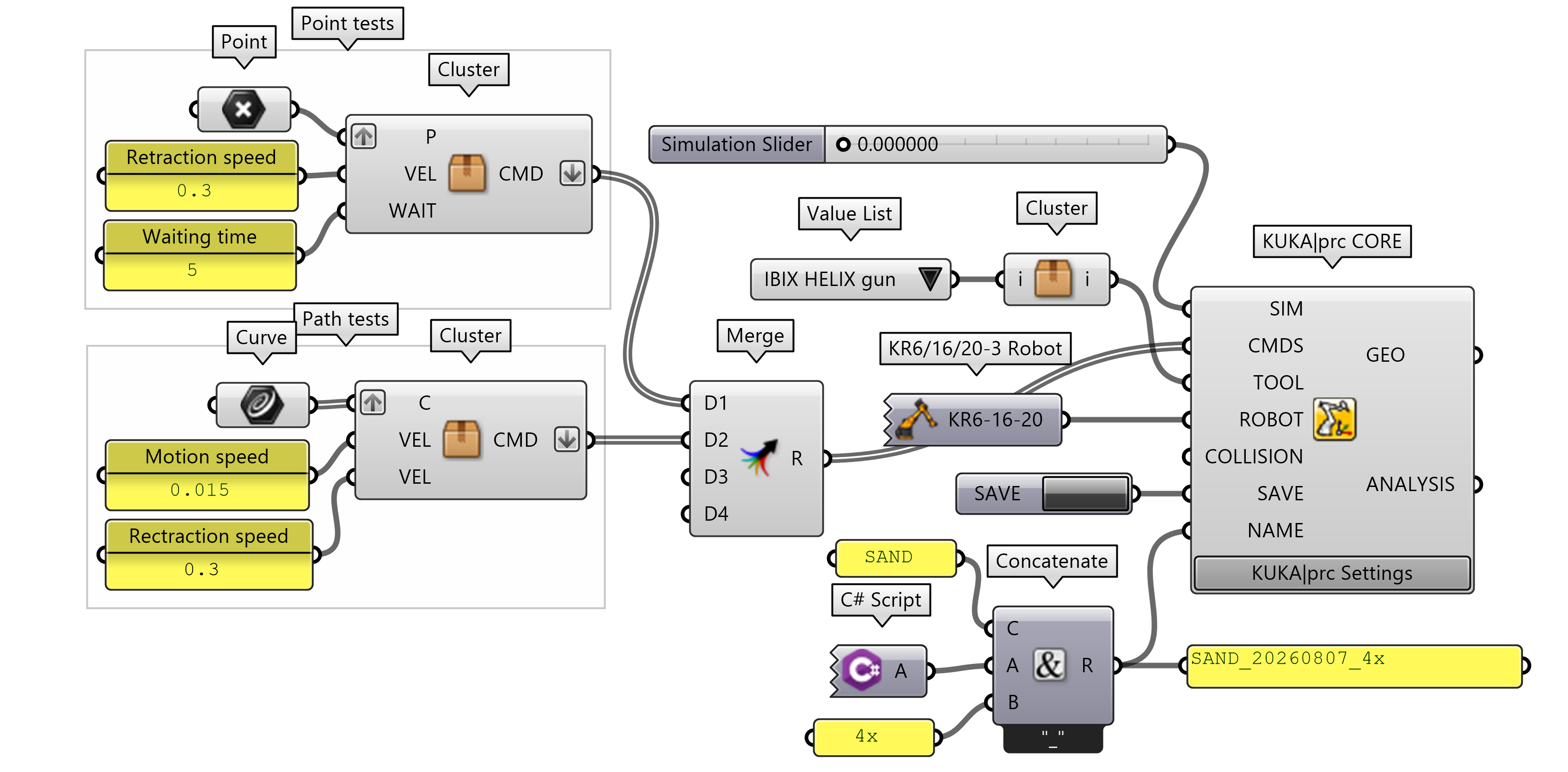
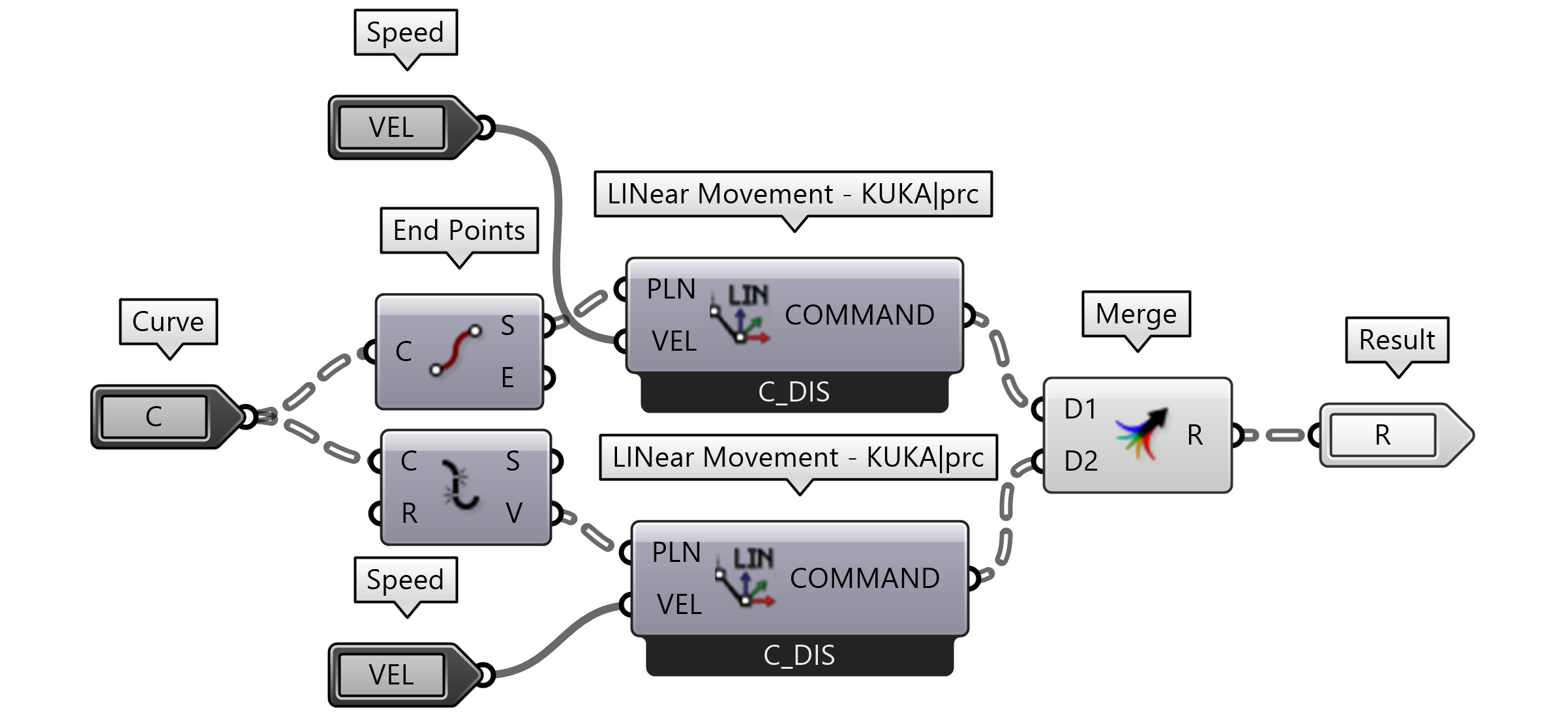
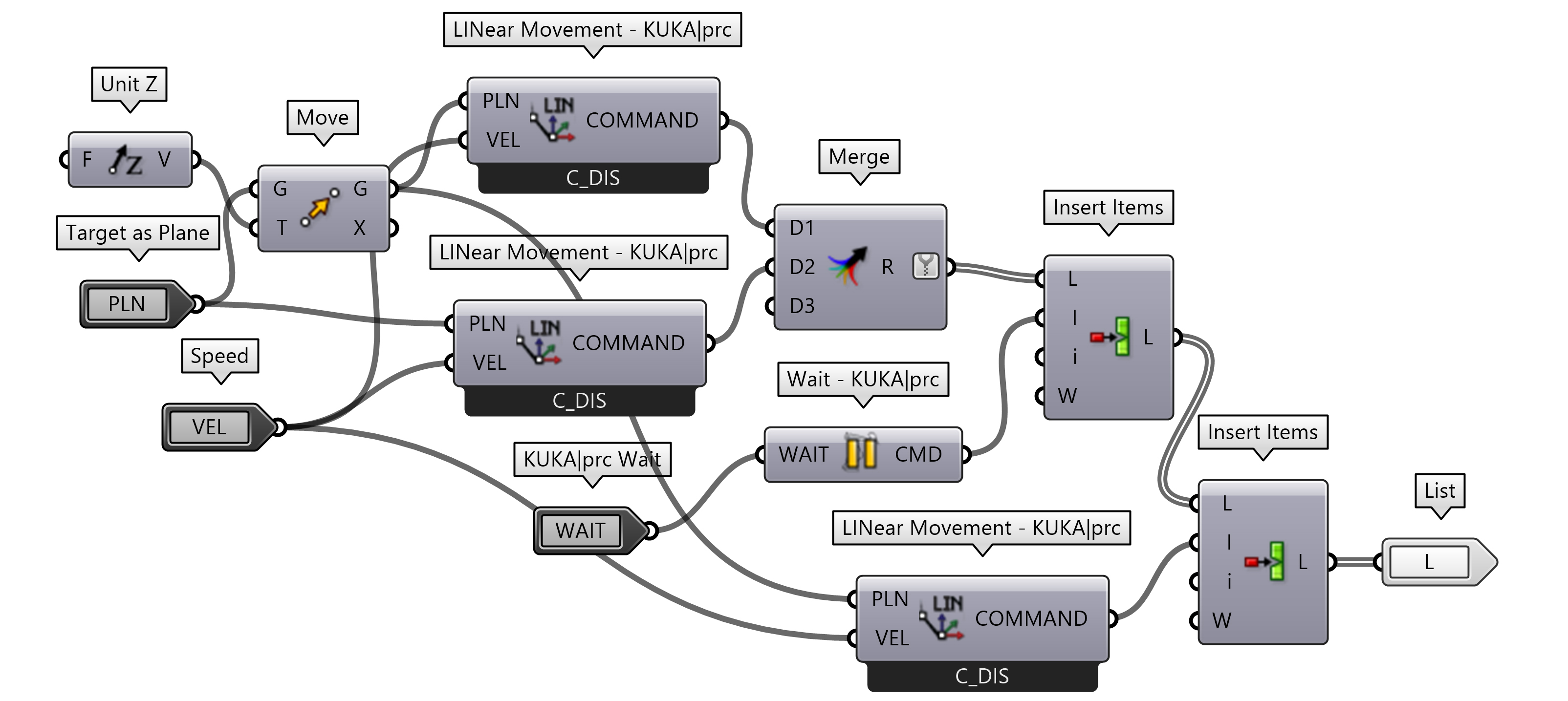
I attached the Grasshopper definition that includes a set of custom clusters built using Kuka-PRC. I kept the code as simple and flexible as possible. If you want to try, you will need to install the Kuka-PRC add-on for Grasshopper.
Cite this post
Related Posts
Cycloidal Toolpath Planning for Robotic Sandblasting
August 5, 2026
Today, Efecan and I attached the sandblasting device to the robotic arm. The device sprays a special sandblasting material onto surfaces using air pressure. Thus, it is used for cleaning moldy and dirty surfaces in buildings under restoration. Under normal conditions, the sandblasting gun is controlled manually. If the cleaning is too light, it remains insufficient, but it shouldn’t be so intense as to erode the stone either. Normally, the operator performs this control visually. Here, the potential uses for…
RHWC of Convex Polyhedra
September 12, 2026
Hot-wire cutting (HWC) is a cost-effective subtractive fabrication technique used across many industries. The basic idea of HWC is to cut a block of material by melting it with a resistance-heated wire under tension. It is effective for materials with low melting temperatures, such as expanded polystyrene (EPS) and extruded polystyrene (XPS). Generally, HWC is associated with mold production in the architecture, engineering, and construction (AEC) industries. Robotic hot-wire cutting (RHWC) is a subtopic of HWC. In a standard RHWC…
Robotic Path Planning for Concrete Printing
August 19, 2026
Three-dimensional concrete printing (3DCP) is an innovative digital fabrication and automation technique based on additive manufacturing that enables the creation of complex and customized structures in the architecture and construction industry. Its most notable advantages include eliminating formwork costs and labor (Buswell et al., 2020; Lyu et al., 2021; Kaliyavaradhan et al., 2022) and facilitating the fabrication of structural elements with complex curvatures, particularly in printing systems utilizing industrial robotic arms (Alabbasi et al., 2023; De Soto et al., 2018)….
Robotic Hotwire Cutting Polyhedra
December 20, 2018
Today, we have studied creating complex robot programs manually again. Platonic solids were the subject of this study. Students tried to create a sequence of robot moves that produces a Platonic solid out of a 17cm EPS cube. We simply call this the robotic hotwire cutting polyhedra exercise. However, the size of our hotwire cutter became one of the problems because of its risk of crashing. We crashed several times but managed to cut some polyhedra at the end of…
Robotic Milling for a Reciprocal Structure
August 7, 2026
The 2025 IAAC Istanbul Summer school was conducted at İstanbul Bilgi University last year. Yesterday, a video was published about it on YouTube. It was prepared by Arkitekt. Here is the video: This reminded me the workshop and I decided to write about my side of the study. The reciprocal structure was designed by Gamze Gündüz, where she finalized it using a Grasshopper code. Then, the timber elements were labeled and sized with the help of Grasshopper again and integrated…