
Robotic Hotwire Cutting Polyhedra
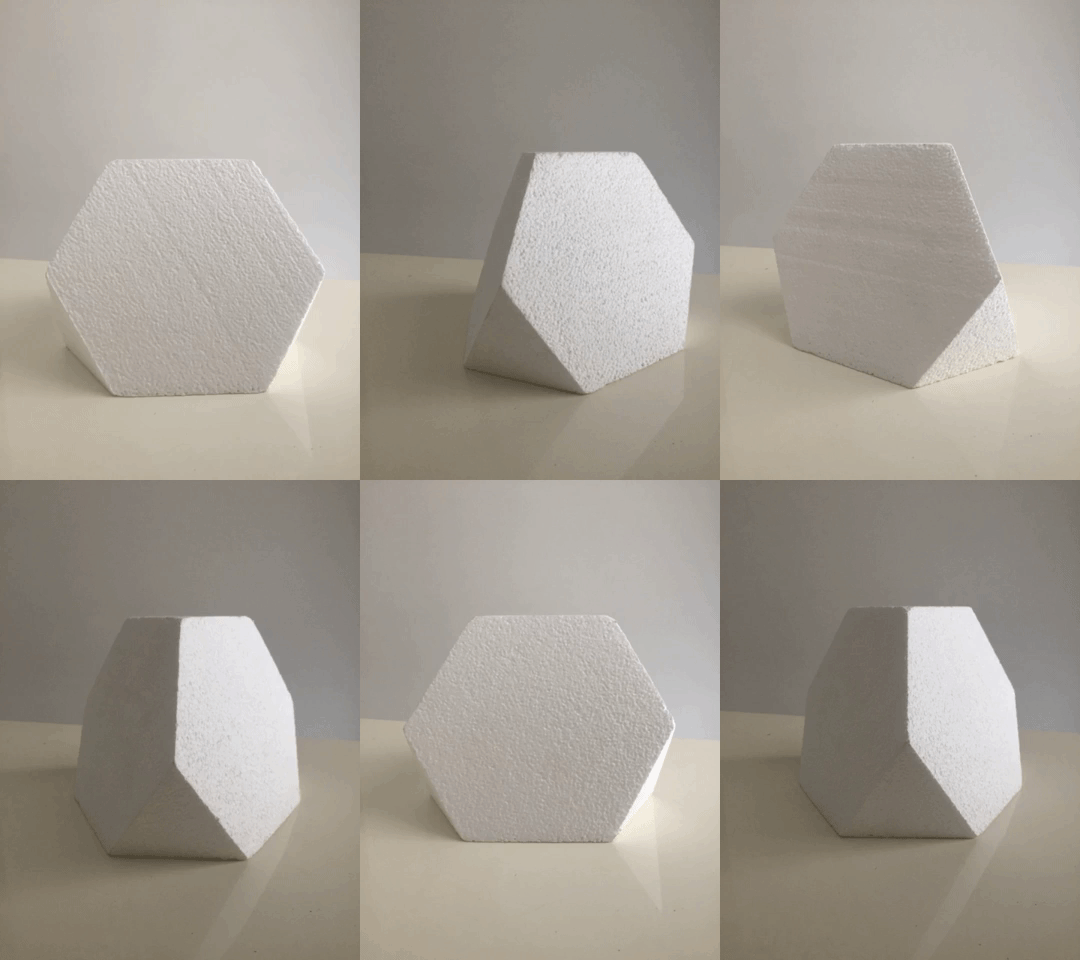
Today, we have studied creating complex robot programs manually again. Platonic solids were the subject of this study. Students tried to create a sequence of robot moves that produces a Platonic solid out of a 17cm EPS cube. We simply call this the robotic hotwire cutting polyhedra exercise. However, the size of our hotwire cutter became one of the problems because of its risk of crashing. We crashed several times but managed to cut some polyhedra at the end of the day. I think this exercise was helpful in repeating the basic robot programming in Grasshopper with a “solid” purpose. The robotic hotwire cutting polyhedra exercise had many beneficial results. For example, it helped me to integrate architectural geometry and Rhino courses with robotic fabrication. I believe that the students better understood those topics now (fingers crossed!). It had also a nice fun factor. Students saw the difficulties and potentials of this new production technology.
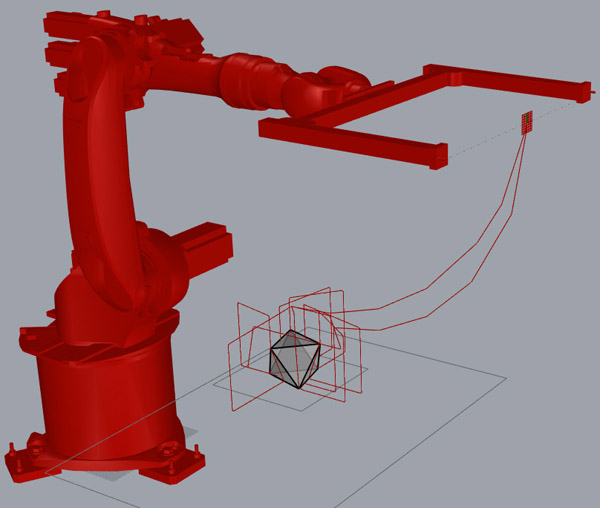
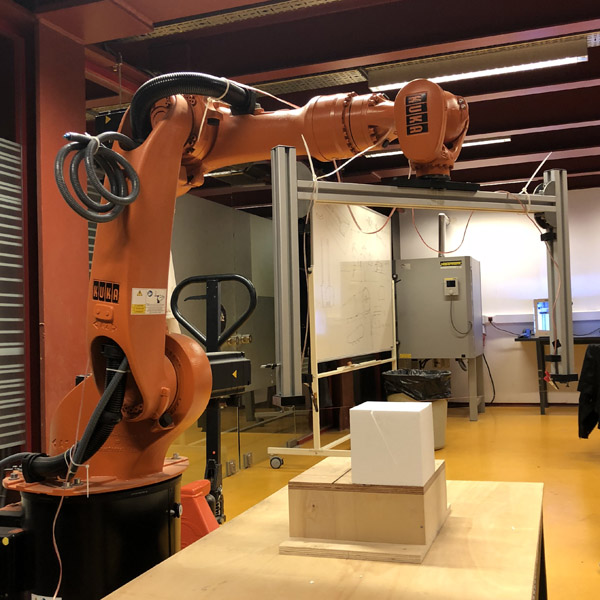
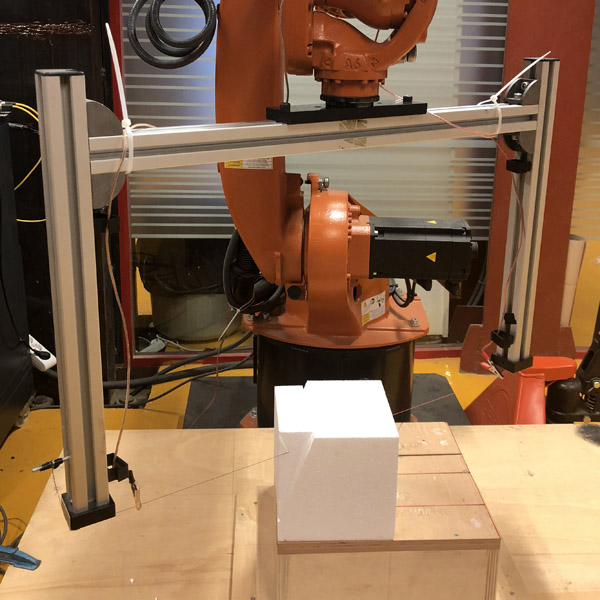
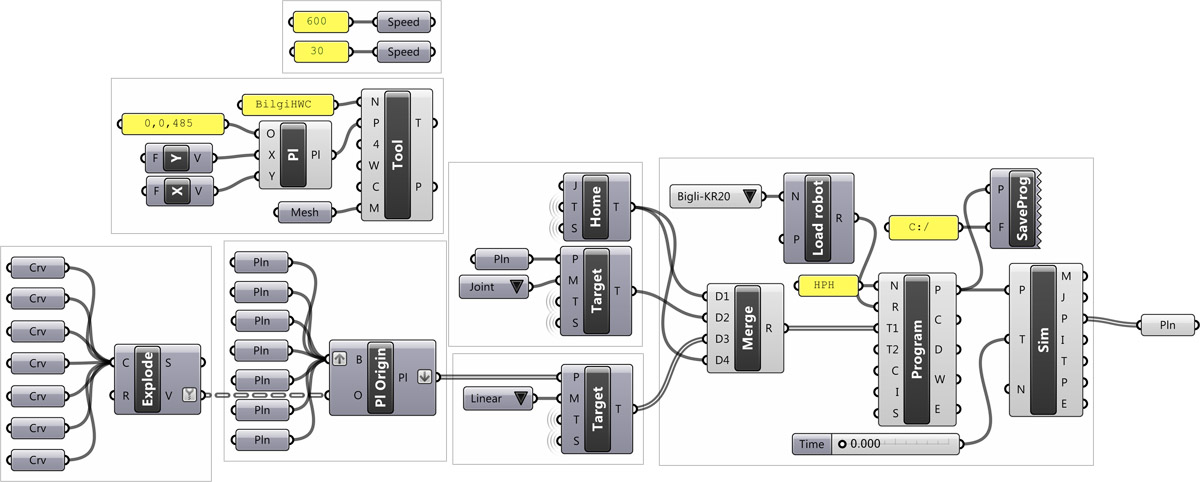
In the above Grasshopper definition, we used the “Robots” add-on to program the motions of our Kuka KR-20. The polyhedron we intended to produce is an Octahedron with 8 identical triangular sides. You can see the available hotwire cutter is a bit larger than necessary. After the calibration of the tool and the position of the EPS block, we tried to create smooth motions to cut the sides. As you can see in the video above, the tool didn’t have to tilt to get to the correct positions. However, there are many external factors affecting the result of hotwire cutting, such as the power, the thickness of the wire, the speed of the robotic arm, and the density of the EPS. So, even the air temperature and humidity are affecting the outcome.
Cite this post
Related Posts
RHWC of Convex Polyhedra
September 12, 2026
Hot-wire cutting (HWC) is a cost-effective subtractive fabrication technique used across many industries. The basic idea of HWC is to cut a block of material by melting it with a resistance-heated wire under tension. It is effective for materials with low melting temperatures, such as expanded polystyrene (EPS) and extruded polystyrene (XPS). Generally, HWC is associated with mold production in the architecture, engineering, and construction (AEC) industries. Robotic hot-wire cutting (RHWC) is a subtopic of HWC. In a standard RHWC…
Robotic Earthcrafts III
August 16, 2026
Last month, we completed the third edition of the Robotic Earthcrafts workshop series, which I co-organized with Fulya Akipek, following the first in 2018 and the second in 2023. An earthen mixture composed of clayey soil, lime, fibers, and cement was rammed into molds produced via robotic hot-wire cutting. The geometry of the fabricated wall is based on a hexagonal grid and features a Truchet-like variation. Constructed using four different block types, the wall was completed within 5 days and…
This is the new paper with Meryem Nurefşan Yabanigül, published at Automation in Construction. It is also Meryem’s master’s thesis. This study is about testing the production of curved surfaces with non-linear robotic hotwire cutting and shape memory alloys. Below is the abstract of it: Robotic arms are being used by construction firms and schools of architecture around the world in design/build research and material studies. Some of these studies utilize robotic hot wire cutting (RHC) as an efficient production…
Robotic Fabrication Student Project: Micro-Wave
March 21, 2019
This is a robotic fabrication student project developed in the Digital Fabrication elective course in 2018. This group of students experimented with the hot wire cutting of EPS foam. Their aim was to create curved surfaces by using a straight wire. Design research started with a literature study of precedents. Then, after several cutting experiments with the available hotwire cutter tool, they gained better control over the technology. However, they found the available tool too large and inefficient. They decided…
PLURA Pavilion
September 22, 2026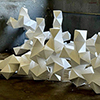
Last year, during the first stage of the Architectural Design Graduate project, our student team made a quick preparation and participated in the experimental works exhibition at the International Antalya Architecture Biennale (IABA 2025). This was a challenging yet educational process for our team. Using EPS foam and the robotic hotwire cutter (RHWC), a production run of 125 units, consisting of two modules (95 octahedra and 30 icosahedral units), was carried out. The icosahedral units also underwent an additional cutting…