
Production of Gyroid-like Modular Systems with Non-linear Robotic Hotwire Cutting
This is the new paper with Meryem Nurefşan Yabanigül, published at Automation in Construction. It is also Meryem’s master’s thesis. This study is about testing the production of curved surfaces with non-linear robotic hotwire cutting and shape memory alloys. Below is the abstract of it:
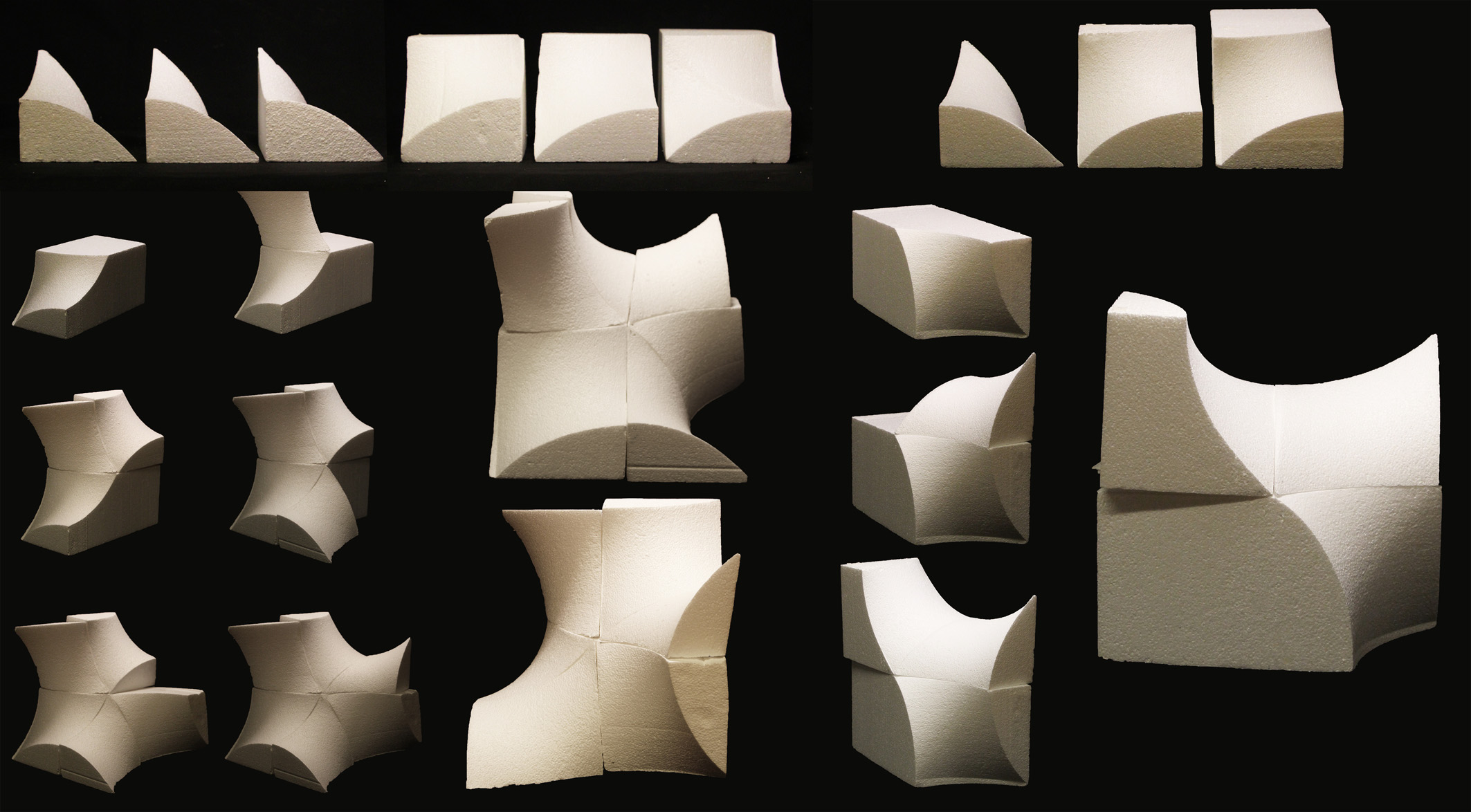
Robotic arms are being used by construction firms and schools of architecture around the world in design/build research and material studies. Some of these studies utilize robotic hot wire cutting (RHC) as an efficient production technique. However, this technique has limitations on the production of free-form objects. This paper addresses this limitation by proposing an alternative non-linear robotic hotwire cutting (NL-RHC) workflow. The original contribution of this workflow is the usage of a shape memory alloy (SMA) as a cutting wire, that enables the production of curved forms. We tested the workflow on the production of a Gyroid-like modular system to reveal its advantages and limits. We made several attempts to find the most accurate approximation of the Gyroid. Therefore, the results suggested that NL-RHC would be an efficient solution for the production of curved surfaces.
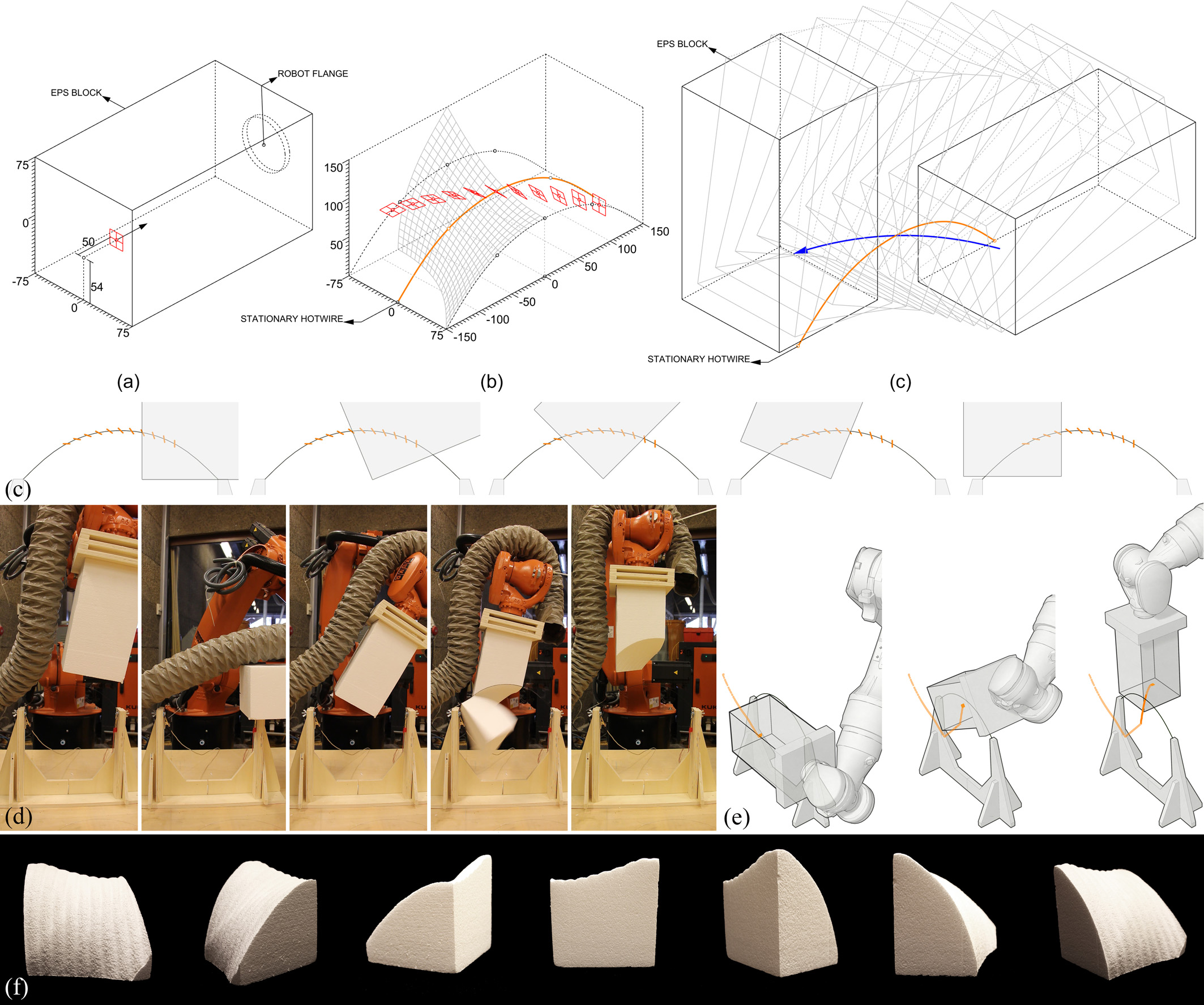
As a result of new studies, robot technologies can contribute to the increasing interest in complex mathematical objects in architecture. Currently, it is not possible to state that the method proposed in this research would present an ultimate solution, and always yield more effective and accurate results compared to its alternatives. However, we can foresee that non-linear robotic hotwire cutting (NLRHC), and the use of shape memory alloys (SMA’s) in RHC in general, would possibly provide effective alternative solutions if the geometric goal is suitable for it. Therefore, for the production of translational surfaces, as in the case of the Gyroid fundamental patch, NL-RHC can offer a significant advantage.
Cite this post
Related Posts
RHWC of Convex Polyhedra
September 12, 2026
Hot-wire cutting (HWC) is a cost-effective subtractive fabrication technique used across many industries. The basic idea of HWC is to cut a block of material by melting it with a resistance-heated wire under tension. It is effective for materials with low melting temperatures, such as expanded polystyrene (EPS) and extruded polystyrene (XPS). Generally, HWC is associated with mold production in the architecture, engineering, and construction (AEC) industries. Robotic hot-wire cutting (RHWC) is a subtopic of HWC. In a standard RHWC…
Robotic Earthcrafts III
August 16, 2026
Last month, we completed the third edition of the Robotic Earthcrafts workshop series, which I co-organized with Fulya Akipek, following the first in 2018 and the second in 2023. An earthen mixture composed of clayey soil, lime, fibers, and cement was rammed into molds produced via robotic hot-wire cutting. The geometry of the fabricated wall is based on a hexagonal grid and features a Truchet-like variation. Constructed using four different block types, the wall was completed within 5 days and…
Robotic Hotwire Cutting Polyhedra
December 20, 2018
Today, we have studied creating complex robot programs manually again. Platonic solids were the subject of this study. Students tried to create a sequence of robot moves that produces a Platonic solid out of a 17cm EPS cube. We simply call this the robotic hotwire cutting polyhedra exercise. However, the size of our hotwire cutter became one of the problems because of its risk of crashing. We crashed several times but managed to cut some polyhedra at the end of…
Robotic Fabrication in Basic Design Studio
March 13, 2023
This paper investigates the integration of robotic fabrication into first-year undergraduate design education, particularly in a basic design studio. Traditionally, robotic technologies are not introduced at this level due to perceived skill gaps among novice students. The study demonstrates the potential and strategies for incorporating robotic arms into early design education through an experiment conducted at Istanbul Bilgi University. The experiment involved 32 students from various design disciplines, divided into control groups using hand-held tools and test groups using a…
PLURA Pavilion
September 22, 2026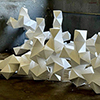
Last year, during the first stage of the Architectural Design Graduate project, our student team made a quick preparation and participated in the experimental works exhibition at the International Antalya Architecture Biennale (IABA 2025). This was a challenging yet educational process for our team. Using EPS foam and the robotic hotwire cutter (RHWC), a production run of 125 units, consisting of two modules (95 octahedra and 30 icosahedral units), was carried out. The icosahedral units also underwent an additional cutting…