
PLURA Pavilion
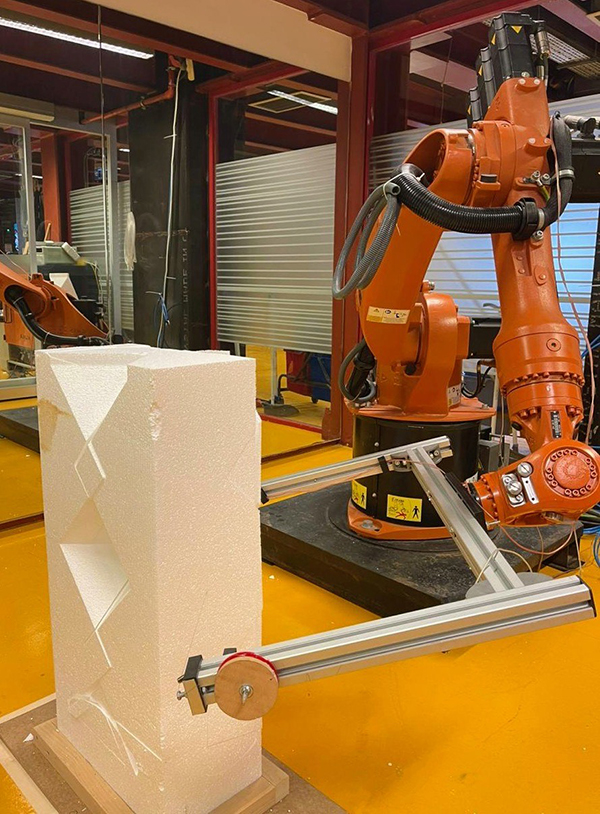
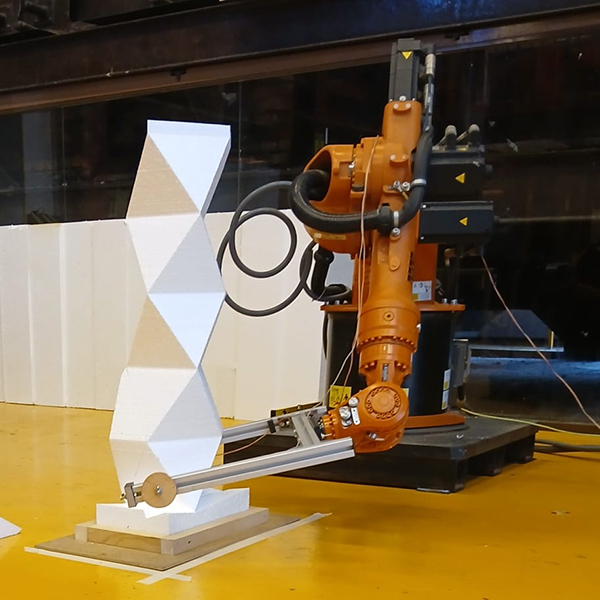
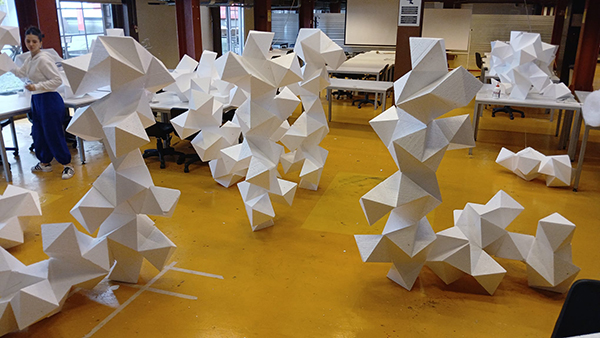
Last year, during the first stage of the Architectural Design Graduate project, our student team made a quick preparation and participated in the experimental works exhibition at the International Antalya Architecture Biennale (IABA 2025). This was a challenging yet educational process for our team. Using EPS foam and the robotic hotwire cutter (RHWC), a production run of 125 units, consisting of two modules (95 octahedra and 30 icosahedral units), was carried out. The icosahedral units also underwent an additional cutting operation to obtain Jessen’s Icosahedron variation.
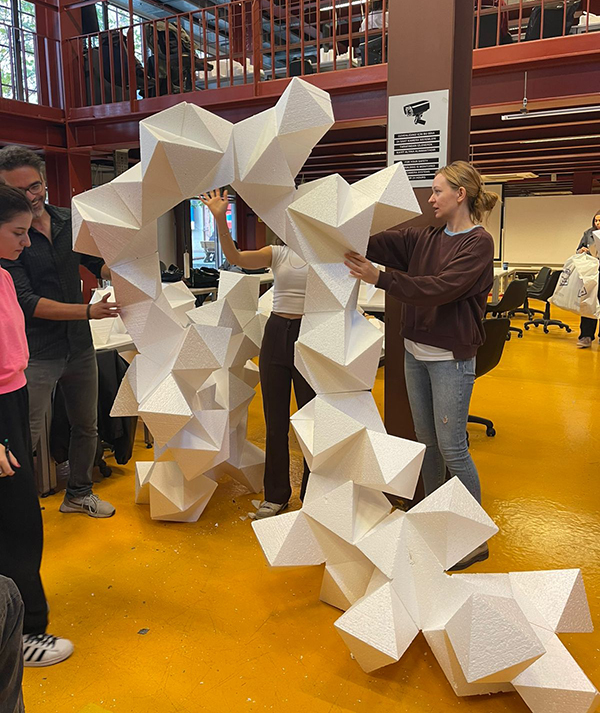
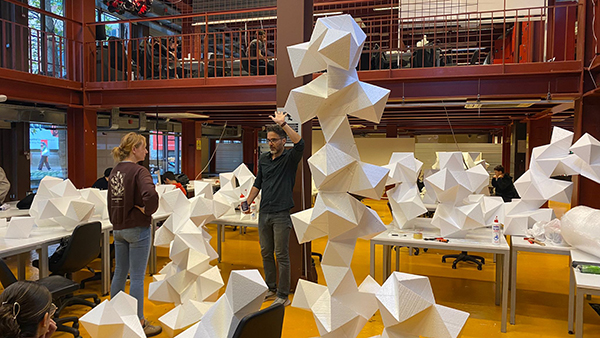
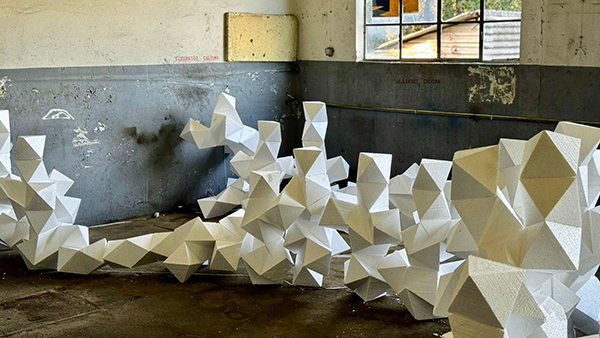
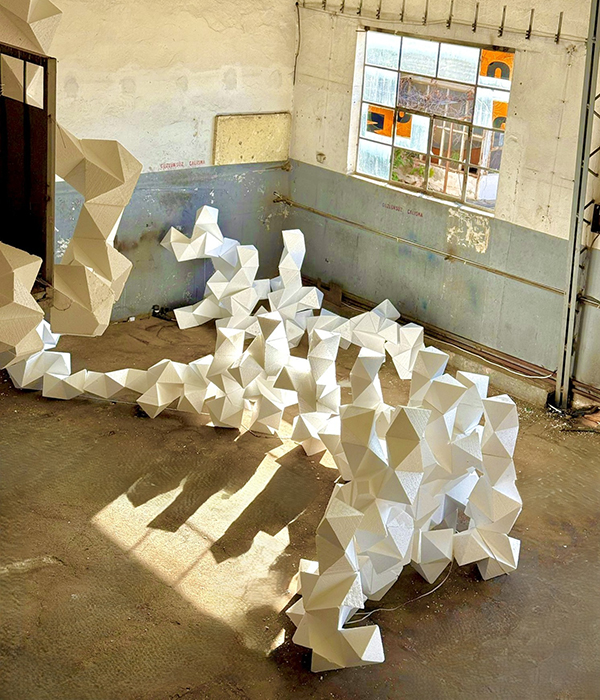
The cut blocks were then assembled by gluing and constructed as an experimental stacking/structural system. Unfortunately, our first attempt failed, and joining the EPS with white glue caused many problems. What we later learned was that silicone adhesive is much sturdier than white glue. However, we unfortunately had to learn this the hard way in this project. You can see the second design we created in the photographs. Beneath this apparent disorder lies a consistent geometric logic: a repeating joinery that is based on the faces of the units. The icosahedra functions as the central connector within this network of polyhedra, positioned between the octahedral forms. It acts as both a mediator and a directional generator. After this project, I decided to take a closer look at the precision issues and the challenges of robot programming in RHWC that I encountered. I had initiated the research you see here, back then.
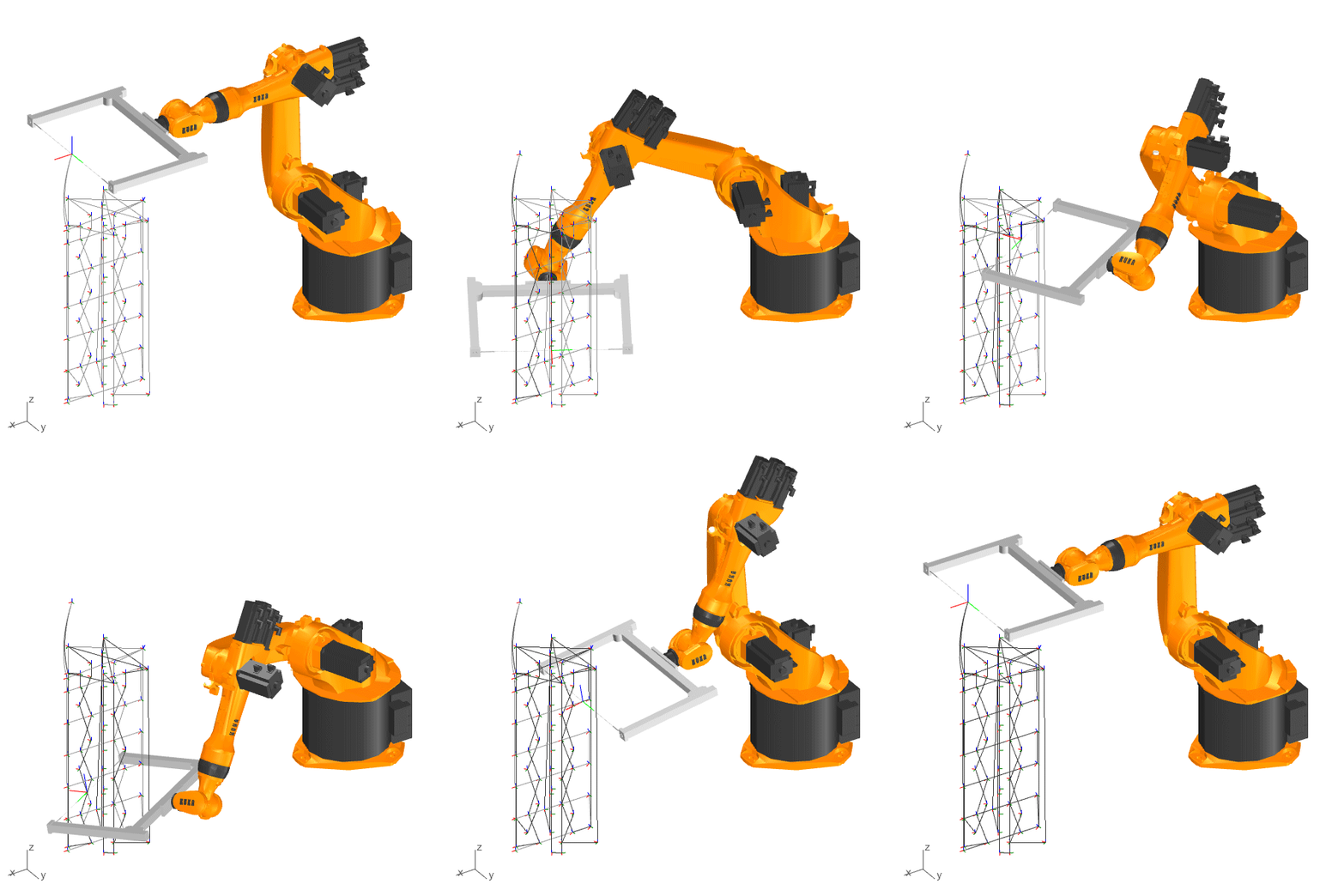
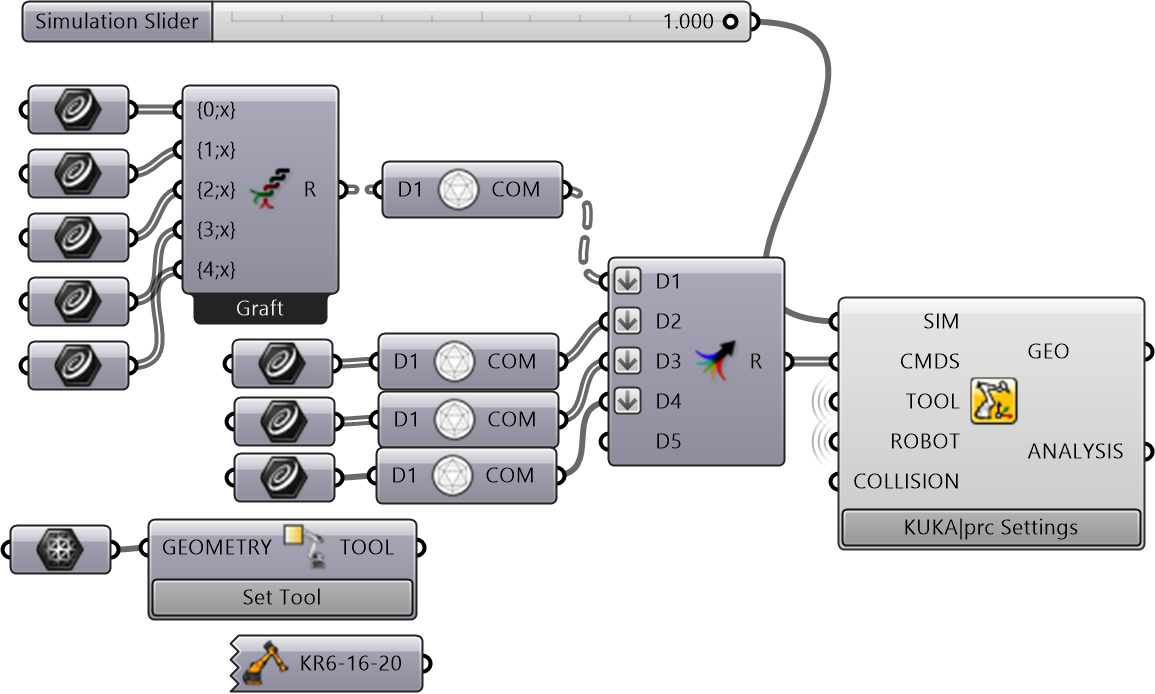
Below is the Grasshopper code that cuts the set of octahedra from standard EPS stock. You need the Kuka-PRC add-on to run it.
TEAM
Aleksanra Panchenko
Almir Can Sinanoğlu
Carlos Jose Azevedo Dıas
Doğa Edremit
Efe Erman
Juna Altruck
Namra Najam
Pınar Kahya
Razan AlGarah
Ruhma Fatima Quadri
Tuğrul Yazar
Cite this post
Related Posts
Robotic Earthcrafts Student Project: ZOM
November 6, 2018
This project is developed in the summer workshop titled Robotic Earthcrafts conducted at İstanbul Bilgi University Architectural Design graduate program. Students call this project “ZOM”. Students are Murat Sökün, Zeynep Çakmak, and Özlem Güven. We organized the workshop together with Fulya Akipek and Hülya Oral. You can find more details about the workshop here. In this project, a simple robot code created the EPS molds of the rammed-earth module. Below are some of the photos of the design and construction…
Hydrophilic Structures
June 6, 2019
Hydrophilic Structures is the 2018-2019 Spring Semester Graduate Studio of the Architectural Design Program. The studio aims to increase the public interaction with water, while being sensitive to the ecological and historical context of the shores of İstanbul. Students will be encouraged to design sustainable, floating modules and structures, which can be integrated into semi-open architectural programmes. A full-scale prototype will be fabricated and tested at the Santral Campus coast to Haliç. The main conceptual framework of the studio consists…
RHWC of Convex Polyhedra
September 12, 2026
Hot-wire cutting (HWC) is a cost-effective subtractive fabrication technique used across many industries. The basic idea of HWC is to cut a block of material by melting it with a resistance-heated wire under tension. It is effective for materials with low melting temperatures, such as expanded polystyrene (EPS) and extruded polystyrene (XPS). Generally, HWC is associated with mold production in the architecture, engineering, and construction (AEC) industries. Robotic hot-wire cutting (RHWC) is a subtopic of HWC. In a standard RHWC…
Robotic Hotwire Cutting Polyhedra
December 20, 2018
Today, we have studied creating complex robot programs manually again. Platonic solids were the subject of this study. Students tried to create a sequence of robot moves that produces a Platonic solid out of a 17cm EPS cube. We simply call this the robotic hotwire cutting polyhedra exercise. However, the size of our hotwire cutter became one of the problems because of its risk of crashing. We crashed several times but managed to cut some polyhedra at the end of…
Robotic Earthcrafts III
August 16, 2026
Last month, we completed the third edition of the Robotic Earthcrafts workshop series, which I co-organized with Fulya Akipek, following the first in 2018 and the second in 2023. An earthen mixture composed of clayey soil, lime, fibers, and cement was rammed into molds produced via robotic hot-wire cutting. The geometry of the fabricated wall is based on a hexagonal grid and features a Truchet-like variation. Constructed using four different block types, the wall was completed within 5 days and…