designcoding
About Table of Contents Keywords
Support designcoding!

#rhinoceros

104 posts

Pattern Deformations Student Works

November 18, 2013
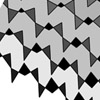
Below is some student works from this year’s Architectural Geometry / Pattern Deformations assignment. Students developed their own pattern deformation sequences mostly on regular tessellations. Based on the classical Parquet Deformation exercise, we tried to implement a rule-based approach in order to explore emergent patterns. The exercise seems to reveal endless improvisation potential. The exercise requires students to design a pattern deformation on a 28cm by 28cm area. It should include at least 100 cells. First, we explained several classical…
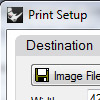
Rhino Print Dialog

November 2, 2013

Here is a simple description of Rhinoceros’ Printing dialog. It is the same with version 4.0, nothing changed in layout and printing dialogs in 5.0. Significantly our Architectural Geometry classes should benefit from this explanation. Most of these options should be tested with a plotter (e.g. pencil widths) before final print-outs. Also, you may try creating a PDF file of your homework from this dialog.

Circle from Three Points

November 1, 2013

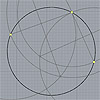
I learned this method from the open math resources website. I couldn’t help myself repeat it in Rhinoceros. It was quite fun to solve circle tangency problems in 2D, this is one of them: drawing the circle that passes three given points, not using ready-made commands but only geometric tools of the circle (compass) and ruler (line). Here is the sequence of it: First of all, we need to know that the circle we are looking for is centered somewhere…

Manage Rhino Viewport in Grasshopper

September 13, 2013

This simple vb.net component controls the Rhino viewport background without a need to enter its options panel. It is used to change the viewport background color and grid visibility quickly within Grasshopper. Here is the definition file: [GHX: 0.9.0056]. In order to be able to return to default settings, I put a “default” toggle. Just click on it to “false” state, then the Rhino background color can be changed by the B input. This component also handles the grid. However I…

Modeling the Weaire-Phelan Structure

May 15, 2013

Becoming popular after the Beijing 2008 Olympics National Aquatics Centre‘s facade (which is believed to be a Voronoi subdivision, as an epic mistake), the Weaire Phelan structure is a solution of equal volumes with minimal surface area. This nice website briefly explains the phenomenon. There is also an implementation on Grasshopper by Jon Mirtschin. Here, I will be modeling the Tetrakaidecahedron of the Weaire-Phelan structure. First, we define the overall size by drawing a 20×10 rhombus. Copy the rhombus by…

Muqarnas Student Works

April 26, 2013

In Design Computing class, we have discussed how the parametric wall study (here) can be implemented to describe regular curved surfaces such as domes. This led us to well-known design compositions named Muqarnas. Previously we have studied how a parametric muqarnas definition could be in Grasshopper (here). After a couple of weeks of study, students started to capture the idea of generating seamless surfaces out of a few components. Of course “Designing your own muqarnas” is a tough question. Here…

Macroforming WFC Shanghai

April 19, 2013

WFC Shangai is a design exercise in our first-year Design Computing class introduced by Onur Yüce Gün. This exercise emphasizes both analytical thinking and associative geometry and aims to utilize boolean operations as solid and void references in creating forms. We asked students to develop variations of this building. In order to discuss this formation in class, I studied a simple algorithm to test variations in real-time. The grasshopper definition can be downloaded from here [GHX: 0.9.0014]—the initial shape, developed…

Parametric Wall Student Works

April 19, 2013

Here are some student works about the parametric wall exercise I briefly explained here along with a Grasshopper implementation of the core wall definition. Students are expected to design their own brick and compose it in a way that generates a seamless wall surface. Ömer Kirazoğlu Osman Can Sözüneri Seda Öznal (slightly out of requirement but very interesting) Adnan Faysal Altunbozar Özgüç Bertuğ Çapunaman

Parametric Wall Exercise

April 19, 2013

This is a first-year design computing problem we studied last month. It is a simple parametric wall exercise introduced by Mete Tüneri. Creating a simple definition of a building brick to be placed on a straight path, and then manipulating the path to reform different variations of the brick. This aims to introduce a fundamental concept of associativity in contemporary architectural geometry and design computing. Students are then encouraged to develop their own parametric brick to be tested in different…

Porous Solids

April 16, 2013

This is a solid-void (or boolean) exercise for first-year students. It is initially introduced by Onur Yüce Gün as an in-class exercise but later became a design problem also. Before getting into the parametric wall and eventually muqarnas exercises, this small but effective assignment helps students understand some of the fundamental concepts such as associativity, solid/void relationships, and component-based design compositions in three dimensions. Here is the initial object we used to introduce in the design computing class: As you…

« 1 2 3 4 5 6 7 8 9 10 11 »
  • Chapters

    • Algorithms
    • Discourses
    • Fabrications
    • Studios
  • Explore

    • #facade
    • #puzzle
    • #responsive
    • #wave
    • #curvature
    • #anemone
    • #folding
    • #random
    • #semi-regular
    • #circle
    • #fractal
    • #phenomenology
    • #tree
    • #calculus
    • #cuboctahedron
    • #firefly
    • #laser-cutting
    • #gyroid
    • #bezier-curve
    • #dome
    • All Keywords
    • Table of Contents
    • Monthly Archive
  • Search

  • Patreon

    Support designcoding!

    Enjoying designcoding? Support its future with a small donation on Patreon. Thank you!


    copyright 2026 designcoding.net | about | privacy policy | end user license agreement