
Parametric Modeling 2013 @ Istanbul Bilgi University
ARCH 362 COURSE BRIEF (2013)
Design computing reflects a focal shift from the singular construction of objects into the relational nature of revealing diversity. Algorithms are mainstream interfaces for the explication of geometric relationships, extending techniques required for such revealing. This course introduces some ways of managing diversity while reasoning about sequential and concurrent; absolute and relational; ordered and chaotic. Students are expected to be familiar with fundamentals of Rhino3D, and willing to experience more of it. Coding exercises, readings, discussions, and CAD+CAM of design prototypes are parts of this course. By successful completion, students will develop literacy on computational geometry via algorithms and reconsider their own design continua via physical inputs. The course plan is composed of three phases that will be conducted concurrently. One of them is the introduction to the patterns of dataflow computing. In this phase, students will get familiar with computational geometry by creating and manipulating animate patterns. Another phase will extend the above study by adding input and output media other than a screen and mouse. This phase will cover techniques and equipment required to get physical inputs from the environment and to design responsive systems. The third phase of the course will be conducted as a workshop event, designing and fabricating responsive material systems on a predefined theme.
ARCH 362 DERS ÖZETİ (2013)
Tasarımda hesaplama, tekil nesnelere odaklanan dünyadan çeşitliliğin varedildiği ilişkisel bir dünyaya geçişi ifade eder. Algoritmalar, geometrik ilişkileri açık hale getirerek bu varoluşa dair teknikleri ilerleten temel arayüzlerdir. Bu ders, çeşitliliğin yönetilmesinin bazı yollarını tanıtırken, sıralı ve eşzamanlı; mutlak ve ilişkisel; düzenli ve kaotik hakkında muhakeme yapmayı hedefler. Öğrencilerin Rhino3D konusunda temel bilgilere sahip olması ve daha fazlasını öğrenmeyi istemesi beklenmektedir. Kodlama egzersizleri, okumalar, tartışmalar ve CAD+CAM tasarım prototipleri bu dersin parçalarıdır. Dersi başarıyla bitiren öğrenciler algoritmalar aracılığıyla hesaplamalı geometriye dair okur-yazarlık geliştirirken, fiziksel girdiler aracılığıyla tasarım süreçlerini yeniden değerlendireceklerdir. Ders planı paralel olarak yürütülen üç bölümden oluşmaktadır. Bunlardan birisi veriakış örüntülerinin tanıtıldığı bölümdür. Burada öğrenciler dinamik örüntüler aracılığıyla hesaplamalı geometryile tanışacaklardır. Bir başka bölüm bu çalışmayı ekran ve farenin ötesindeki giriş ve çıkış ortamlarına doğru genişletilecektir. Burada çevreden tasarım girdilerinin alınması ve bu girdilere tepki veren sistemlerin tasarlanmasına yönelinecektir. Üçüncü ve son bölüm ise bir çalıştay etkinliği olarak yürütülecek, öntanımlı bir konu üzerine tasarım ve üretim çalışmaları yapılacaktır.
Cite this post
Related Posts
Data Structures in Grasshopper
June 8, 2023
Data structures and data matching principles are important to be able to design with Grasshopper. In this tutorial, I show data matching procedures with arithmetic operations. Then I repeat them in the production of geometric objects. I think it should be easier to use this programming language once the students understand the basic principles. Therefore it would be easier to design with it. Sometimes the design process of these diagrams proceeds from left to right (by induction) but sometimes it…
Rhino+Gh: Grasshopper for Beginners (7)
February 2, 2023
We continue with the Grasshopper for Beginners series by explaining Rhino+Gh workflow principles. What does GH add to Rhino‘s standard drawing and modeling functions? To put the question differently, what does GH do that conventional modeling programs, such as Rhino, can’t? What is the difference and relationship between Rhino+Gh? Let’s take an example to answer these questions. Our example is about parametrically describing a surface model and deriving its alternatives. First, we will try to create a surface using only…
Hello World! Grasshopper for Beginners (6)
January 17, 2023Let’s continue the Grasshopper for Beginners series. We start with the traditional “Hello World!” displayed on the Rhino screen: Placing the Components In most CAD programs, the text creation function, which is the equivalent of the Text command, is performed by a component called Text Tag (Tag) in GH. The Text Tag (Tag) component is in the Dimension panel under the Display tab. If you’re not comfortable with tabs and panels yet, you can revisit this section from the beginning….
Interface Continued: Grasshopper for Beginners (5)
December 21, 2022In this 5th episode of Grasshopper for Beginners, the interface continued by exploring the interface of Grasshopper. With the help of these two methods (tabs and search box), we can find the components. We can select them with the left click and place them on the canvas with the left click again. Now take random components and try to place them on the canvas with both methods. Therefore, components with different functions are the building blocks of GH definitions. The…
Design Mathematics Student Work: Pi Chapel
March 27, 2019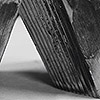
Today, I am introducing a student work from the Design Mathematics course. Foad Sarsangi is a very talented designer, who attended my elective course last semester. The final project he studied was inspired by Peter Zumthor’s Bruder Klaus chapel. Foad wanted to experience its special production process. However, as the course was about “mathematics”, he also studied, solved, and generated an interior volume to be subtracted from a solid mass. Here are the project documents: This is the production workflow….