
Fibonacci Sphere
This website explains the problem and several solutions. I managed to implement the formulas to convert a 2D square grid into spherical coordinates. The Fibonacci Sphere is one of the solutions to the equal distribution of points on a sphere. It is not the best solution to this problem. But it is regarded as a quick and efficient one. Suitable for me.
I developed this Grasshopper code by studying the above website and some other sources. The code starts with the definition of a series of numbers. The Series component gives me numbers starting from 0 to x by an increment of 1. Changing the input N affects the overall shape. For example, if you enter 0.5 to N, you will get a dome instead of a sphere. Then, two Functions are running to generate two numbers (phi and theta). In the above code, the formulas to generate these numbers are given in Panels. One of them is also using the Golden Ratio, which is a component in Grasshopper. After the generation of phi and thetas, I put them into the following formula to get the x, y, and z coordinates of points:
(x,y,z) = (cos(phi)*cos(theta), cos(phi)*sin(theta), sin(phi)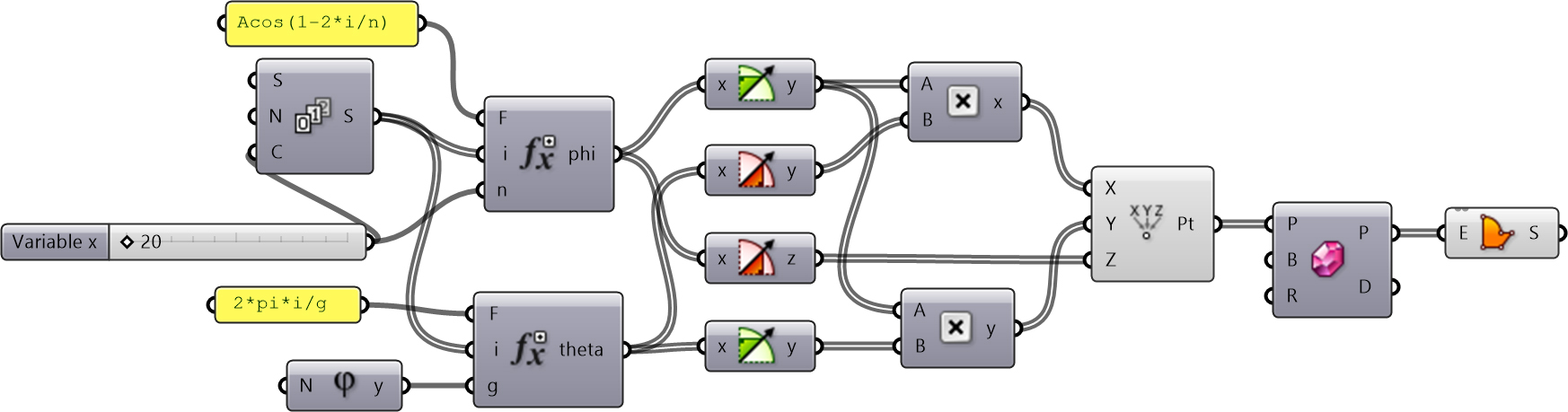
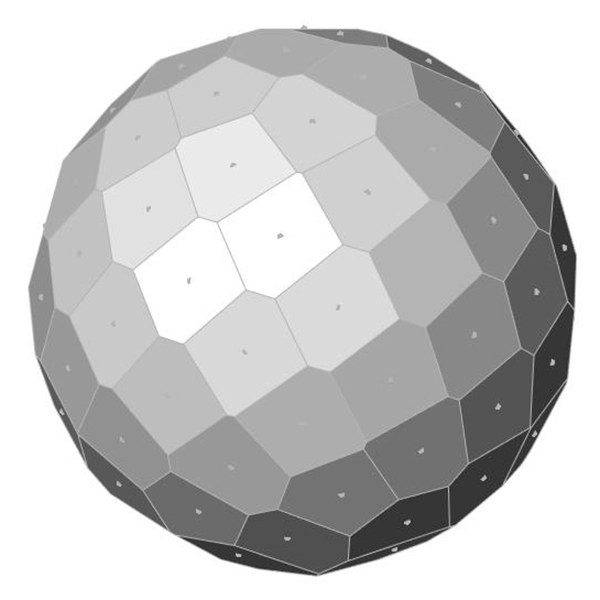
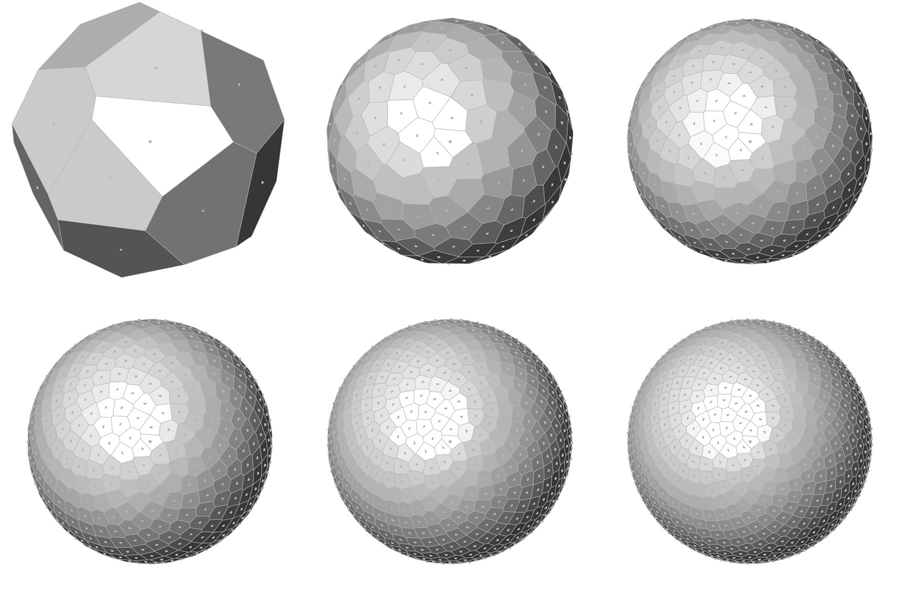
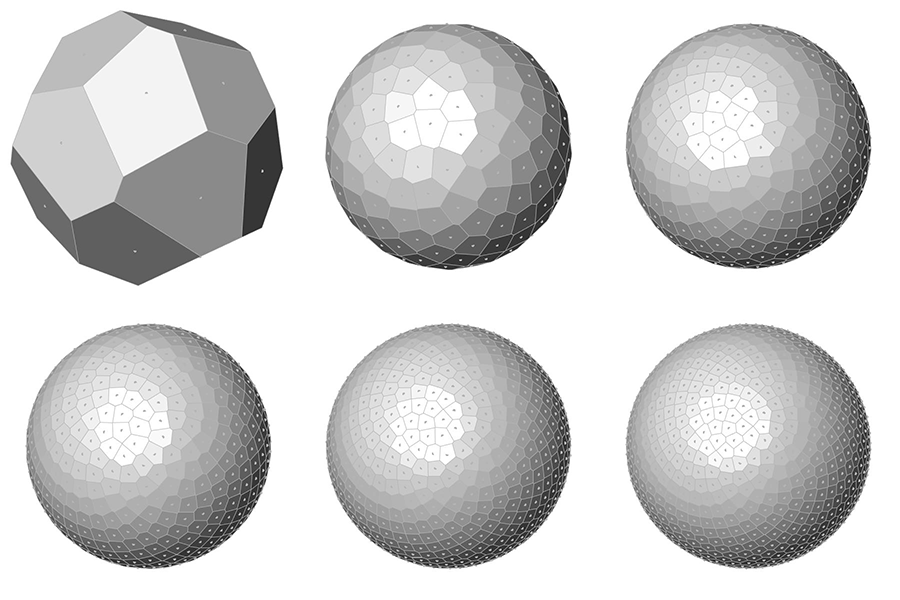
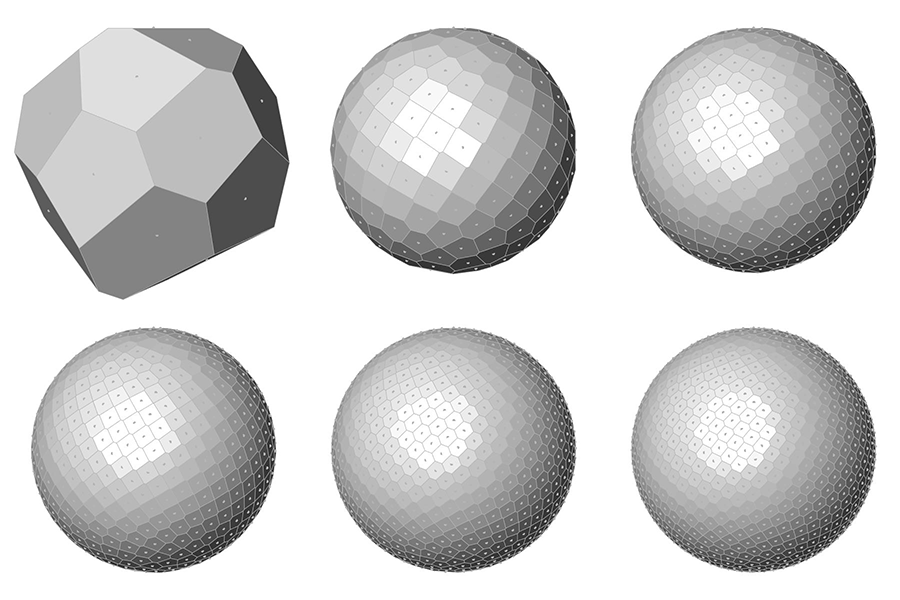
This is exactly what I am calculating at the end of the Grasshopper definition. After generating x, y, and z values, I place points. Finally, I added a Faceted Dome component to visualize the surfaces. Changing the number of points on the sphere creates the below animations:
Cite this post
Related Posts
Perseverance
October 8, 2026
While digging through my trash archives, I found this video from three years ago. Instead of exploring things with Grasshopper, I jumped into a bit of naive digital art. The Fibonacci Sphere algorithm was very popular in those days. I used the SubD components, which were new at the time. It was around the same period as the one right over there. I tried to make something scary again, but to be honest, there is also quite a depressive mood…
Modeling a Geodesic Sphere
May 23, 2012
Not all of them, but when you get the idea, you’ll see there are lots of different alternatives for creating Fuller’s famous Geodesic Domes (Although in fact, he is not the inventor of it). I was playing with Platonic Solids in Rhino and realized that the “Pull” command is very useful in subdividing objects. I modeled this in Rhino 4. First, take a regular Icosahedron and divide it. Because, this is the simplest way for modeling a Geodesic sphere, by…
Geodesic Dome
January 28, 2024
Geodesic refers to the shortest path between two points on a curved surface. It is based on the principles of geodesy, which is the science of measuring the Earth’s shape. On the other hand, in architecture and design, a geodesic dome is a spherical or hemispherical structure consisting of a network of geodesic lines (great-circle arcs) forming triangles. Therefore, the dome’s framework provides strength and stability, distributing stress throughout its structure. Buckminster Fuller popularized and developed the concept of the…
Graph Waves with Attractor Geodesic
January 25, 2012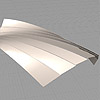
The regular component design technique can be further improved by adding several manipulations. The purpose of this study was to create a surface component that reacts to an inherent parameter (actually a geodesic curve on the surface). However, within the process of parametric modeling, diverse formal potentials emerged. Most interesting results are achieved by adding a graph parameter to control the waves of reaction while splitting the surface as stripes. It is created in the recently updated version (0.8.00066) of…
Fermat’s Nightmare
October 14, 2026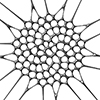
Revisiting a specific mathematical phenomenon that I previously explored twice, here (in 2017) and here (in 2011), from a different angle in 2026 now. This was the final video (from 2023) that I found in my junk folder during the blog’s resurrection. Today, designers mostly know Fermat through the famous 137.5-degree angle of rotation, which is the mathematical formula used to describe the arrangement of sunflower seeds. However, today I will speculate on a nightmare of Fermat’s. Because Fermat, in…