designcoding
About Table of Contents Keywords Monthly Archive
Support designcoding!

Studios

203 posts

Paramod 2011 Mid-term

April 12, 2012
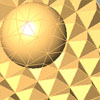
Today, we’ve finished first phase, the introduction to dataflow management in visual programming environments; and conducted “well defined” part of the mid-term examination. First two questions were designed to test technical skills of data matching, geometric evaluation. First one was a simple algorithm that calculates the area of ANY triangle in real-time. Tricky part of this problem was to research and find ways of calculating area and implementing it in Grasshopper. Most obvious formula, “a x h / 2” is…
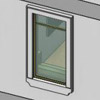

Window Component in Revit

April 5, 2012

[It seems simple at first sight, but creating a window definition in Revit requires a lot more time than I expected. A freelance job led me to create this parametric object, when I saw the architect’s sketch of all window types of the building side by side. There was a clear connection between all of them, leading me to define a single window object. Of course I’m not happy with the overall look of the window, those sills; but, what…

Paramod 2011 Student Examples

April 4, 2012

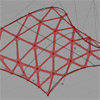
Here are some results of fourth homework. An animate design sketch of a roof structure. Yağız, Deniz and Sacha created animated results; Derya and Sacha proposed conventional approaches to create “openings” by animating geometries. However, that does not meet the requirement of structural (and logical) intentions of the design problem. Unless some very high-tech materials were introduced to design. On the other hand, Yağız tried to create a structure that looks more like real. This exercise showed us that in…

Grande Armchair

April 3, 2012

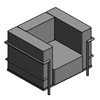
This is another old-school approach to parametric modeling, today known better as part of Building Information Modeling. I tried to create parametric objects in order to understand and learn the capabilities of Revit.  That was very useful for me in learning this interface. I specially chose Le Corbusier’s chair set as my first experiment on family creation in Revit. On his 100th anniversary of Eastern Voyage, Le Corbusier’s soul returned here, walking around the conference halls of Istanbul. This set…

Paramod 2011 Fabrication

March 21, 2012

After a reviewing a short story of digital architecture from Branko Kolarevic, we looked at the roots of the theory and the concepts derived from it such as digital fabrication, building information modeling and parametric modeling. After a short brief, we’ve discussed about the final projects. Next week, we’ll start studying final projects and start to look at individual problems developed from them. Final submissions will highly be related with their design problem; it might be only digital animations, or…

Parametric Modeling Class: Subdivided Entities

March 14, 2012

Today, we’ve studied fundamentals of component-based design methods. Using curves and surfaces as starting points, we’ve experienced ways of translating those entities via design criteria based on our purposes. First, a curve is used to construct a leaf structure. We’ve experienced dispatching data lists and combining them back together. Subdividing curves into points created further entities such as vectors and planes. We used those entities as inputs of regular drawing and modeling commands such as rectangles, or planar surfaces. This…

Attractors

March 7, 2012

Today’s subject was closely related to the one last week; the data list and data tree management. Creating suitable data structures for our purposes is one of the tricky parts of whole Grasshopper experiments. We’ve developed a grid of objects, somehow associated with another one (a curve). Strong emphasis was on the way of thinking, getting back and forth on the process, and the re-definition of data lists. Especially, this in-class exercise would help you understand basic design techniques in…

SPEC Student Examples

March 7, 2012

SPEC disappeared from our garden suspiciously. Hopefully, we’ve already finalized its parametric survey. Can create the original model by measuring exact corner coordinates. Then, it manipulated shape by creating diverse vectors for each shape. Emre has also tried a similar approach. Can be definition was too long, and did not use data trees, therefore it is slow. But it’s very effective at offering a solution for animation. I re-captured his frames for animation: Another innovative solution came from Yağız along…

SPEC, Data Lists and Trees

February 29, 2012

Today, we’ve studied ways of representing multiple data structures in Grasshopper at ARCH 362. As of our last week’s experience, sometimes (most of the time actually) we’ll need to work with vast amount of data. We’ll have to control them in order to open door for further explorations. Today’s exercise was a good example of this “sustainable” process of data management. All functionality of Grasshopper is based on data matching. From short-list, long-list matching, to the structures of data trees….

Reptile Skin Student Examples

February 22, 2012

Here are some of the results of first assignment, “Reptile Skin”. Generally, we couldn’t manage to develop innovative solutions to the problem. But this became a good starting point for understanding the method of “skins of components” in contemporary digital design. Before going into any control over the flow of data, it’s hard to maintain associative geometries. We usually feel stuck within the capabilities of the single commands or procedures. That’s why, digital design deals with “processes” much more intensively…

« 1 2 3 … 9 10 11 12 13 14 15 16 17 18 19 20 21 »
  • Chapters

    • Algorithms
    • Discourses
    • Fabrications
    • Studios
  • Explore

    • Table of Contents
    • Monthly Archive

    • All Keywords
    • #canopy
    • #visualization
    • #dual
    • #graph-mapper
    • #galapagos
    • #tangent
    • #concrete
    • #wittgenstein
    • #tetrakaidecahedron
    • #noise
    • #gosper-curve
    • #eps-foam
    • #landscape
    • #tetrahedron
    • #complex-number
    • #unity
    • #weaire-phelan
    • #music
    • #escher
    • #delaunay-triangulation
  • Search

  • Support designcoding!

  • Enjoying designcoding? Support me on Patreon to keep it growing. Thank you!

  • copyright 2026 designcoding.net | about | privacy policy | end user license agreement