
SPEC Student Examples
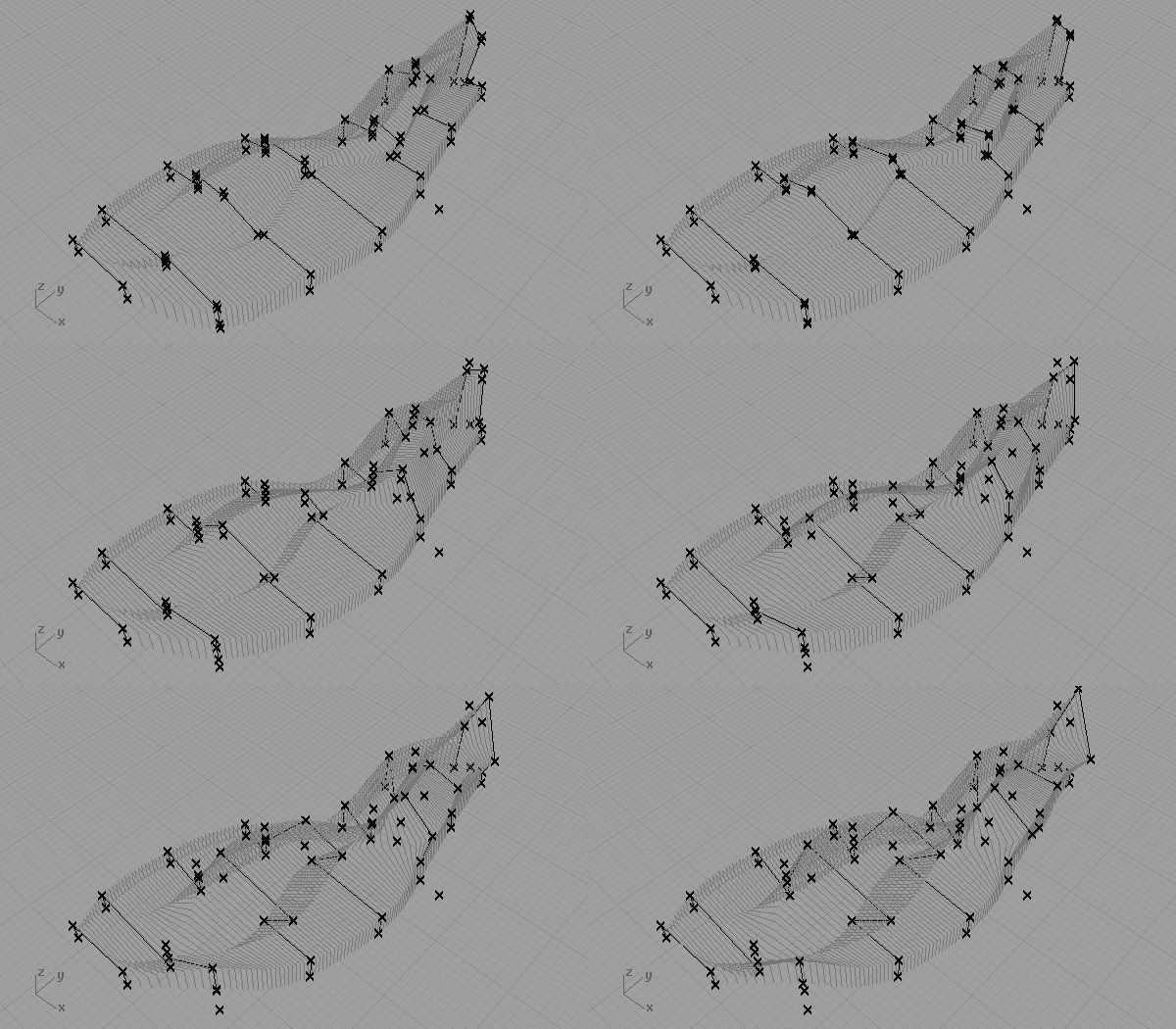
SPEC disappeared from our garden suspiciously. Hopefully, we’ve already finalized its parametric survey. Can create the original model by measuring exact corner coordinates. Then, it manipulated shape by creating diverse vectors for each shape. Emre has also tried a similar approach. Can be definition was too long, and did not use data trees, therefore it is slow. But it’s very effective at offering a solution for animation. I re-captured his frames for animation:
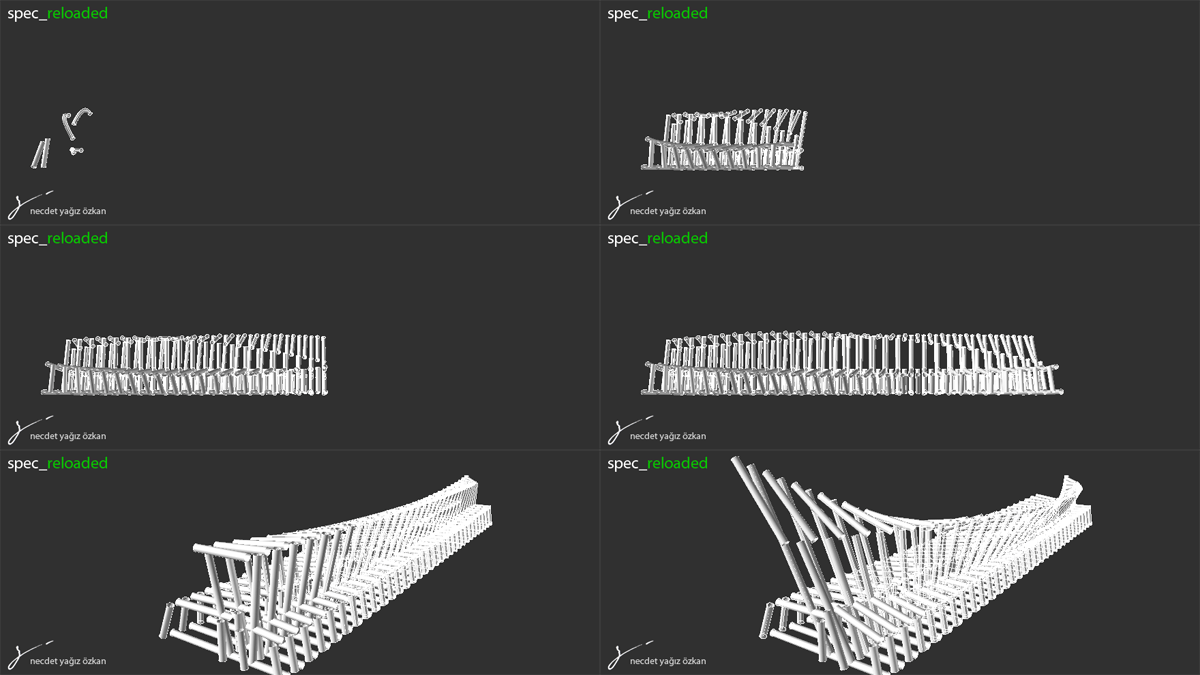
Another innovative solution came from Yağız along with a presentational concern. He seems to know what he’s doing. He dispatched each row into separate lists, creating two symmetrical lists without losing their relationship. That solves the tricky part of this exercise.
Gizem, Nurcan, and Yeşim have experienced how SPEC could conform by manipulating each of its points. Again, data trees (logical connections between points) were absent. Solutions were created by hand. Ahmed, Derya, and Sacha have also finished the definition without animations. Derya and Sacha didn’t define parameters suitable for animating the structure. Ahmed’s solution was interesting, he could have animated the path and cross-section curves.
Cite this post
Related Posts
Paramod 2011 Fabrication
March 21, 2012
After a reviewing a short story of digital architecture from Branko Kolarevic, we looked at the roots of the theory and the concepts derived from it such as digital fabrication, building information modeling and parametric modeling. After a short brief, we’ve discussed about the final projects. Next week, we’ll start studying final projects and start to look at individual problems developed from them. Final submissions will highly be related with their design problem; it might be only digital animations, or…
Contour-fold Structure
February 1, 2015
Euclidean constructions, when represented computationally, rely on algorithms and mathematical principles to generate geometric shapes and forms. Through precise calculations and logical operations, a computer program can emulate the actions of a compass and straightedge, constructing lines, circles, and polygons with accuracy and efficiency. These digital incarnations of Euclid’s timeless techniques enable the exploration of geometric concepts and the creation of visually captivating representations. This project is interesting because of the Euclidean construction underneath. Initially, I studied this type of…
Parametric Furniture Exercise
February 10, 2012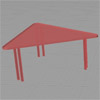
This is a rather traditional geometry exercise we used to make in MaxScript. Grasshopper is also quite capable of associative geometry and real-time parametric designs of objects. The exercise of designing a furniture family should be based on design research, followed by shape alternatives and sketches (both digital and hand), then might be finalized using this parametric design environment. However, the example presented here is one of the most simplistic solutions to furniture family. This may be further developed regarding…
New Year Lanterns 2018
January 9, 2018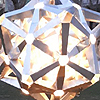
This year’s Computation-based Basic Design Studio finals were very successful. Below are some of our student’s design works, and lanterns that light the campus area at İstanbul Bilgi University. It was a great experience for them to seek a design system between the domains of material computation and architectural geometry. 28 first-year students of architecture, interior design, and industrial design completed their projects in groups of 4. Students: Aleyna Demirkök, Aleyna Yıldız, Ali Hayder Ali Al Obaidi, Ara Yerlikaya, Aybike Sarıgül, Ayşe…
Low-Poly Habitat
August 7, 2017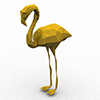
Below is a simple tutorial class we studied in Rhino in 2015 and 2016. The exercise is called “A Low-Poly Habitat”. The aim is to create simple polygon models by analyzing the overall geometric topology of an animal body. First-year design students attended the exercise and they are encouraged to create these models using blueprints from www. They used simple commands such as point, line, and surface from 3 or 4 points and that’s all. Such exercises (hopefully) help them…