designcoding
About Table of Contents Keywords Monthly Archive
Support designcoding!

#grasshopper

268 posts

Graph Surface

December 24, 2011

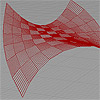
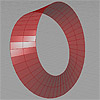
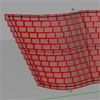
This time, in order to develop a potential “dummy” surface for Grasshopper experiences, I built a better definition. The Graph Surface definition uses a polygon as a basis, divides the edges and moves them according to various parameters. It’s fun to play with mapping different graph types and various polygons and subdivision values. Surprisingly, this definition led me to a wide range of possibilities I haven’t planned. Especially, shifting the graph along the edge of polygon (as seen above) creates interesting…

Subdividing Triangular Surfaces

December 22, 2011

NURBS surfaces by nature, like four-corner topologies with U and V directions. Şebnem Yalınay Çinici has formulated a tectonic exercise of “Primitive Hut”, which in my point of view is a tough geometric challenge; a subdivision on a real three-corner manifold. That seems very easy at the beginning as both Rhinoceros and Grasshopper are able to create surfaces with three corners, by either lofting, meshing, or edge curve methods. However, those surfaces, then cannot be used to develop sub-surfaces because of…

Surface Component based on Gaussian Curvature

December 22, 2011

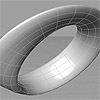
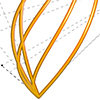
This experiment is based on a traditional surface-component definition. However, the variation of components is associated with Gaussian curvature. We just control the subdivision and a multiplier value. Results are interesting in as an educational tool to explain NURBS surface curvature and its utilization for Design Geometry. Different surface shapes generate exciting results. Of course, this could be much improved by recognizing positive and negative curvature values, (probably only accepting positive ones maybe).

Parametric Modeling 2011 @ Istanbul Bilgi University

December 22, 2011

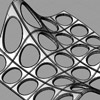
ARCH 362: PARAMETRIC MODELING: Undergraduate Elective Course at İstanbul Bilgi University Faculty of Architecture student exercise: Deniz Yazıcı (YTU/CADU 2008) COURSE BRIEF (2011) Digital paradigm transferred parametric modeling as an alternative conception in architecture, emphasizing a focal shift from the singularity of design artifacts to the explicit and generative process of designing. While architects start to experience the construction of algorithms, computers played an increasingly important role in the adaptation of this new conception utilizing design geometry. Architectural education also started…

Sunflower Spiral

December 22, 2011

Sunflower Spiral (or Phyllotaxis) can be constructed in Grasshopper according to Vogel’s model of parametric relationships. This model uses polar coordinates. The Grasshopper file is still working after more than 11 years -15.12.2022. This is such a powerful quality of Grasshopper, I think. It’s a good example of utilizing polar coordinates. It’s also fun to play with the parameters and constraints of the Sunflower Spiral. Also, there are very interesting results if you also connect the polar angle value to…

Animated Parameters

December 21, 2011

We’ll use the “Animate” function in Grasshopper3D to create a stop-motion animation. First, you need to determine the parameters you’ll animate, which means defining maximum-minimum values of it. In our example, we’ll be using a simple bezier curve generation algorithm. In this definition, we plan to animate one parameter which is the value of “t” between 0.0 to 1.0. This single change affects various things in the model. You may find them by studying the definition. There is a list…

Semi-regular Surface Tessellation

December 20, 2011

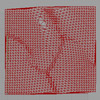
Back in 2011, one of the first posts on designcoding explored how to divide a surface in alternative ways. I called this Grasshopper definition a semi-regular surface tessellation. Although the term isn’t entirely accurate -since the pattern is neither planar nor made of equilateral shapes- it still reflects what I had in mind. Dividing surfaces into fabricable parts remains a key concept in learning parametric modeling, so I decided to revisit and update this old definition. There must be many…

Graph Mapping Edge Surface

December 19, 2011

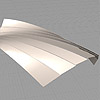
The smooth and continuous nature of the “Sine Surface” has garnered significant popularity among designers and architects alike. This captivating curved surface offers a visually pleasing aesthetic that adds an elegant touch to various design projects. Its flowing contours and gentle undulations create a sense of harmony and organic beauty. Recently, I delved into this with the help of Grasshopper’s Graph Mapping functionality, I began my artistic journey. Although I encountered some initial challenges, I managed to generate a series…

« 1 2 3 … 17 18 19 20 21 22 23 24 25 26 27
  • Chapters

    • Algorithms
    • Discourses
    • Fabrications
    • Studios
  • Explore

    • All Keywords
    • Table of Contents
    • Monthly Archive
    • #sandblasting
    • #nesting
    • #solar-analysis
    • #curvature
    • #tensegrity
    • #unity
    • #kuka-prc
    • #metaball
    • #cube
    • #space-filling
    • #optimization
    • #visualization
    • #maxscript
    • #cnc-milling
    • #aluminium
    • #dome
    • #vector
    • #designcoding
    • #unrolling
    • #aperiodic
  • Search

  • Support designcoding!

  • Enjoying designcoding? Support me on Patreon to keep it growing. Thank you!

  • copyright 2026 designcoding.net | about | privacy policy | end user license agreement