
I at the Center
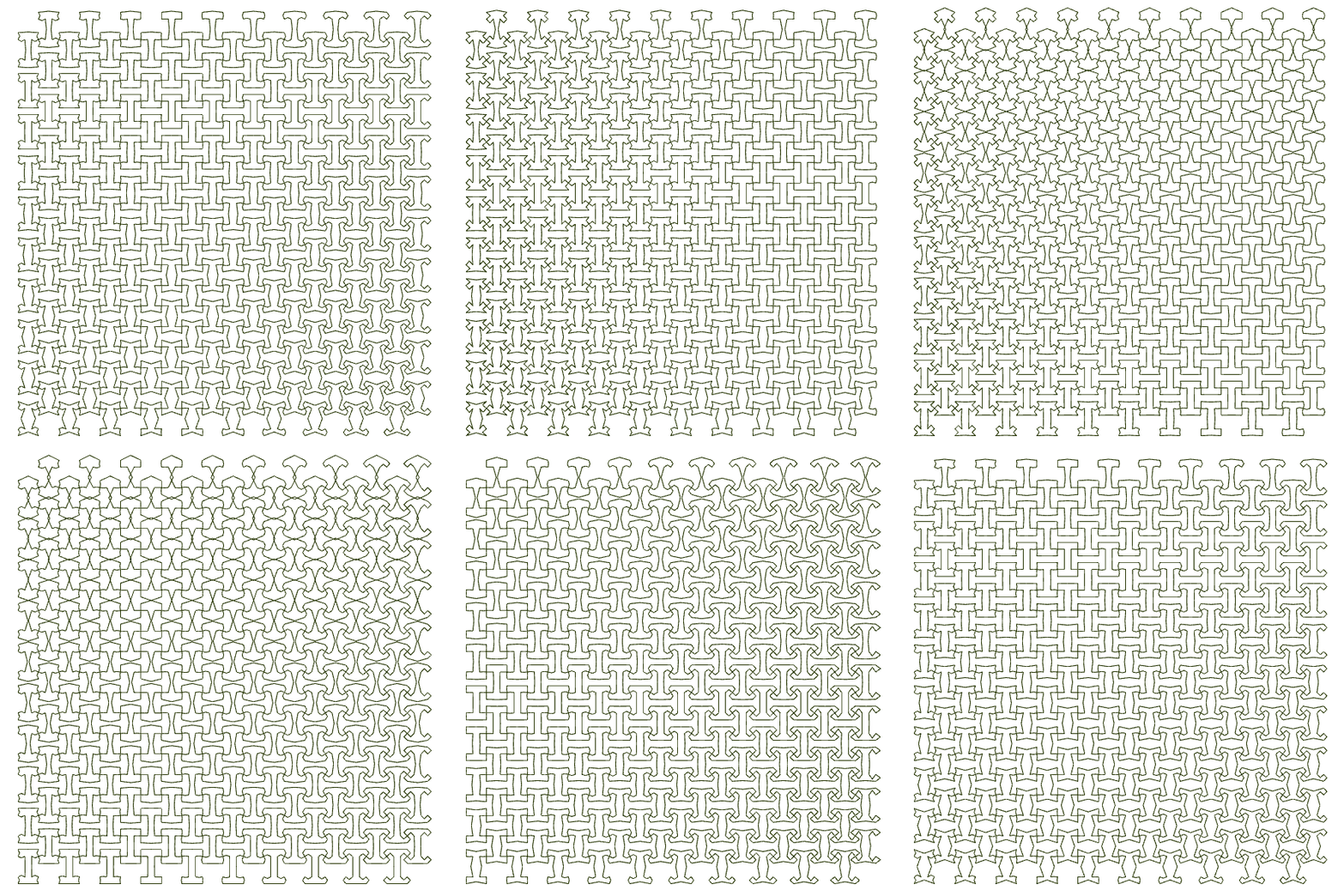
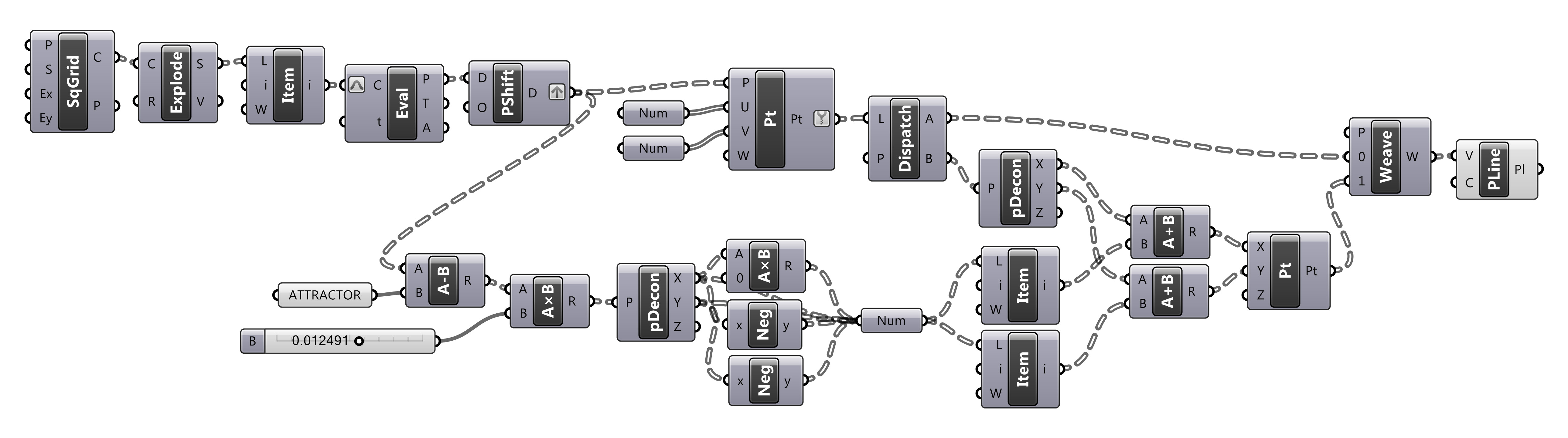
I at the Center is a multiple-axes vertex deformation based on a quadrangular hyperframe, designed by David Oleson at the studio of William Huff in 1964. Below, you see the original drawing and my Grasshopper animation based on a single-point attractor, creating the “I” wherever it is. It was a pleasure to read and repeat this deformation, which is a nice exercise in data tree operations and also one of the first examples I see about point attractor algorithms in design education. I used lots of data tree tweaks and selected appropriate vertex coordinates in order to transform them on their predefined paths. This one particularly opens up lots of open ends in its algorithm; I’m sure it can evolve into something very different and beautiful if you play with the DFD.
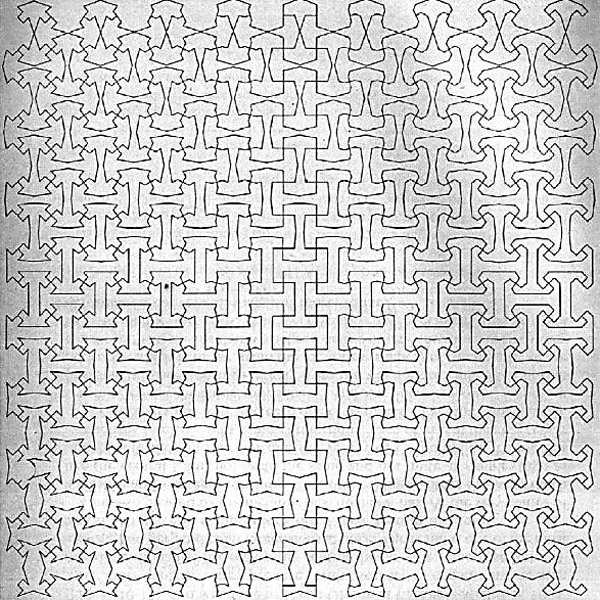
The “I” is composed of 23 vertices and the point attractor affects them in particular directions.
Douglas Hofstadter mentions this algorithm as;
… One of my favorite parquet deformations is called “I at the Center”, and was done by David Oleson at Carnegie-Mellon in 1964. This one violates the premise with which I began my article: one-dimensionality. It develops its central theme-the uppercase letter `I’ -along two perpendicular dimensions at once. The result is one of the most lyrical and graceful compositions that I have seen in this form. I am also pleased by the metaphorical quality it has. At the very center of a meshis an I-an ego; touching it are other things-other I’s-very much like the central I, but notquite the same and not quite as simple; then as one goes further and further out, the variety of I’s multiplies. To me this symbolizes a web of human interconnections. Each of us is at the very center of our own personal web, and each one of us thinks, “I am themost normal, sensible, comprehensible individual.” And our identity-our “shape” inpersonality space-springs largely from the way we are embedded in that network-which isto say, from the identities (shapes) of the people we are closest to. This means that we help to define others’ identities even as they help to define our own. And very simply but effectively, this parquet deformation conveys all that, and more, to me…
Hofstadter, D., (1983), Parquet Deformations: A Subtle Intricate Art Form, Chapter 10, in Metamagical Themas Questing for the Essence of Mind and Pattern, New York: Basic Books, p.191-212.
Cite this post
Related Posts
Wiry Wonder
January 8, 2023
The Parquet Deformation named “Wiry Wonder” was designed by Michael Cuttita in William Huff’s studio at the State University of New York in 1989. The below figure shows the original drawing made by the student. Similar to the previous one, this composition is based on a hexagonal lattice. In this composition there are three significant prototiles, marking the three key moments in the shape-shifting process. There is also one invisible prototile. It accommodates the transition between the last two prototiles….
Trifoliolate
April 30, 2013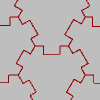
The Parquet Deformation exercise is generally originated with William Huff. Huff conducted it at several schools of architecture since the 1960s. Huff defines the exercise as rooted in two analytical disciplines; monohedral tilings in geometry, and the continuous deformations in biological morphology. This is generally exemplified by D’Arcy Thompson’s and Albrecht Dürer’s studies. One of the student’s works of Huff, Trifoliolate is a single-axis, single-prototile hexagonal parquet deformation. It was designed by Glen Paris at the studio of William Huff…
Field Deformation
October 8, 2026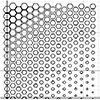
Ever since I restructured designcoding, I’m still sorting through the trash folder. All 580 posts published on the blog have been reviewed, and their files have been uploaded as open source. The mysterious trash folder, where I couldn’t even tell where things belonged, is shrinking fast. While checking this folder yesterday, I found a video. This is probably a simple tutorial I prepared about 10 years ago for the parametric modeling elective course (probably related to this 2012 post). The…
Basic Grid Deformation
July 5, 2023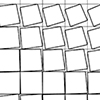
I am still trying to find the simplest solution to some geometric definitions. This is why I called this Grasshopper definition “Basic Grid Deformation”. Here you see the Curve Proximity (CrvProx) component in use. This component calculated the shortest distance between two curves. I think the underpinnings of this component are very interesting. I hope I can code it in Python one day. In order to see the result more clearly, the Previews of the Interpolate Curve (IntCrv) and Square…
Parquet Deformations add-on
May 4, 2023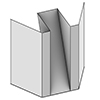
This is my first experiment on developing add-ons for Grasshopper. There are two components in the “Parquet Deformations” add-on. These are the ghuser files coded in Python. So, they can work by just dragging and dropping to the Grasshopper canvas. These first two components of the toolset are more like helpers while designing Parquet Deformations. I introduced some of my re-generations of classical parquet deformations here and here and in a book chapter here. The Loft Component of Parquet Deformations…