
Metamorphosis
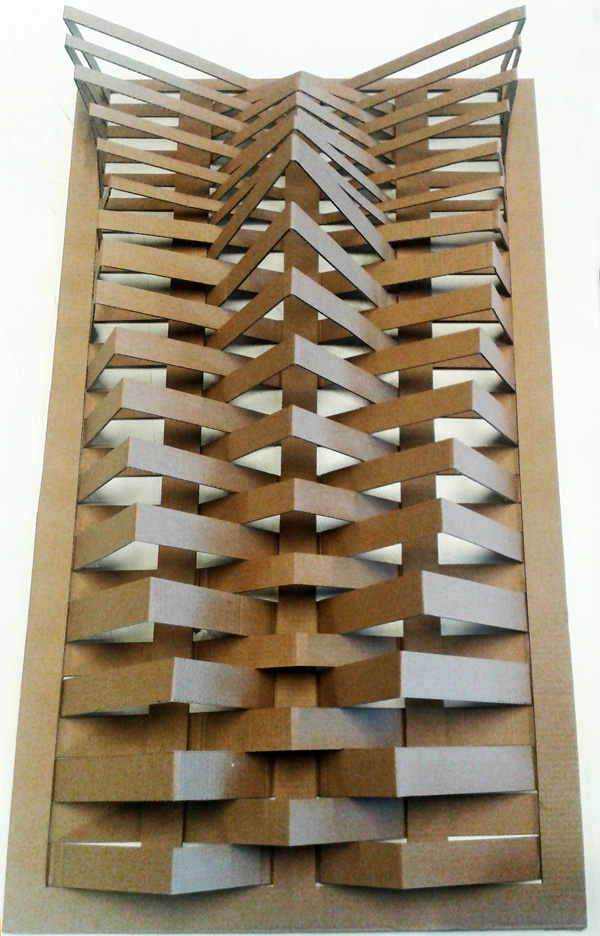
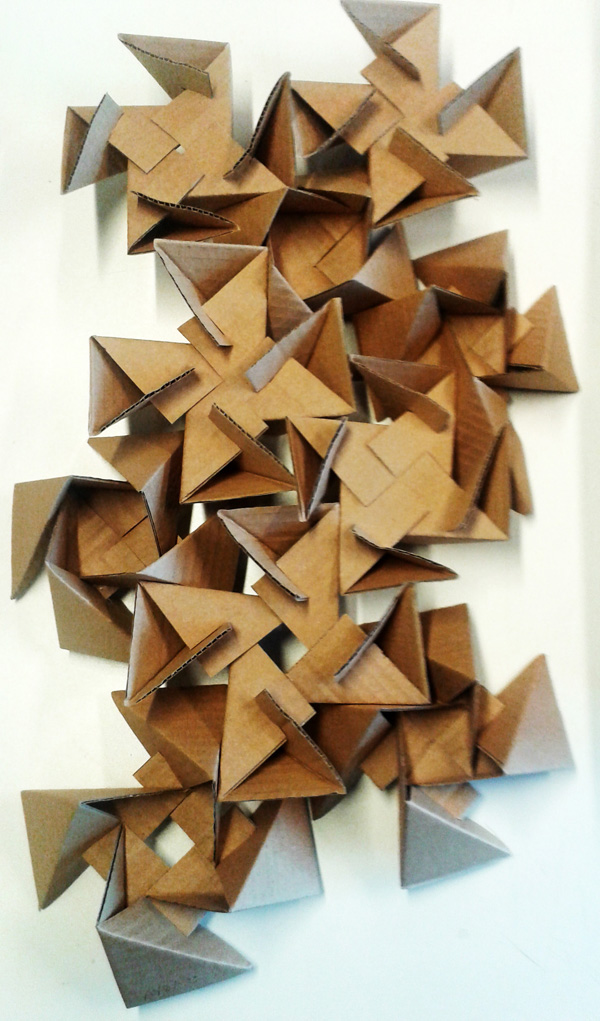
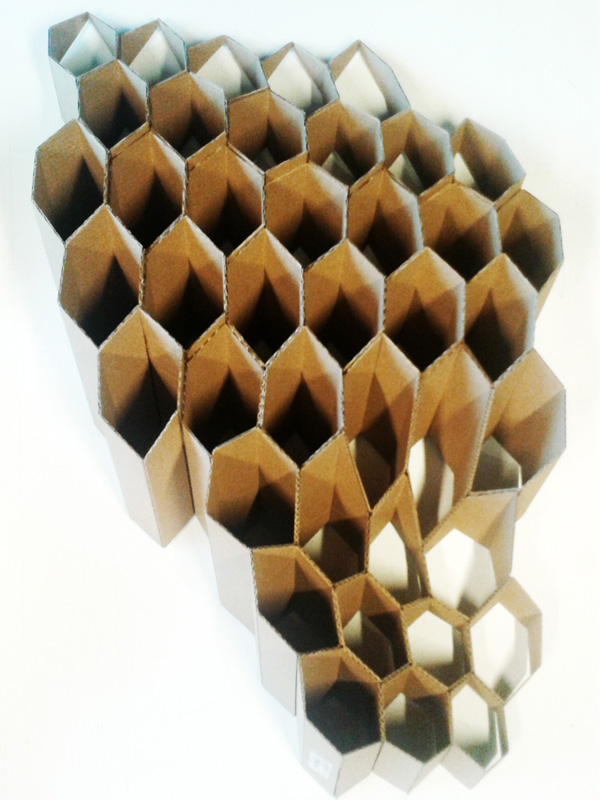
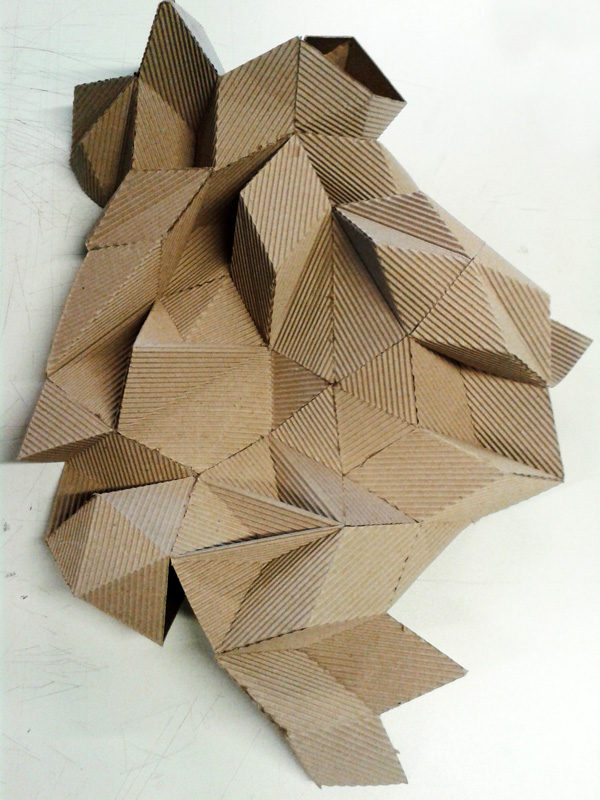
Here are some of the student works from this year’s Computation-based Basic Design Studio, centered around the captivating theme of Metamorphosis. Throughout the course, we tasked the students with pushing the boundaries of their creativity and innovation and encouraged them to construct designs that transcend conventional limitations and embody the essence of shapeshifting systematic wholes. The metamorphosis concept catalyzed their artistic exploration. Then, urged them to delve deep into the realm of design possibilities.
A pivotal aspect of this studio was introducing the students to the exciting crafting potentials of corrugated cardboard. For many, it was their first time working with this versatile and eco-friendly material. So, this added excitement and challenge to their projects. We often underestimate cardboard. But it proved to be a remarkably flexible medium that could be molded, cut, folded, and sculpted in countless ways. So, as they got their hands on this accessible resource, they transformed it into intricate and compelling structures.
Each student’s journey through the metamorphosis exercise was as unique as the result of their creations. Some explored organic, fluid forms that seamlessly transitioned from one shape to another, like living organisms undergoing metamorphic changes. Others drew inspiration from the mesmerizing geometry in nature. They created mesmerizing patterns that seemed to shift and transform when viewed from different angles.
Cite this post
Related Posts
Wiry Wonder
January 8, 2023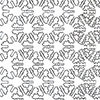
The Parquet Deformation named “Wiry Wonder” was designed by Michael Cuttita in William Huff’s studio at the State University of New York in 1989. The below figure shows the original drawing made by the student. Similar to the previous one, this composition is based on a hexagonal lattice. In this composition there are three significant prototiles, marking the three key moments in the shape-shifting process. There is also one invisible prototile. It accommodates the transition between the last two prototiles….
I at the Center
September 30, 2013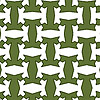
I at the Center is a multiple-axes vertex deformation based on a quadrangular hyperframe, designed by David Oleson at the studio of William Huff in 1964. Below, you see the original drawing and my Grasshopper animation based on a single-point attractor, creating the “I” wherever it is. It was a pleasure to read and repeat this deformation, which is a nice exercise in data tree operations and also one of the first examples I see about point attractor algorithms in design…
Trifoliolate
April 30, 2013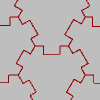
The Parquet Deformation exercise is generally originated with William Huff. Huff conducted it at several schools of architecture since the 1960s. Huff defines the exercise as rooted in two analytical disciplines; monohedral tilings in geometry, and the continuous deformations in biological morphology. This is generally exemplified by D’Arcy Thompson’s and Albrecht Dürer’s studies. One of the student’s works of Huff, Trifoliolate is a single-axis, single-prototile hexagonal parquet deformation. It was designed by Glen Paris at the studio of William Huff…
Drawing Lattice Deformation
December 11, 2024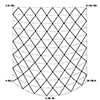
Lattice deformation in parametric design refers to the process of manipulating a grid or mesh structure so that it changes shape in response to specific inputs or parameters. We use this approach widely in computational design for creating complex, organic forms and adaptive systems. Also, lattice deformation can be applied in architectural facades, structural systems, and product design where adaptability and aesthetic fluidity are desired. In this short tutorial video, I am drawing a lattice deformation in the Rhinoceros. It…
Drawing Crosswise Deformation
December 11, 2024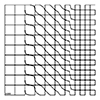
Parquet deformation refers to a transformation technique applied to a grid or tiling pattern, particularly one that resembles traditional parquet flooring, to create visually interesting and dynamic patterns. This concept is used in parametric design to alter repeating geometric tiles, producing effects such as warping, bending, or otherwise deforming the original pattern while maintaining an overall cohesive layout. In this short tutorial video, I am explaining the drawing of Crosswise deformation. This is a beginner-level drawing exercise that utilizes basic…