
Design Geometry Final Works
Classical folding methods were subjects to be tested and studied in this semester’s design geometry classes. This has been very useful in introducing first-year students to 3d euclidean constructions and using physical objects as references to a digital model. Groups of students studied different folding methods and made both physical and digital models. Two of these methods were dominant in the class however, one of them was the variations of Miura-Ori, and the other one was Ron Resch’s famous folding pattern. Below are some models students made during their research. I’ll post some topics about how to model these foldings manually in Rhino.
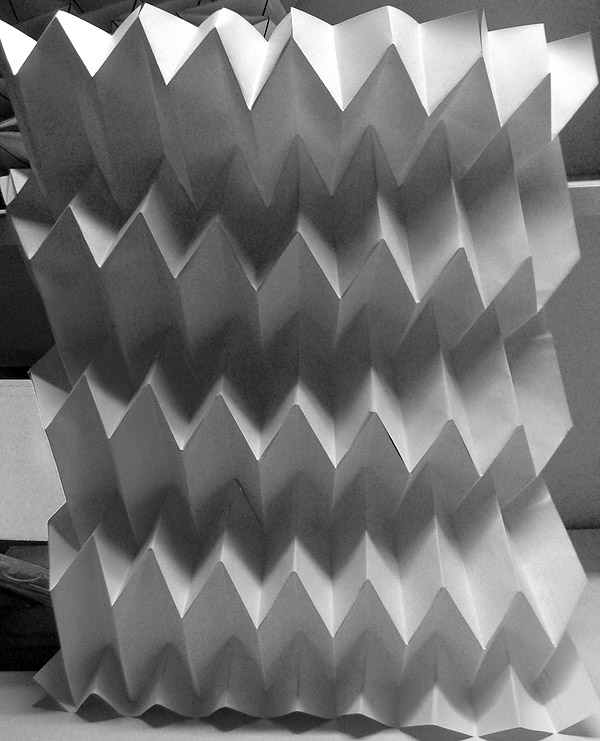
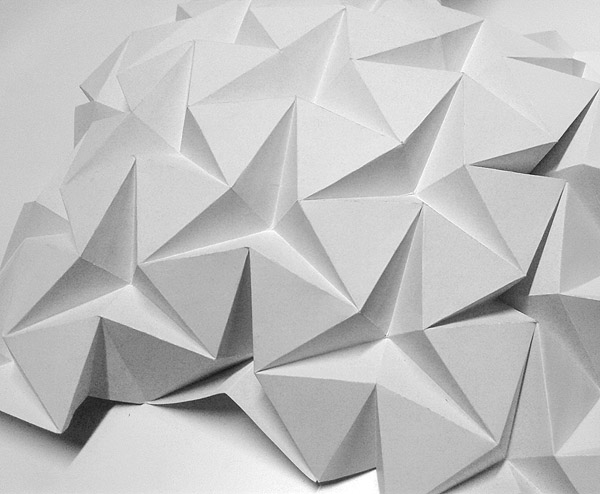
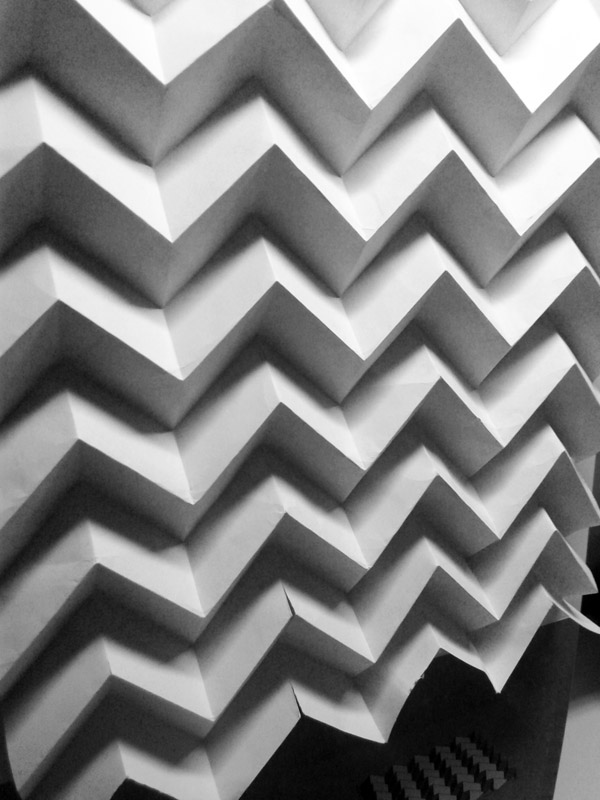
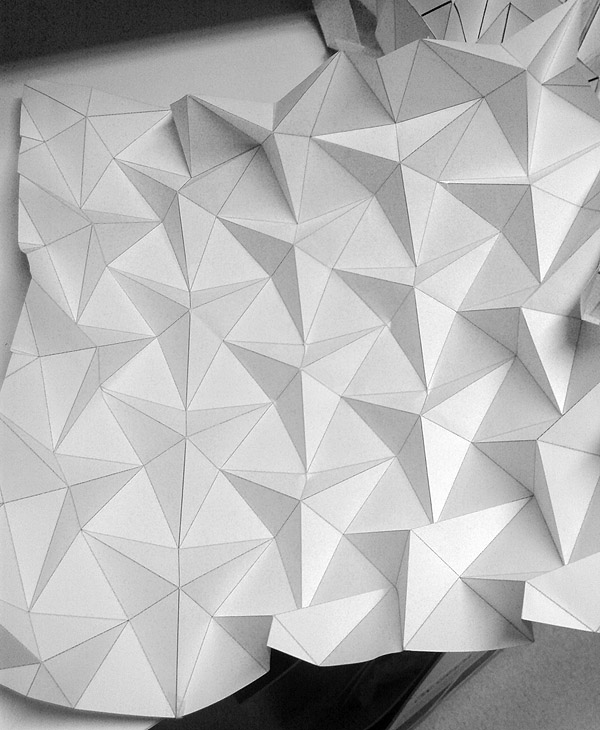
Students: Canan Gül, Cansu Başatıcı, Dila Kırmızıtoprak, Ecem Vanlı, Elham Kaya, Elnur Veliev, Esra Koç, Ezgi Yüksel, Göktuğ Balıkçı, İlkben Topaç, İsmet Bilgin, Kerem Yücel, Merve Dinli, Merve Kaptan, Oğuz Kaan Hiçyılmaz, Pembe Ülgen, Recep Buz, Saim Can Kuru, Seda Kasa, Sıla Yılmaz, Talha Tunahan Çetinkaya, Yıldırım Erbaz, Zehra Demir, Zeynep Ulusoy
Cite this post
Related Posts
Modeling Folds Relief Pattern
December 16, 2024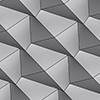
In art, design, and geometry, folding involves bending or creasing a material, such as paper, fabric, or other flexible materials into defined shapes or patterns. In this short tutorial video, I am modeling a folds relief pattern. This pattern stands out due to its resemblance to a collapsible folding system, combining both structural and aesthetic qualities. We refer to it as a folds relief pattern because it also mimics a relief design, creating light and shadow effects. This video series…
Folding Sphenoid Hendecahedron
December 15, 2024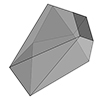
The sphenoid hendecahedron is a unique and interesting polyhedron. As the name implies, a “hendecahedron” is a polyhedron with 11 faces, while “sphenoid” refers to a specific type of shape that is often unusual, asymmetrical, and typically wedge-shaped. This polyhedron fills space, packing 3D space without gaps or overlaps. Its convex shape allows it to tessellate efficiently. Therefore, space-filling polyhedra play a crucial role in understanding tessellations and geometric arrangements, showing how to occupy 3D space without leaving any voids…
Folding Herschels Enneahedron
December 15, 2024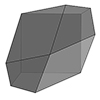
The Herschel nonahedron is a canonical polyhedron whose skeleton is the Herschel graph. It has 11 vertices, 18 edges, and 9 faces. Of the edges, 6 are short and 12 are long. It is characterized by having nine faces (hence the prefix “ennea” meaning nine in Greek). In this short tutorial video, I am folding Herschel’s enneahedron. To do that, I am constructing the interior angles of this polyhedron using its unrolled net. First, I am drawing the net by…
Folding a Truncated Tetrahedron
February 12, 2023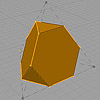
While digging through the lecture archive, I found this video I made in 2017. We introduce Platonic solids and Archimedean solids in the Design Geometry course at Istanbul Bilgi University. This video shows how we can create an Archimedean solid, the Truncated Tetrahedron, by folding it from a flat sheet. While doing this, I intersected the spheres by using the relations between the side lengths of the solid, and I calculated the rotation angles accordingly. First of all, I drew…
Escher Patterns in the Classroom
August 22, 2017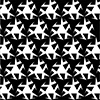
Here is one of the exercises I tested with a few students in Architectural Geometry. The exercise is about creating Escher-like patterns. It is an introductory topic on the designerly utilization of regular tessellations. We use square, hexagonal, or triangular tessellations as underlying structures of complex patterns. Below are some of the student works from this exercise. I think the black-and-white coloring helps in terms of reducing the requirements. Although the patterns designed in this exercise are not Escher patterns,…