
Tree of Life
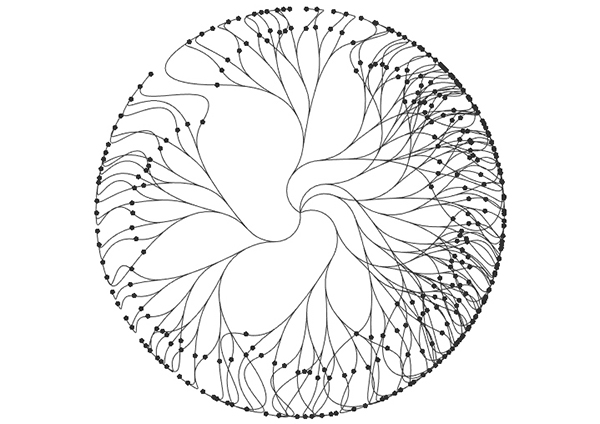
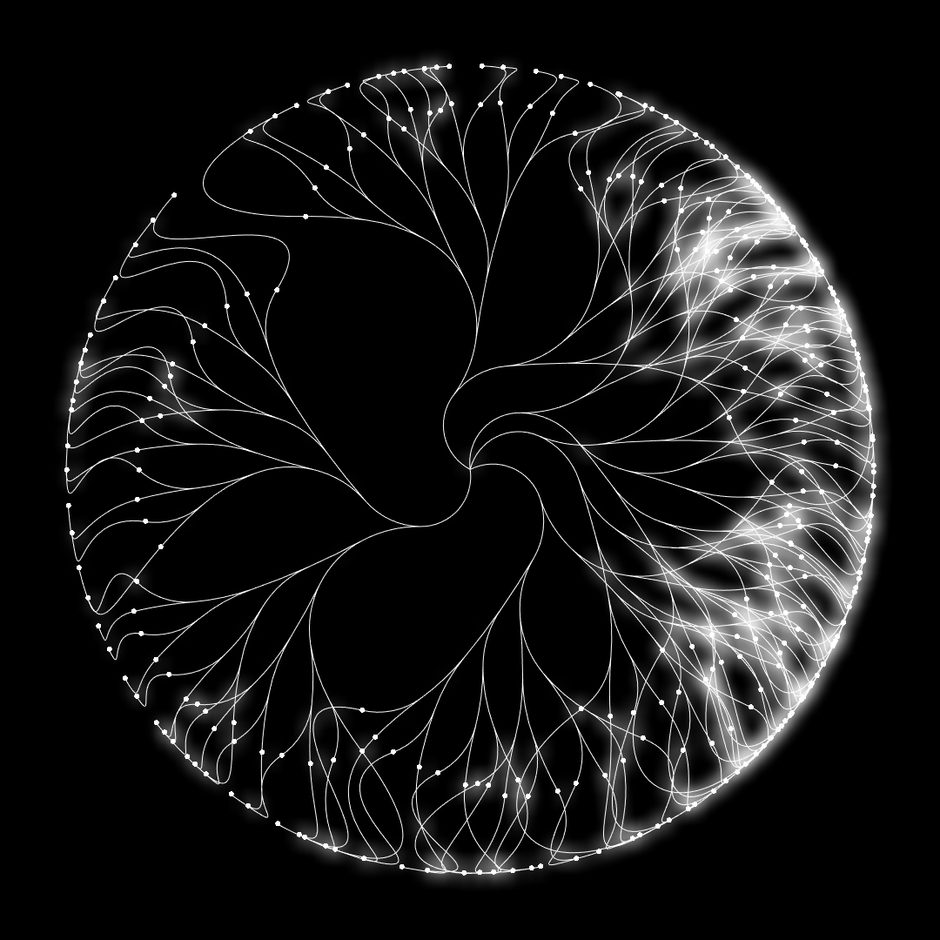
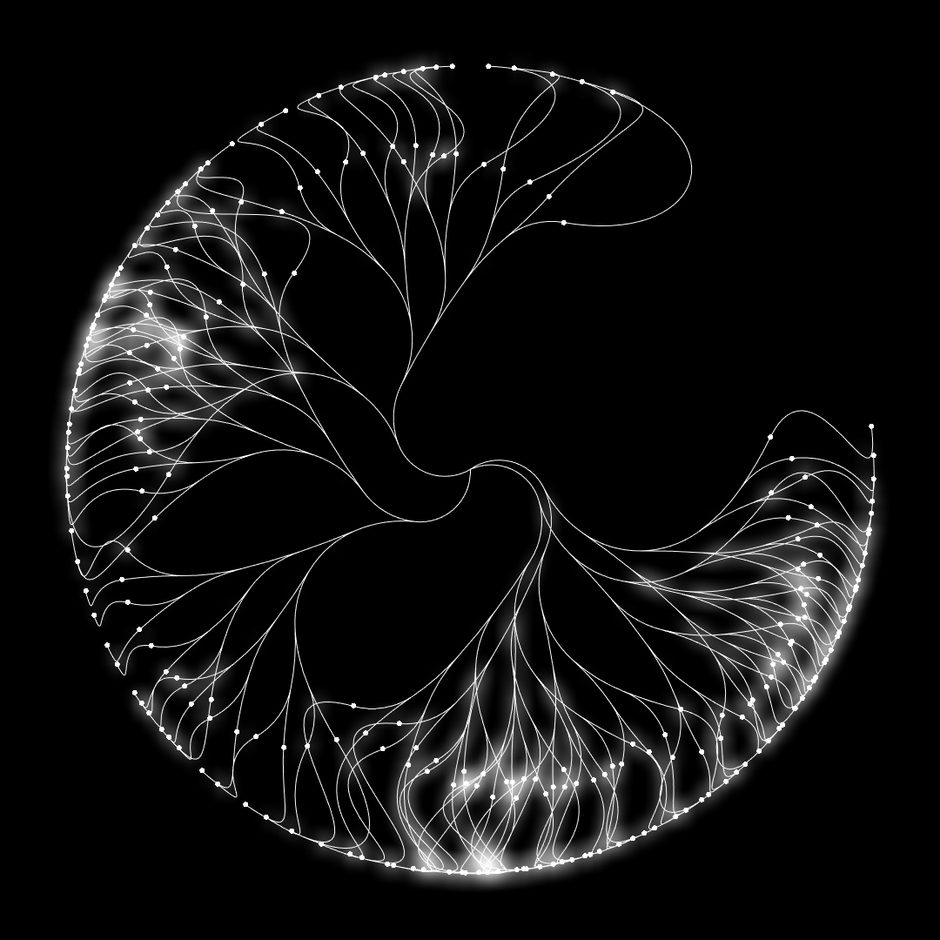
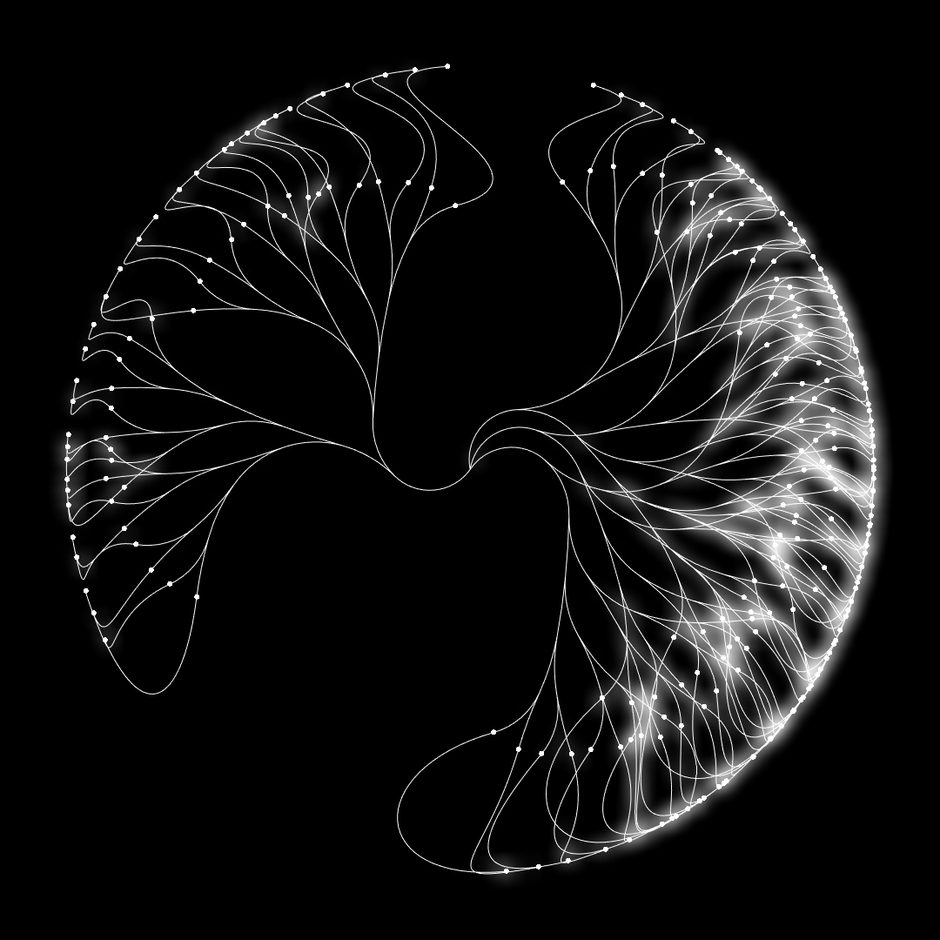
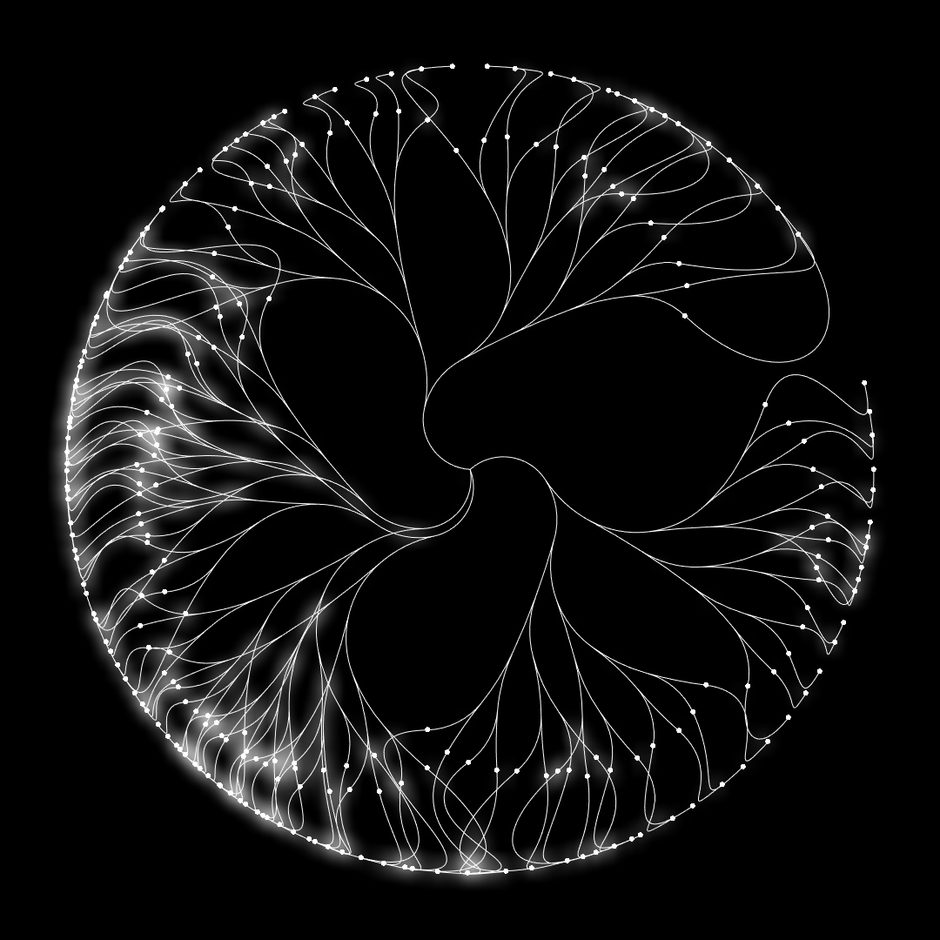
This Grasshopper exercise is a special one. I used Hoopsnake components to develop the branching design I studied earlier here. This time I multiplied the number and orientations of several tree structures to generate my interpretation of the Tree of Life. The challenging part of the algorithm was to finalize every branch tangent to a predefined circle. Group 3 handles this issue by utilizing a Blend Curve component. There are many Number Sliders to play with the design. Thus, I think this became a very flexible and interesting code. You can generate an infinite number of trees with this algorithm. In the future, I may try to find a way to produce them with a laser cutter.
According to www.gustav-klimt.com
“The Tree of Life is an essential symbol of many theologies, philosophies, and mythologies. It signifies the connection between heaven and earth and the underworld. Gustav Klimt illustrated the same concept in his famous mural, The Tree of Life, Stoclet Frieze. For Klimt’s admirers, the mural also has another significance, being the only landscape created by the artist during his golden period. During that time, Klimt used oil painting techniques with gold paint to create luxurious art pieces.”

You can rebuild the definition by looking at the diagram above. By the way, notice that you will need a Hoopsnake components add-on for the looping parts.
Cite this post
Related Posts
Trees and Recursive Computing
March 15, 2012
This topic of trees and recursive computing is inspired by the method shown here at the Rhino Python 101 Primer. This is a beautiful method of recursion that creates tree-like shapes, composed of arcs. I constructed these arcs by using the Arc SED (start, end, direction) method. This requires start and end points and a vector that is tangent to the arc (at the start point). Therefore, the overall look of a chain of these constructions creates curves with continuous…
Ice-ray Lattices
February 5, 2012
The design of Chinese window lattices named “ice-ray” is one of the classic studies of Shape Grammars. It is an old and good example of algorithmic design. George Stiny explained their geometric construction based on the parametric Shape Grammars approach. He explained shape rules and the abstract machine that produces the subdivisions. I was especially interested in Shape Grammars when I was a graduate student. I even made a prototype tool for Shape Grammars in MaxScript. Here is another post…
Hoopsnake: Looping Definitions
February 3, 2012
Wow! Is this possible in Grasshopper? In order to start creating recursive algorithms in Grasshopper, I finally managed to run Hoopsnake, a special component developed by Yiannis Chatzikonstantinou. This will help me develop parametric models that include loops. The fundamental experiment here shows a surface subdivision based on iterations. We should define a starting object or data, an operation to be repeated, and a limit that will tell Hoopsnake to stop looping. In this condition, this is the area of…
Animated Tree Growth
May 26, 2023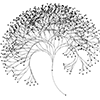
The Animated Tree Growth is an interesting study for Grasshopper. First, I developed a regular tree generation definition similar to those I studied earlier, here, here, and here. In component group 1, I develop an initial generator arc. Then, in group 2, I generate the fractal tree by using iteration. I did this with the help of the Anemone add-on. The interesting and original part of this definition is group number 3. Here I am trying to trace the growth…
Low Poly Trees in Grasshopper
November 30, 2022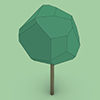
Let’s make some nostalgia. I thought of a very simple and useful algorithm that I can generate with Grasshopper. At the concept stage in architectural projects, I tried to derive figures that could symbolize the trees on the land. To make random low poly trees in Grasshopper we need several lists of random numbers first. The Facet Dome component will meet all our needs. In the code I shared on this page, I arranged the data tree structure to handle…