designcoding
About Table of Contents Keywords Monthly Archive
Support designcoding!

#tessellation

34 posts

Puzzling

March 21, 2012
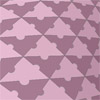
Nowadays, I found myself back into traditional hand sketching. Several failed attempts on Grasshopper led me back there. NURBS (and Grasshopper) somehow limits our conception of surfaces to four-cornered (or two-directional) manifolds. Although it sounds like limiting our designs, having four-cornered component spaces has still lots of experimental fields for designers. Escher is a cult person, who transforms the euclidean coordinate system to meet his design intentions. There are lots of interesting research about him, and he shows us how…
Parquet Deformation of Star Patterns

February 3, 2012

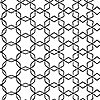
This is another starting point for pattern generation study in a dataflow environment. I tried to implement the parquet deformation of Islamic patterns in Grasshopper. I studied Hankin’s method of Islamic Pattern generation. Then I tried to simulate his process beginning with basic regular tiling (regular hexagonal tessellation). Craig S. Kaplan (here) explains this and other methods in his dissertation. A Simple Foundation We have already experienced the result of exploding any hexagonal grid, shifting its points with the help…

Graph Waves with Attractor Geodesic

January 25, 2012

The regular component design technique can be further improved by adding several manipulations. The purpose of this study was to create a surface component that reacts to an inherent parameter (actually a geodesic curve on the surface). However, within the process of parametric modeling, diverse formal potentials emerged. Most interesting results are achieved by adding a graph parameter to control the waves of reaction while splitting the surface as stripes. It is created in the recently updated version (0.8.00066) of…

Semi-regular Surface Tessellation

December 20, 2011

Back in 2011, one of the first posts on designcoding explored how to divide a surface in alternative ways. I called this Grasshopper definition a semi-regular surface tessellation. Although the term isn’t entirely accurate -since the pattern is neither planar nor made of equilateral shapes- it still reflects what I had in mind. Dividing surfaces into fabricable parts remains a key concept in learning parametric modeling, so I decided to revisit and update this old definition. There must be many…

« 1 2 3 4
  • Chapters

    • Algorithms
    • Discourses
    • Fabrications
    • Studios
  • Explore

    • All Keywords
    • Table of Contents
    • Monthly Archive
    • #parakeet
    • #cycloid
    • #folding
    • #aperiodic
    • #interlocking
    • #bezier-curve
    • #puzzle
    • #parametric-curve
    • #designcoding
    • #chaos
    • #buckminster-fuller
    • #cnc-milling
    • #macro
    • #enneahedron
    • #golden-ratio
    • #icosahedron
    • #arduino
    • #metaball
    • #landscape
    • #galapagos
  • Search

  • Support designcoding!

  • Enjoying designcoding? Support me on Patreon to keep it growing. Thank you!

  • copyright 2026 designcoding.net | about | privacy policy | end user license agreement