designcoding
About Table of Contents Keywords Monthly Archive
Support designcoding!

#pattern

55 posts

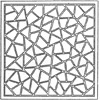
Pattern Deformations Exercise

November 17, 2012

Last week, the first-year architectural geometry course was about pattern deformations. Students are expected to familiarize themselves with 2d drawing, transformation, and control point editing commands while trying to design a deformation. After studying regular and semi-regular tessellations of the plane, they are expected to develop reasoning on the rule-based and iterative processes. This also constructed an underpinning for Basic Design’s “Metamorphosis” study, where they have discussed more conceptual frameworks derived from such systems. Below are some of the results…
Parquet Deformation Handmade

October 31, 2012

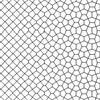
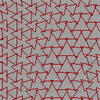
This is not to explain the method of the Parquet Deformation but to see the potential. After we’ve studied regular, semi-regular, dual, and truncated tessellations with students, the Architectural Geometry course expects them to develop a Parquet Deformation handmade such as those shown below. I call them Parquet Deformation handmade. Because they are manually designed but drawn using traditional CAD. The samples you see below are from this website. It is a good source for other topics of tessellation as well….

Point Attractors Revisited

February 29, 2012

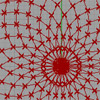
This is the basic definition of one point attractor on a grid of points. Here, the fundamentals of data tree matching can be studied. A hexagonal grid is exploded into points and new polygons are created there. Instead of a standard point distance relation to polygon size, this time the distance factor affects the rotational angle of these polygons. Although the structure of data trees is getting complicated, this has no difficulty in such definition, because the operational complexity is still very…

Ice-ray Lattices

February 5, 2012

The design of Chinese window lattices named “ice-ray” is one of the classic studies of Shape Grammars. It is an old and good example of algorithmic design. George Stiny explained their geometric construction based on the parametric Shape Grammars approach. He explained shape rules and the abstract machine that produces the subdivisions. I was especially interested in Shape Grammars when I was a graduate student. I even made a prototype tool for Shape Grammars in MaxScript. Here is another post…

Circle Crossing

December 25, 2011

I am learning Grasshopper. In this Circle Crossing definition, I tried to create the above pattern (also described in Sunflower Spiral) as simply as possible, this definition creates not only spirals but is also capable of more tessellations I guess. Maybe a three-dimensional equivalent might be studied in the future. As you can see from the definition, I started with a large circle. Then, I divided it into segments and placed new circles centered on them. Finally, I divide the…

« 1 2 3 4 5 6
  • Chapters

    • Algorithms
    • Discourses
    • Fabrications
    • Studios
  • Explore

    • Table of Contents
    • Monthly Archive

    • All Keywords
    • #processing
    • #tree
    • #truchet
    • #pvc-hose
    • #packing
    • #euclidean-construction
    • #octahedron
    • #islamic-pattern
    • #gosper-curve
    • #3d-max
    • #puzzle
    • #koch
    • #noise
    • #workshop
    • #attractor
    • #tangent
    • #ice-ray
    • #vector-field
    • #bezier-curve
    • #moulding
  • Search

  • Support designcoding!

  • Enjoying designcoding? Support me on Patreon to keep it growing. Thank you!

  • copyright 2026 designcoding.net | about | privacy policy | end user license agreement