designcoding
About Table of Contents Keywords Monthly Archive
Support designcoding!

#deformation

24 posts

Pattern Deformations Extended

February 8, 2014

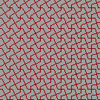
Unlike the classical Pattern Deformations assignment discussed here and here, this time we asked Design Geometry students in 2014 to explore deformations by using referential systems as a secondary space. We wanted them to create variations on a regular pattern only by deforming its underpinning lattice. Below are three examples of this alternative assignment. I’m thinking about improving this exercise to three dimensions, seems possible to implement by using the cage editing commands of Rhino. Selin Işıldar Serra Uludağ Mine Güvenç…

Pattern Deformations Student Works

November 18, 2013

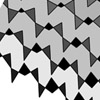
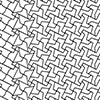
Below is some student works from this year’s Architectural Geometry / Pattern Deformations assignment. Students developed their own pattern deformation sequences mostly on regular tessellations. Based on the classical Parquet Deformation exercise, we tried to implement a rule-based approach in order to explore emergent patterns. The exercise seems to reveal endless improvisation potential. The exercise requires students to design a pattern deformation on a 28cm by 28cm area. It should include at least 100 cells. First, we explained several classical…

I at the Center

September 30, 2013

I at the Center is a multiple-axes vertex deformation based on a quadrangular hyperframe, designed by David Oleson at the studio of William Huff in 1964. Below, you see the original drawing and my Grasshopper animation based on a single-point attractor, creating the “I” wherever it is. It was a pleasure to read and repeat this deformation, which is a nice exercise in data tree operations and also one of the first examples I see about point attractor algorithms in design…

Testing Spatial Deformation

September 13, 2013

Instead of searching for an iterated and rule-based variety, this method captures instances of spatial deformation by transforming the hyperframe. This liberates us from a classical understanding of pattern deformations that are enframed within regular polygons, mostly rectangles or hexagons. Grasshopper has a built-in component to study such variety. The spatial Deform component gets vectors as inputs and transforms any given geometric object according to it. This website has also another nice use of this component.

Crossover Parquet Deformation

August 20, 2013

It has been a while since I didn’t post any patterns. Here is a beautiful one from the iconic design studio of William Huff. Crossover Parquet Deformation is a single-axis, line-based deformation algorithm, constructed on a regular quadrangular hyperframe, designed by Richard Lane at the Basic Design studio of William Huff in 1963. It presents two different parquet deformation sequences linked together. Thus, the designer created a transition between the borders and inner cross-shapes gradually. This transition is visually smooth…

Trifoliolate

April 30, 2013

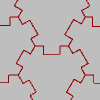
The Parquet Deformation exercise is generally originated with William Huff. Huff conducted it at several schools of architecture since the 1960s. Huff defines the exercise as rooted in two analytical disciplines; monohedral tilings in geometry, and the continuous deformations in biological morphology. This is generally exemplified by D’Arcy Thompson’s and Albrecht Dürer’s studies. One of the student’s works of Huff, Trifoliolate is a single-axis, single-prototile hexagonal parquet deformation. It was designed by Glen Paris at the studio of William Huff…

Infections Workshop

January 29, 2013

The series of workshops named “gridal infection”, or “infections” in short, explore the multiplicity of pattern deformation in a pedagogical context. It aims to encourage design students to manage an associative process of design, composed of short-term constructive assignments. Students are expected to develop an understanding of contemporary computational design techniques regarding a connection between abstraction and conceptualization. It reflects an open discussion of the abstract types and methods of potential infections on any pre-defined system while the geometric representation of…

Firefly and a Webcam

January 29, 2013

I finally installed Firefly, it immediately powers Grasshopper up with beautifully smart components, even if you don’t have Arduino it is still very useful. If you want to give it a try, first you have to install a small tool free from www.reactivision.com in order to send data to Firefly. After that, you may download and install firefly from their website, www.fireflyexperiments.com. It was the real-time inputs, my first interest. I was very excited to get data from my laptop’s…

Minimal Parquet Deformations

January 28, 2013

Is it possible to model a two-way parquet deformation using only native components of Grasshopper? In this definition, I limited myself to 10 of them. Parquet deformations are a very interesting and pedagogical topic to teach some of the basics of contemporary parametric modeling. This post explains a minimal parquet deformations algorithm in Grasshopper. However, this has its own limitations. You will see that the definition generates the attractor graph curve. Because the graph input tool creates the magic here….

3D Pattern Deformation

December 12, 2012

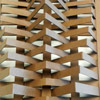
These are examples of 2.5D exercises in the design geometry course in my freshman year of architecture. We asked students to create extruded or referenced solids referenced from their previous exercise of pattern deformations, (examples are here and here). We also started to inject some of the most used concepts of design computing here, by perceiving each tessellation cell as the variation of a predefined algorithm, such as a relationship with an attractor object (a distance value with a point)….

« 1 2 3 »
  • Chapters

    • Algorithms
    • Discourses
    • Fabrications
    • Studios
  • Explore

    • All Keywords
    • Table of Contents
    • Monthly Archive
    • #geodesic
    • #timer
    • #kangaroo
    • #dome
    • #rammed-earth
    • #rhombus
    • #galapagos
    • #aluminium
    • #non-euclidean
    • #polygon
    • #tiling
    • #tensegrity
    • #rubber
    • #canopy
    • #boolean
    • #dodecahedron
    • #b-spline
    • #spiral
    • #deleuze
    • #contouring
  • Search

  • Support designcoding!

  • Enjoying designcoding? Support me on Patreon to keep it growing. Thank you!

  • copyright 2026 designcoding.net | about | privacy policy | end user license agreement