
Embroidery with Grasshopper
During my sabbatical at Loughborough University in 2023, as part of a project we carried out together with Prof. Avşar Gürpınar, I had the opportunity to use the Parakeet and pyEmbroidery add-ons together in Grasshopper. Gürpınar and I wrote the following text based on this experience.
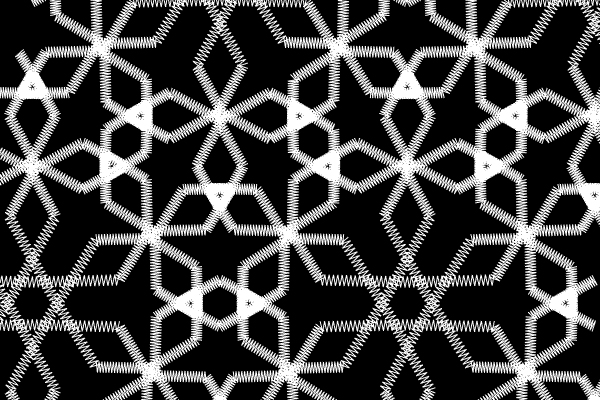
Digital embroidery preserves several prominent and intrinsic qualities of lace while opening the design realm to digital and parametric modeling. It is possible to establish a seamless yet dynamic operational and creative bridge between the embroidery machine and widely used parametric modeling interfaces, such as Grasshopper. The G-code language of digital embroidery machines gives designers direct control over the stitching of lace patterns, opening the design realm to parametric variations. On the other hand, the workflow is iterative and requires feedback from humans, materials, and machines. After the model is generated and exported, production trials yield critical feedback from experts who report back when certain parts are not compliant with the logic of lace. This incompatibility, often related to thread tension, density, or structural integrity, leads designers to return to the parametric model and manipulate the algorithm until the outcome is physically compatible with the machinery and the material constraints. This feedback confirms that the machine and material constraints are active co-designers in the process. Additionally, digital embroidery technique provides a final layer of manipulative control: a set of parameters allows the designer to adjust line thickness, stitch density, and color, enabling refinement of the final tactile and aesthetic quality. Therefore, digital embroidery was found to be the closest fabrication mode for hypercrafting of lace.
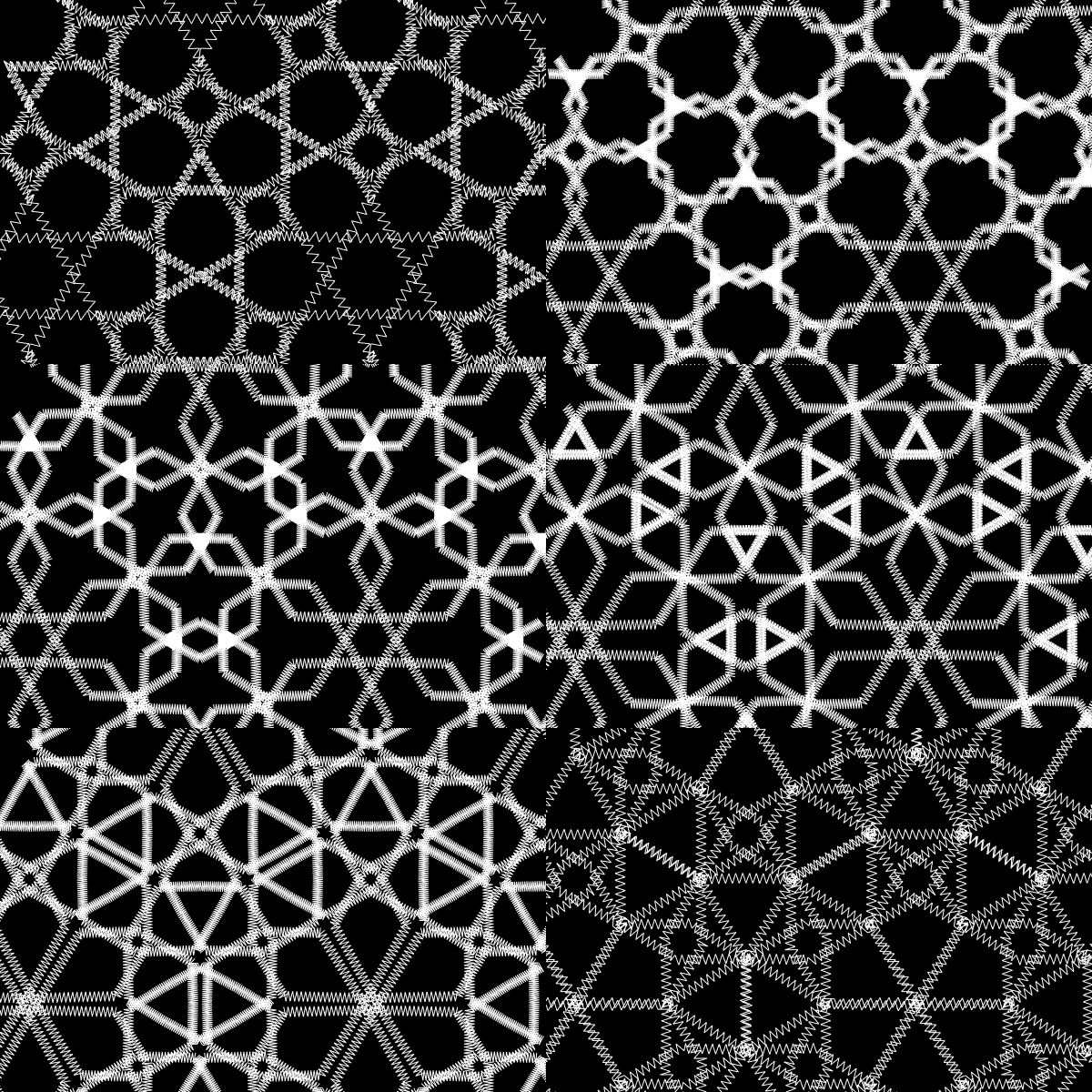
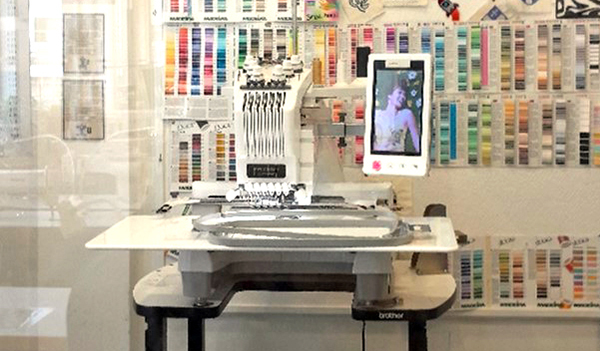
The most common digital embroidery file formats are: DST (Tajima format), the most widely used embroidery file format. It works with almost all embroidery machines and software.PES (Brother/Deco format): Primarily used by Brother and Babylock machines, this format is also popular among home embroidery machines.
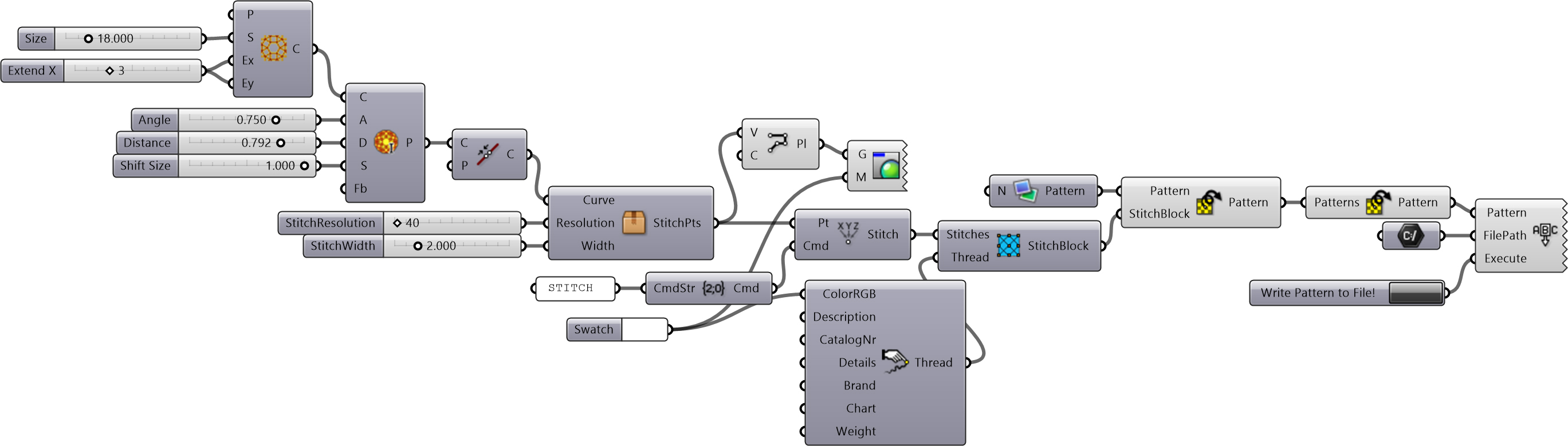
When you examine the code, you can actually see how it works. I used the example files that come with the plugin to understand the pyEmbroidery components. As you can see, these components are labeled as “Old”.During this research, I found some very interesting applications. Fashion designers use standard digital embroidery interfaces. This topic was also discussed in the Grasshopper community years ago. I wanted to share this experience and my source code from the archive. Maybe it can be useful to someone. For this code to work, pyEmbroidery and Parakeet must be installed.
Cite this post
Related Posts
Lace Experiments
September 15, 2026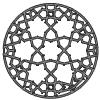
For a research project with Avşar Gürpınar in 2024, we studied lace patterns. During this process, I had the opportunity to try out two Grasshopper plugins: Parakeet and Clipper. When combined, they allow you to obtain laser-cutting patterns. Parakeet is a very good plugin that generates tessellations. This was something I always dreamed of developing back in my youth. 2-Uniform Tiling In this design, I used the Parakeet component named 2-Uniform Tiling. In geometry and tiling theory, a 2-uniform tiling…
More Scary Patterns
November 11, 2026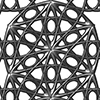
I had previously shared a few pattern animations (here, here, and here) from 2023 that felt a bit unsettling. Here, I am presenting the last four remaining in the archive of Grasshopper 1.0. To me, they feel a bit eerie, and I don’t even know why I made them this way. But I am sharing them anyway, thinking that maybe they could be useful to someone for a completely different, cheerful purpose. It is possible, but difficult, to create these…
Scary Patterns
August 6, 2026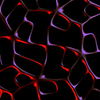
While digging through my archives, I found an old animation I made in 2023. Back then, I was generating patterns with Parakeet. Thanks to this talented add-on, I managed to create a nice pattern by dressing a different component onto a Snub Square tiling base. However, for some reason, things started turning into a horror movie after that. MultiPipe was popular back then. So, I converted this pattern into surfaces using MultiPipe and attempted an animation using Rhino’s rendered viewport…
Firefly and a Webcam
January 29, 2013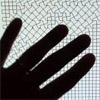
I finally installed Firefly, it immediately powers Grasshopper up with beautifully smart components, even if you don’t have Arduino it is still very useful. If you want to give it a try, first you have to install a small tool free from www.reactivision.com in order to send data to Firefly. After that, you may download and install firefly from their website, www.fireflyexperiments.com. It was the real-time inputs, my first interest. I was very excited to get data from my laptop’s…
Voronoi Bubbles
November 11, 2026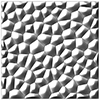
Informal use of Voronoi diagrams can be traced back to Descartes in 1644 Peter Gustav Lejeune Dirichlet used two-dimensional and three-dimensional Voronoi diagrams in his study of quadratic forms in 1850. British physician John Snow used a Voronoi-like diagram in 1854 to illustrate how the majority of people who died in the Broad Street cholera outbreak lived closer to the infected Broad Street pump than to any other water pump. Voronoi diagrams are named after Georgy Feodosievych Voronoy who defined…