
Robotic Chopstick Digger
Today in the Digital Fabrication course, we examined digital-physical translations utilizing the robots add-on for Grasshopper. Students learn how to get coordinate data from a physical environment, use it in the digital model and apply it to a robot motion. We aimed to dig chopsticks into an EPS block by using a special wooden tool called “Chopstick Digger”. In the first hour of the class, we attached the “pointer” tool, which is already calibrated to the robot. Students used “Actual Position” information in the smart pad and noted the coordinates of the corner points of the EPS block. Then, every student chose one chopstick and determined the coordinates of its tip point.
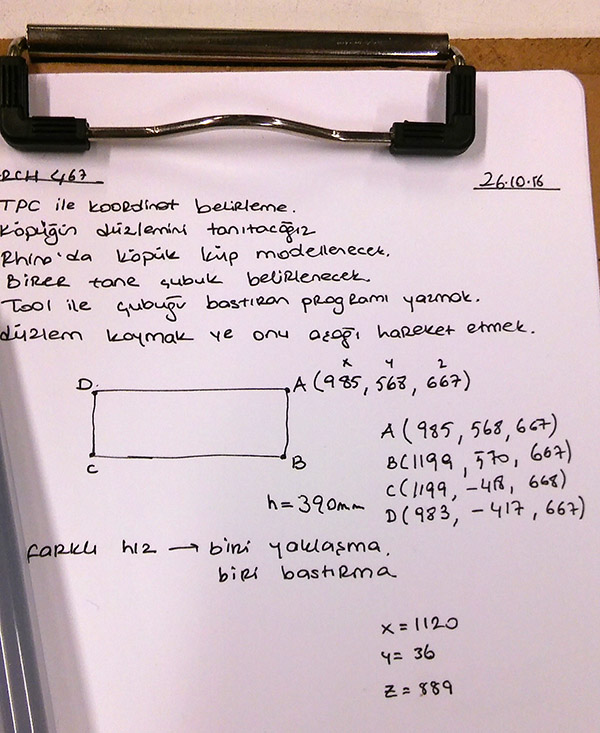
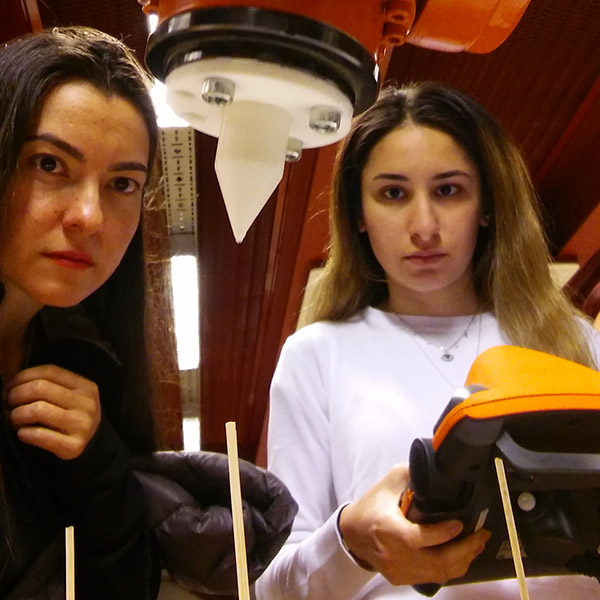
After gathering information, we went to the computer lab. where Grasshopper and robots would be utilized to use it. I gave the students a ready-made Grasshopper definition which is a basic setup of our robot. Students entered the coordinates of the EPS block and the coordinates of their chosen chopstick. Below is the code we started with:
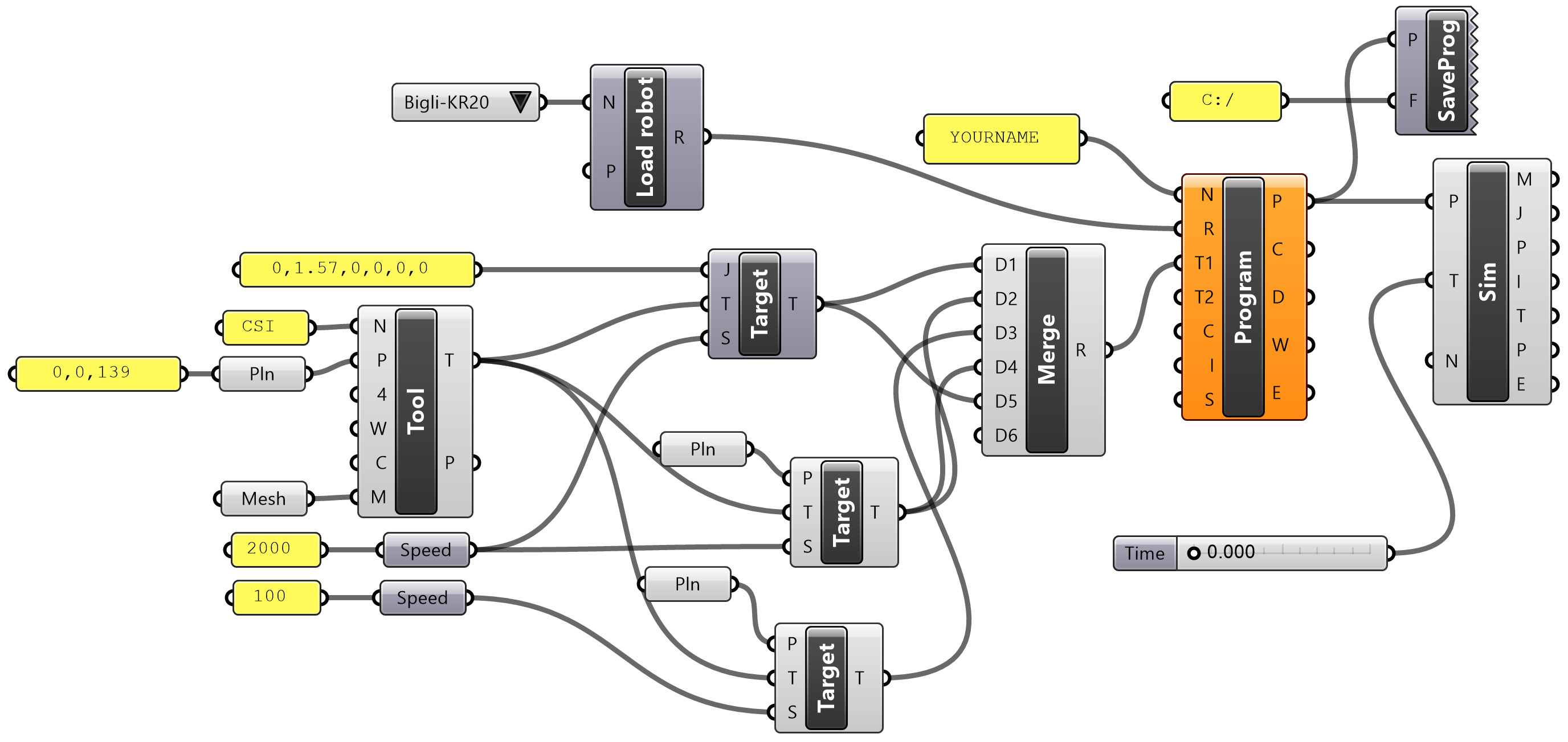
Here are the Chopstick Digger tool Rhino 5 file and the Grasshopper definition:
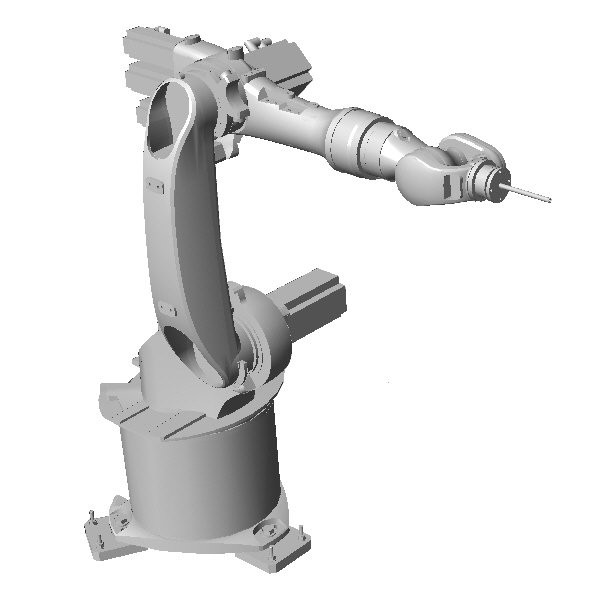
After mounting our “hi-tech” Chopstick Digger, we ran the codes generated by students to test if the translation between physical and digital spaces match. The chopstick pushing exercise was successful at the end of the third hour of today’s class. Next week, we hope to advance this exercise using more planes in Grasshopper, and more chopsticks in reality.
Cite this post
Related Posts
Parametric Tool Designer for KUKA PRC
August 7, 2024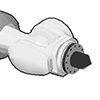
In architectural research, a significant challenge in robotic fabrication is replicating setups due to the unique configurations used in each study. There is a lack of a unified software platform connecting various researchers and their robotic setups. Additionally, the fabrication tools are typically not open-source and may not be versatile across different scenarios. I suggest using Grasshopper’s parametric modeling capabilities to address these challenges to create flexible robotic tools. Specifically, I’ve developed a definition that allows the design of tools….
Robotic Chopstick Digger Exercise
November 5, 2018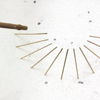
Today, we tried to understand one of the ways of generating multiple planes in Grasshopper. This is an important step in utilizing the robot program efficiently. Instead of manually jogging the robot, we designed the path that the robot will dig lots of chopsticks. In the “Robotic Chopstick Digger Exercise”, every student designed their own paths and decided the height, orientation, and number of sticks to be dug on an EPS block. I provided the Rhino and Grasshopper files with…
Tool Calibration in Robots
October 11, 2018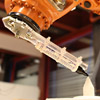
On the second day of the Digital Fabrication course, we tried to understand what is a “tool” and how to draw/ produce/ attach/calibrate a simple penholder tool for our robot. This study will hopefully make students aware of the effects of these procedures in robotic design and fabrication. The tool we used here is based on this Rhino drawing laser-cut from a waste plexiglass sheet. The flange of our robot has a diameter of 50mm and has 8 holes for screws with a…
RHWC of Convex Polyhedra
September 12, 2026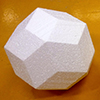
Hot-wire cutting (HWC) is a cost-effective subtractive fabrication technique used across many industries. The basic idea of HWC is to cut a block of material by melting it with a resistance-heated wire under tension. It is effective for materials with low melting temperatures, such as expanded polystyrene (EPS) and extruded polystyrene (XPS). Generally, HWC is associated with mold production in the architecture, engineering, and construction (AEC) industries. Robotic hot-wire cutting (RHWC) is a subtopic of HWC. In a standard RHWC…
Robotic Path Planning for Concrete Printing
August 19, 2026
Three-dimensional concrete printing (3DCP) is an innovative digital fabrication and automation technique based on additive manufacturing that enables the creation of complex and customized structures in the architecture and construction industry. Its most notable advantages include eliminating formwork costs and labor (Buswell et al., 2020; Lyu et al., 2021; Kaliyavaradhan et al., 2022) and facilitating the fabrication of structural elements with complex curvatures, particularly in printing systems utilizing industrial robotic arms (Alabbasi et al., 2023; De Soto et al., 2018)….