
Rhombille Tiling on Surface
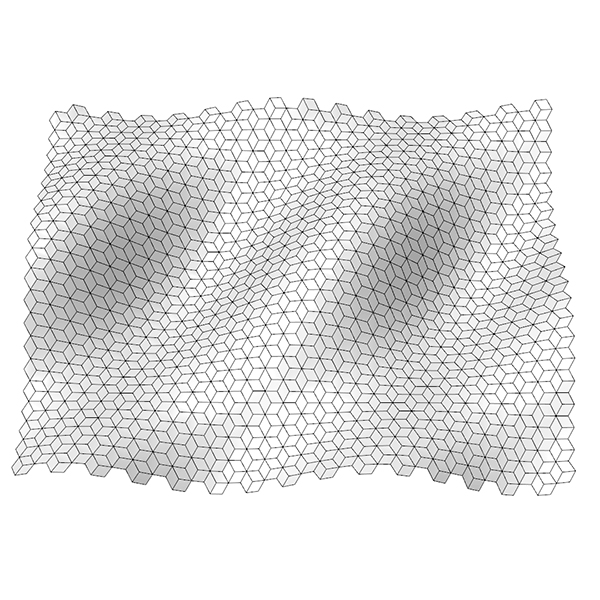
This is an update on my 2012 exercise on rhombille tiling. This reminded me of the old-school subdivisions of surfaces again after 11 years. It was while reading about rhombic dodecahedron (the stackable solid), that I came across this cute tiling. It’s quite simple, just a hexagonal grid with a special reconstruction. I decided to recreate it by using well-known native Grasshopper components. I animated the result with a variation of the Breaststroke surface function (described here). Then I reconstructed as three quadrangles with proper vertex IDs. These IDs are always the same. So it seems that it is possible to apply it to any Rhino surface.
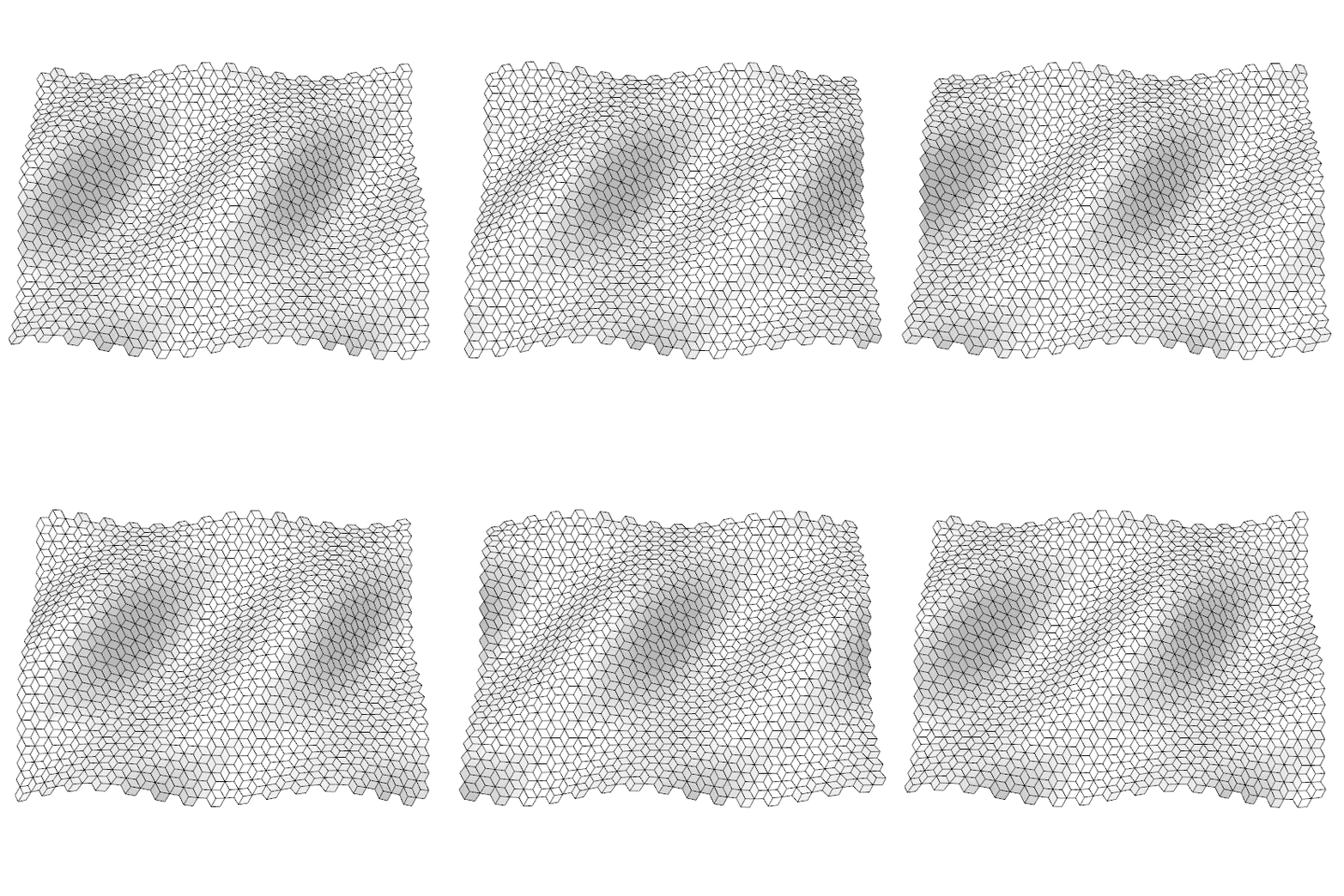
You may subdivide any surface to create such tessellations, this time I chose to rebuild the surface from hexagonal cells. In this Grasshopper definition, first, I developed the surface by using a function. This function gets x and y values and generates a z value. After creating the surface, I decompose and map a hexagonal grid onto that surface. One can simplify this definition better in the future. However, this works very well. It is also educational for beginners of Grasshopper. It looks like a paneling at first. But it is not, because there is no flat planarization here.
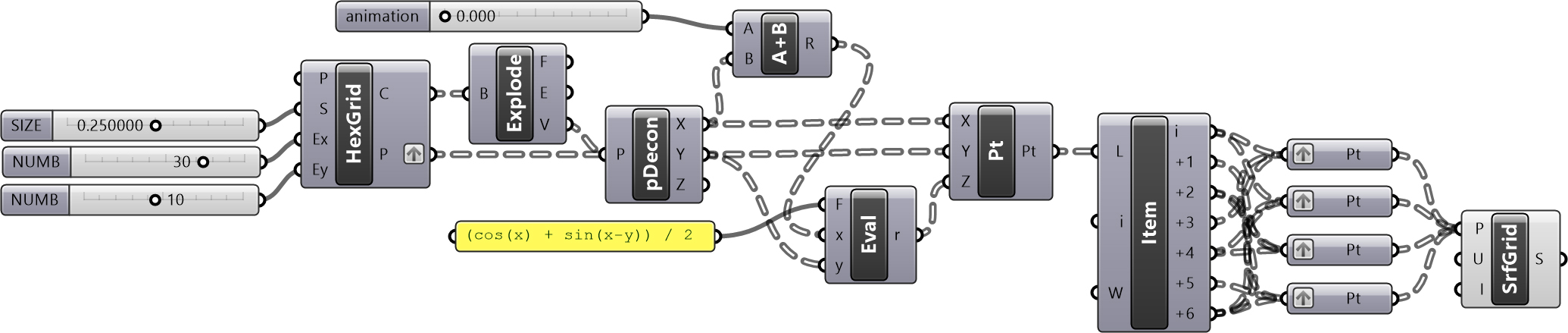
I updated the 2012 definition in 2023. I wrote the equation of the function in a Panel. You can rebuild the definition by looking at the definition above. However, the List Item indices are a bit tricky. Here are the index orders of those four Point containers: (0,3,6), (6,4,0), (1,2,4), and (2,6,5).
Cite this post
Related Posts
Defective Use of Algorithms: TPI Disability
June 24, 2013
This is based on my failure of creating an optimum solution for planar polygonal subdivisions. There is a method called Tangent Plane Intersection (TPI), explained briefly here (sometimes similar algorithms are called “planar remeshing” and “variational shape approximation”) which is effectively used in the Trada pavilion (here). I tried to implement a similar method using only native Grasshopper components and no recursion, but it quickly became much more complicated than I thought. It was based on the simple idea that…
Quadrilateral Surface Tessellation
April 9, 2012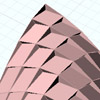
As far as I understood, it is impossible to physically construct double-curved surfaces from quadrilateral and planar faces. This definition tries to find an optimized alternative to this problem. Any surface, single or double curved, is divided into standard sub surfaces. But this time, those surfaces are treated as planar surfaces, therefore one corner is moved to meet this requirement. The output consists of only planar surfaces ready for fabrication. There are potential improvements to this definition such as finding…
Surface Components Basics
January 17, 2012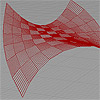
This is a basic formation of component-based design in a dataflow environment. A double-curved surface is subdivided and re-constructed using straight sections. Parametric model of a surface construction by variable components. The main data list of subsurfaces are distributed into four distinct lists, that will be used to construct lines out of double-curved quadrilateral faces. Such definitions could be further advanced by adding a precise fabrication detail.
Surface Subdivision
December 25, 2011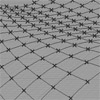
Here is the fundamental of surface subdivision in Grasshopper. In order to design a parametric truss exercise, this is the generally accepted starting point. Get a surface from the file, subdivide it into U and V directions to create point lists, and then manipulate these points to create something interesting. Having a list of points would also present good potential regarding attraction with other entities, such as point or curve attractors. As you probably notice, this is the new version…
Space-filling Rhombic Dodecahedra
February 10, 2024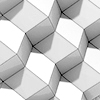
The rhombic dodecahedron is a polyhedron with twelve rhombus-shaped faces, where each face has four sides of equal length. It is possible to construct the space-filling variant of the rhombic dodecahedron by arranging multiple such rhombic dodecahedra in a regular pattern so that they fill space without leaving any gaps. In his 1611 work on snowflakes titled “Strena seu de Nive Sexangula,” Johannes Kepler observed that honey bees utilize the geometric structure of rhombic dodecahedra to construct honeycombs. These honeycombs…