
Evolutionary Solver Introduction
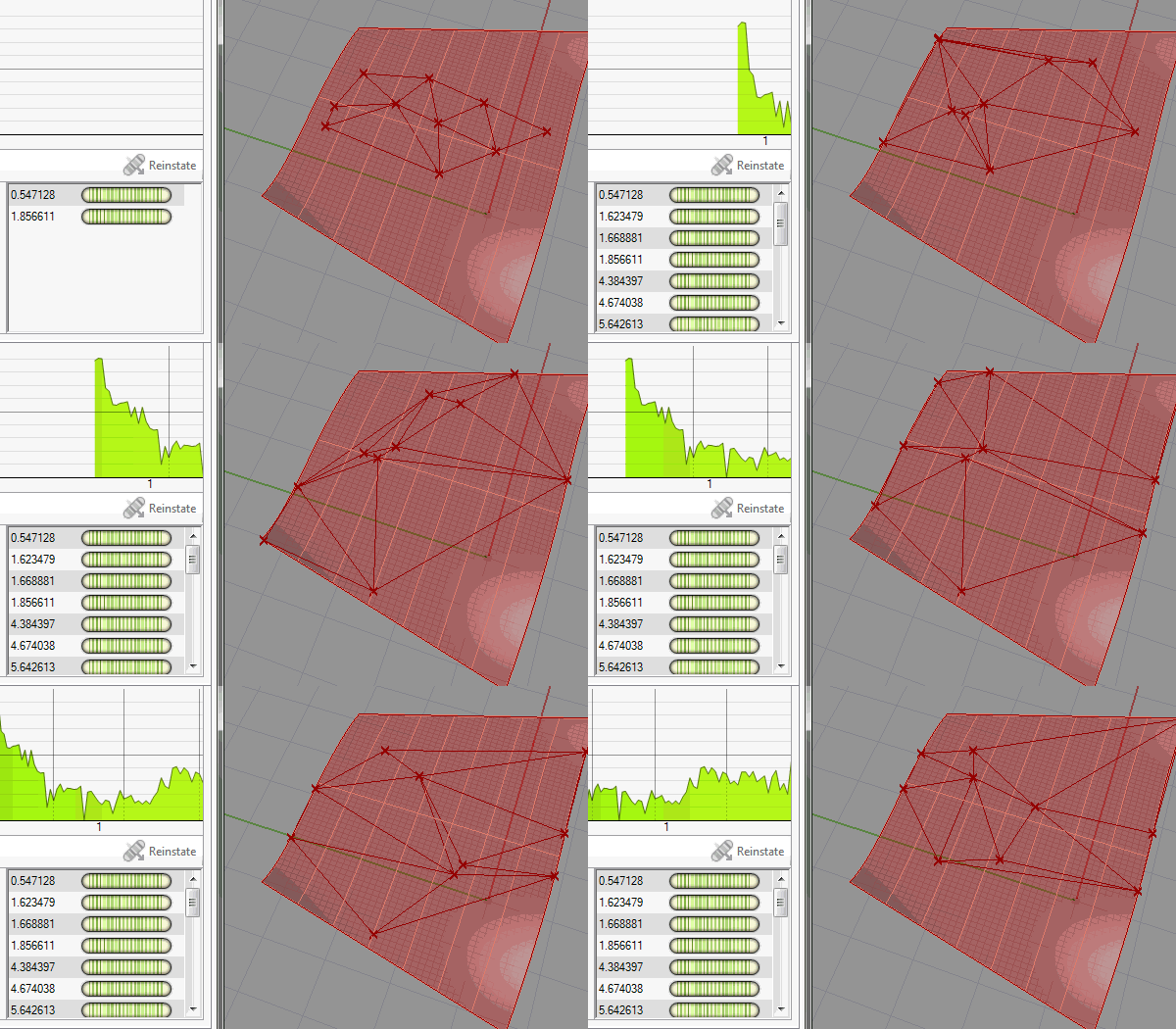
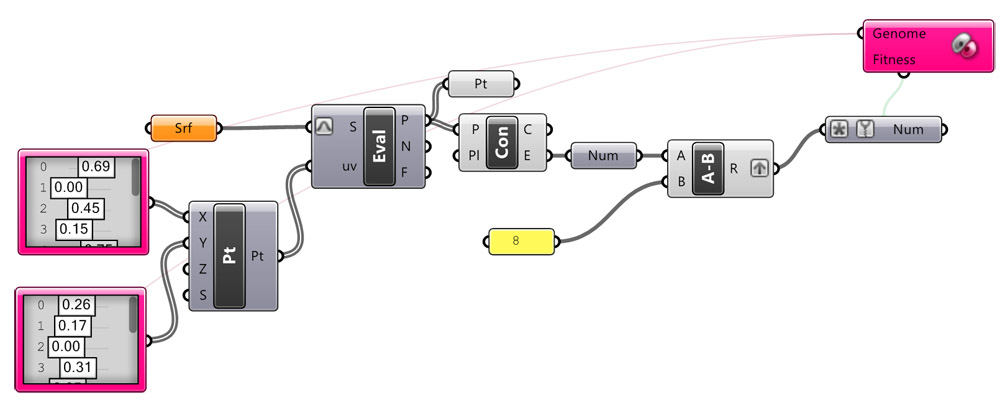
Galapagos was a great improvement when it became available natively within Grasshopper as an Evolutionary Solver. However, I couldn’t find time to examine it until recently. This examination gave me an idea of algorithmic thinking, tool making, and tool using. The first experiment shown below tries to solve equilateral triangulation, based on the Delaunay method.
Galapagos has two different solvers, named “simulated annealing solver” and “evolutionary solver” shown respectively below. Both of them are trying to reach a fitness value defined by the user. You may enter “Maximize”, “Minimize” or any numeric value to this input. It is important to formulate this value according to your design intentions. There are limited explanation links from the component inside. But it seems they are not enough. In 2022, after more than ten years, Galapagos hasn’t changed a lot. There are similar add-ons in Grasshopper, which I should also study. I hope you may find this beginning useful if you are also trying to “solve” the evolutionary solver.
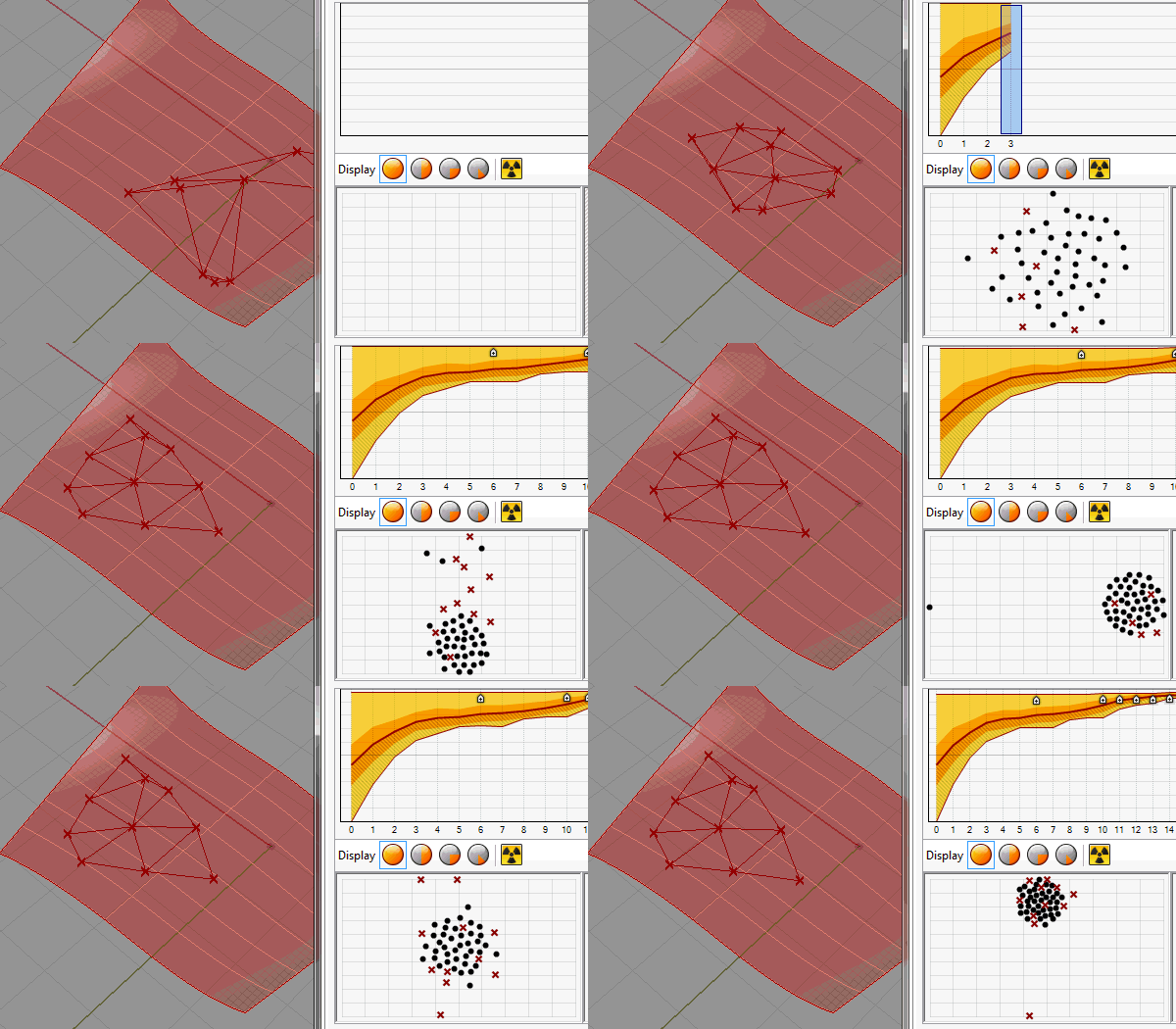
In a sense, evolutionary simulations replace design since artists can use this software to breed new forms rather than specifically design them. This is basically correct but, as I argue below, there is a part of the process in which deliberate design is still a crucial component.
De Landa, ManuelThe sad thing about artificial intelligence is that it lacks artifice and therefore intelligence.
Baudrillard, Jean
Cite this post
Related Posts
Packing Objects with Galapagos
May 22, 2012
After the starting point of the Galapagos, there came another attempt to utilize this beautiful addition of David Rutten. This time, I worked over the night to tell it what I want. The aim was (or seemed to be) simple at first sight. I wanted several shapes (not one) to fit into an area, as smallest as possible, without overlaps. This is packing objects. A bounding box and area components quickly gave me the first fitness value. The area of the…
Evolutionary Optimization of Tilings
April 19, 2025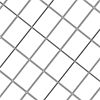
In large-scale projects, calculating tiling layouts for wall, floor, and ceiling surfaces becomes even more critical. Evolutionary optimization of these tilings seemed to be a viable approach yesterday. Considering how time-consuming and labor-intensive this process can be, I tried using Galapagos, an old but often overlooked feature in Grasshopper, which might be particularly useful in this situation. Galapagos provides an alternative interface for evolutionary optimization within Grasshopper. It works by minimizing or maximizing a fitness value you define, using parameters…
Kangaroo 2 Test
April 27, 2015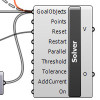
After several readings, I’ve understood the way of working the new and very interesting feature of Kangaroo 2: “Grab”. Now, we can actually grab the Grasshopper objects from Rhino viewport! Also, on one hand, the new Kangaroo has a very special way of working (not common to us, native Grasshopper users) and on the other hand, it is very very easy to use and understand now. I loved that. Here is the classical truss exercise I’ve made with my students…
Fermat’s Nightmare
October 14, 2026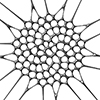
Revisiting a specific mathematical phenomenon that I previously explored twice, here (in 2017) and here (in 2011), from a different angle in 2026 now. This was the final video (from 2023) that I found in my junk folder during the blog’s resurrection. Today, designers mostly know Fermat through the famous 137.5-degree angle of rotation, which is the mathematical formula used to describe the arrangement of sunflower seeds. However, today I will speculate on a nightmare of Fermat’s. Because Fermat, in…
Campanus Sphere
October 9, 2026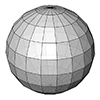
I want to introduce a concept I came across the other day, one I had never heard of before, along with a few fantastic websites. The Campanus Sphere is essentially a rather crude spherical representation, the kind I’m used to seeing in (very old) computer games, and it also makes a nice nod to 80s disco culture. I also recall that in many older CAD software packages, spheres and sphere-related Mesh objects were represented as polyhedra using this method. However,…