
Packing Objects with Galapagos
After the starting point of the Galapagos, there came another attempt to utilize this beautiful addition of David Rutten. This time, I worked over the night to tell it what I want. The aim was (or seemed to be) simple at first sight. I wanted several shapes (not one) to fit into an area, as smallest as possible, without overlaps. This is packing objects. A bounding box and area components quickly gave me the first fitness value. The area of the bounding rectangle should be as small as possible. That is a sentence I think Galapagos could easily understand. However, when I came to the other sentence, that is “without overlaps” that was the big question. My partial solution was to identify the total area of the shapes and check it with the present “unified” area of the shape. I found no way to tell Grasshopper that one or several objects in a set overlap.
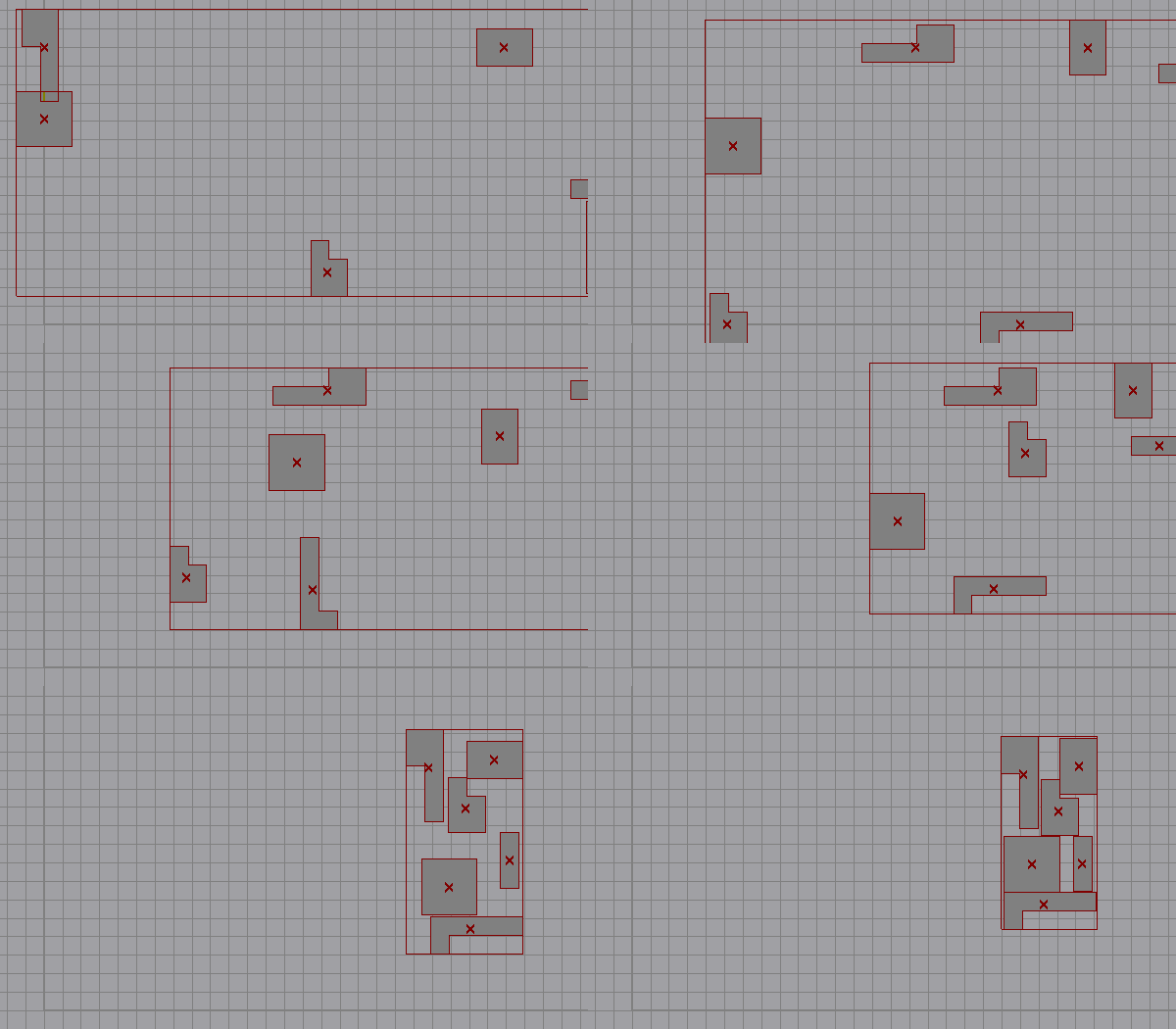
The third challenge of packing objects was to evaluate these two to create a single fitness number. As I cannot tell Galapagos that these objects should never collide, then the overlapping curve areas are multiplied by 20. Also, I divided the total size of the bounding rectangle by 10 to decrease its effectiveness. Then, these two numbers are added together to create Galapagos fitness value. The funny thing is to see it actually working. Whenever it creates an overlap, it suddenly draws back. I felt I’d terrified Galapagos. It tries to decrease the total bounding area carefully, without overlapping. Although I’ve changed the Galapagos parameters, it cannot fully solve this problem. Maybe I’ve programmed it wrong but somehow it now seems to me a little out of the Galapagos’ context. Here is my working file, feel free to use and advance it;
Cite this post
Related Posts
Evolutionary Solver Introduction
May 22, 2012
Galapagos was a great improvement when it became available natively within Grasshopper as an Evolutionary Solver. However, I couldn’t find time to examine it until recently. This examination gave me an idea of algorithmic thinking, tool making, and tool using. The first experiment shown below tries to solve equilateral triangulation, based on the Delaunay method. Galapagos has two different solvers, named “simulated annealing solver” and “evolutionary solver” shown respectively below. Both of them are trying to reach a fitness value…
Circle Packing Experiments
October 3, 2012
Since last week, I’m very curious about circle packing. There are a couple of complete solutions on the internet. I’m still in the early steps of such a solution yet. A full circle packing means that it does not include any gaps and each circle is tangent to all possible neighbors. Sounds easy in Grasshopper but I couldn’t see any solution yet. There are some circle-packing attempts but they have gaps. Also, I don’t want to use an evolutionary solver…
Evolutionary Optimization of Tilings
April 19, 2025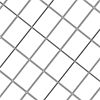
In large-scale projects, calculating tiling layouts for wall, floor, and ceiling surfaces becomes even more critical. Evolutionary optimization of these tilings seemed to be a viable approach yesterday. Considering how time-consuming and labor-intensive this process can be, I tried using Galapagos, an old but often overlooked feature in Grasshopper, which might be particularly useful in this situation. Galapagos provides an alternative interface for evolutionary optimization within Grasshopper. It works by minimizing or maximizing a fitness value you define, using parameters…
Kangaroo 2 Test
April 27, 2015
After several readings, I’ve understood the way of working the new and very interesting feature of Kangaroo 2: “Grab”. Now, we can actually grab the Grasshopper objects from Rhino viewport! Also, on one hand, the new Kangaroo has a very special way of working (not common to us, native Grasshopper users) and on the other hand, it is very very easy to use and understand now. I loved that. Here is the classical truss exercise I’ve made with my students…
Open Nest
July 24, 2023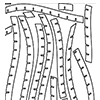
In this short trial, I will be testing the Open Nest add-on for Grasshopper. The add-on is available in food4rhino as of 2023. For this test, I will use the latest exercise on Interlocking structures I experimented with here. Nesting is an important topic, especially in today’s economic crisis. It reduces the waste materials on laser-cut plates. First, I should re-visit the interlocking structures Grasshopper definition here. The below image is the new definition for the interlocking structure: The new…