
MetaBalls in 3D
Playing with the 2D Metaball component in Grasshopper. I was curious about why there are no Metaballs in 3D in Grasshopper. Then, I realized that in fact, the 2D Metaball component is creating a section of a 3D Metaball computation. I think it is a topic worth studying even 10 years after this original post to develop an easy way to create the metaball surfaces. In 2012, thanks to the Grasshopper’s easy interface, I was able to create a series of planes from the “Shortest Path” study quickly.
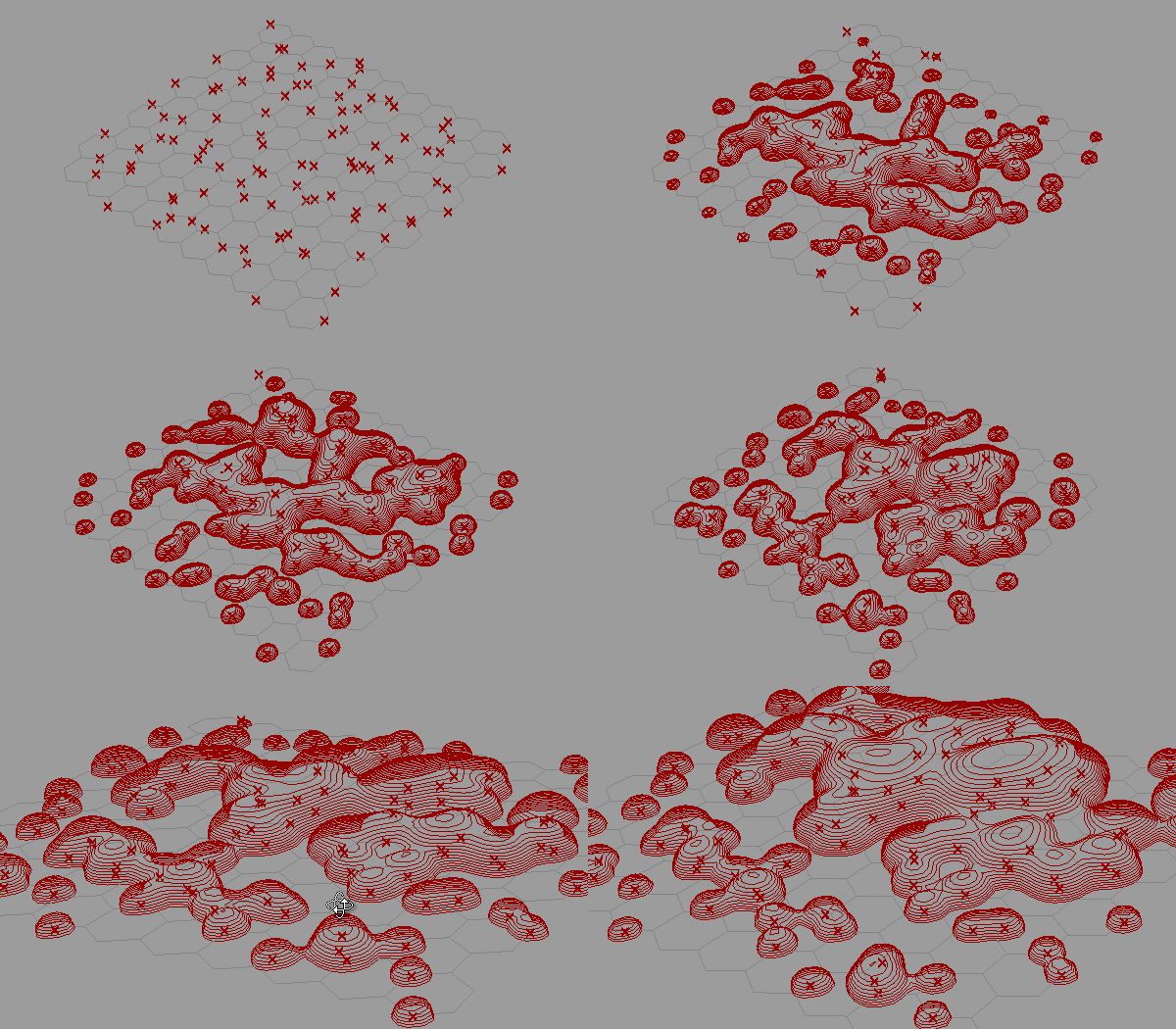
Grasshopper is an easy and very promising tool for form-finding. I’ve been collecting such experiences for almost 4 years. It is very helpful to construct your own design knowledge. Still, I have no idea if these experiences would lead to proper practice and pedagogy of architecture.
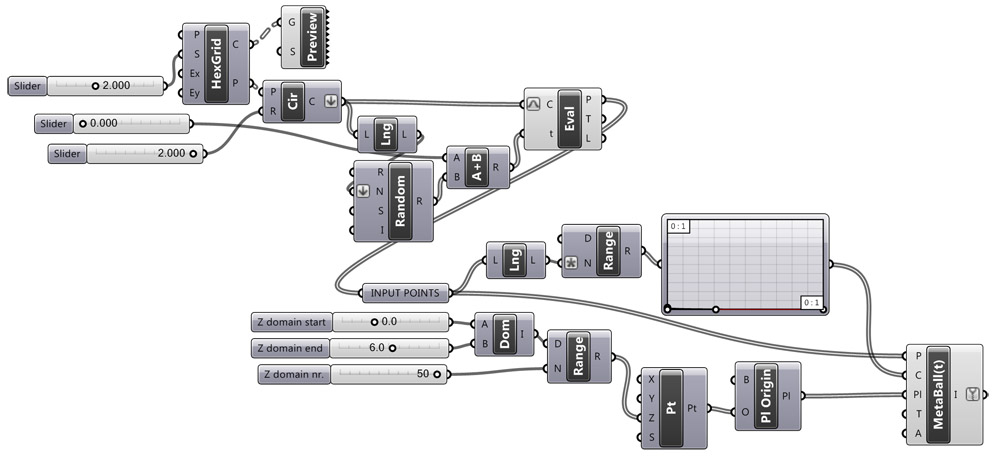
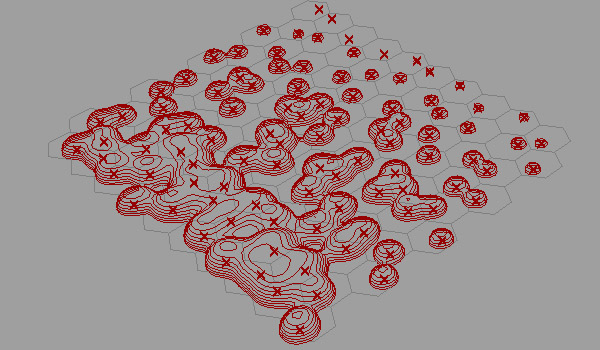
Here is the Metaballs in 3D Grasshopper definition. I created that file in 2012 and it still worked when I checked in 2021. Grasshopper marks some of the components as “Old”. However, they still work as expected.
I am sure that the most obvious question here would be the creation of surfaces, not only the curves. I think there are some tools and add-ons that would do this job. However, I am afraid I don’t have time to install and try them. But I would be glad to create a solution natively inside Grasshopper to do that. A nice Python script can be helpful here. Maybe I will study it in the future.
To conclude, here are some quotes from Greg Lynn, father of the term “Blob Architecture”;
We don’t want to make things look familiar but we do want to look real… to have a cosmic scale but still have gravitational logic.
Greg Lynn, “New City” (Video Lecture) in Seed Design Series, Seed Magazine.
In the end it’s geometry… Visualizing geometry and thinking abstractly was something that came easily. When I went to college I got out of architecture for a while, and majored in philosophy. Then I realized that all the philosophy I was reading was really about form.
Greg Lyenn, Eva Priz (Interviewer). “Interview.” in Index Magazine. 2005
Cite this post
Related Posts
Drops
June 22, 2012
Using SPM Vector Components developed by two talented people, Daniel Hambleton and Chris Walsh (website here), I’ve studied ways of displaying dynamic diagrams of form. I’ve modified an example file and found myself in a surprising formal exploration. It’s like watching the clouds, giving them meaning like a sheep, a flower, a baby… This needs SPM tools to be installed first and includes a timer component. To run the simulation, double-click on the lower toggle (set it to false) and run the timer…
Fermat’s Nightmare
October 14, 2026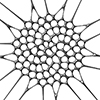
Revisiting a specific mathematical phenomenon that I previously explored twice, here (in 2017) and here (in 2011), from a different angle in 2026 now. This was the final video (from 2023) that I found in my junk folder during the blog’s resurrection. Today, designers mostly know Fermat through the famous 137.5-degree angle of rotation, which is the mathematical formula used to describe the arrangement of sunflower seeds. However, today I will speculate on a nightmare of Fermat’s. Because Fermat, in…
Campanus Sphere
October 9, 2026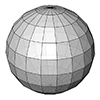
I want to introduce a concept I came across the other day, one I had never heard of before, along with a few fantastic websites. The Campanus Sphere is essentially a rather crude spherical representation, the kind I’m used to seeing in (very old) computer games, and it also makes a nice nod to 80s disco culture. I also recall that in many older CAD software packages, spheres and sphere-related Mesh objects were represented as polyhedra using this method. However,…
Field Deformation
October 8, 2026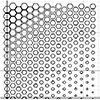
Ever since I restructured designcoding, I’m still sorting through the trash folder. All 580 posts published on the blog have been reviewed, and their files have been uploaded as open source. The mysterious trash folder, where I couldn’t even tell where things belonged, is shrinking fast. While checking this folder yesterday, I found a video. This is probably a simple tutorial I prepared about 10 years ago for the parametric modeling elective course (probably related to this 2012 post). The…
Damped Harmonic Motion
October 7, 2026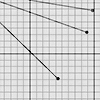
Have you ever thought about making a damped pendulum in Grasshopper? I have no idea why, but I did. I just decided to transfer a Python snippet I found online into a Grasshopper definition. Here, the Initial Angle (Radians) Number slider sets the initial angle to any value from 0 to Pi. The letter G represents the acceleration due to gravity (approximately 9.81 m/s2). This is the primary force pulling the pendulum downward. As you know, pendulums wouldn’t swing without…