
Louvered Structures Update
I see that nowadays everything is accelerating at a terrifying pace with AI. Acting like a complete dinosaur in yesterday’s class, I looked back and talked about this facade design code I wrote in 2015. One of its early versions was a classic wavy facade using an aluminum frame and membrane. 10–15 years ago, these were very trendy. They were designed for use on a factory facade. Right now, my goal is to use this to explain some fundamental concepts of Grasshopper. I updated the Grasshopper code and tried to make it work using the fewest components. We turn a curve into this facade using just two number sliders and two Graph Mappers. The first number slider determines how many strips will be created, and the Graph Mappers determine the deformation to apply. This actually consists of lofting three lines.
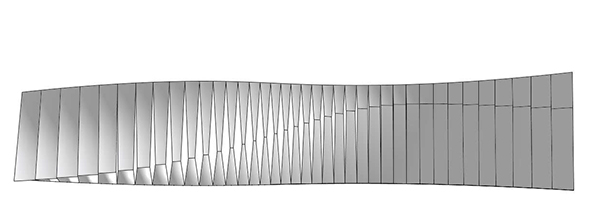
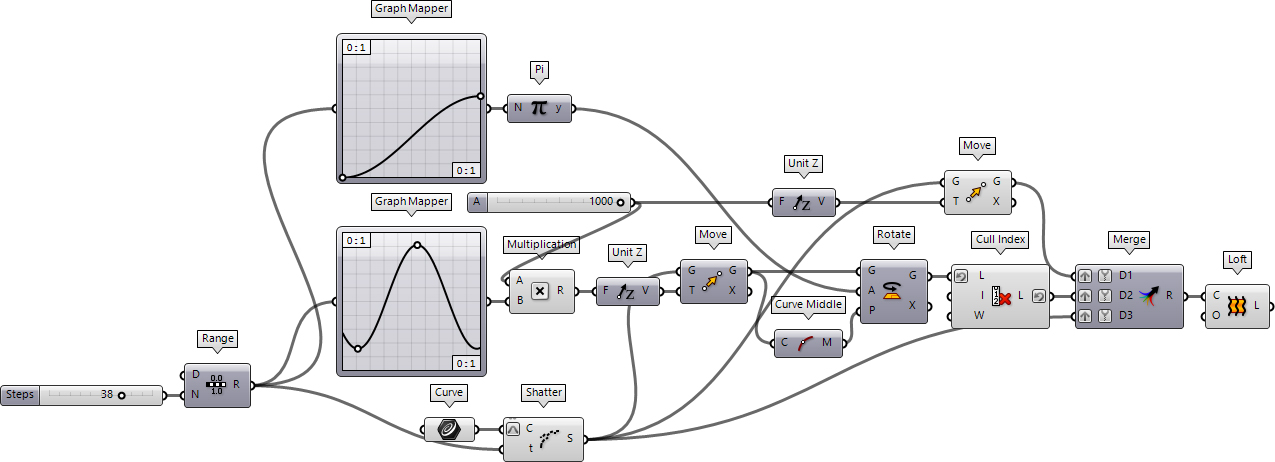
Our class was about lofting variable numbers of strips in groups of three. After determining the number of strips and dividing the curve, the top and bottom edges of the loft operation are already determined. We copy the bottom edge upward using a height parameter. The important part is the middle edges. We move them upward and rotate them sequentially using two Graph Mappers. And in the final step, we see the magic of the Graft operation. These three curves come from three different streams. However, because they are grafted, they turn into lists of three.
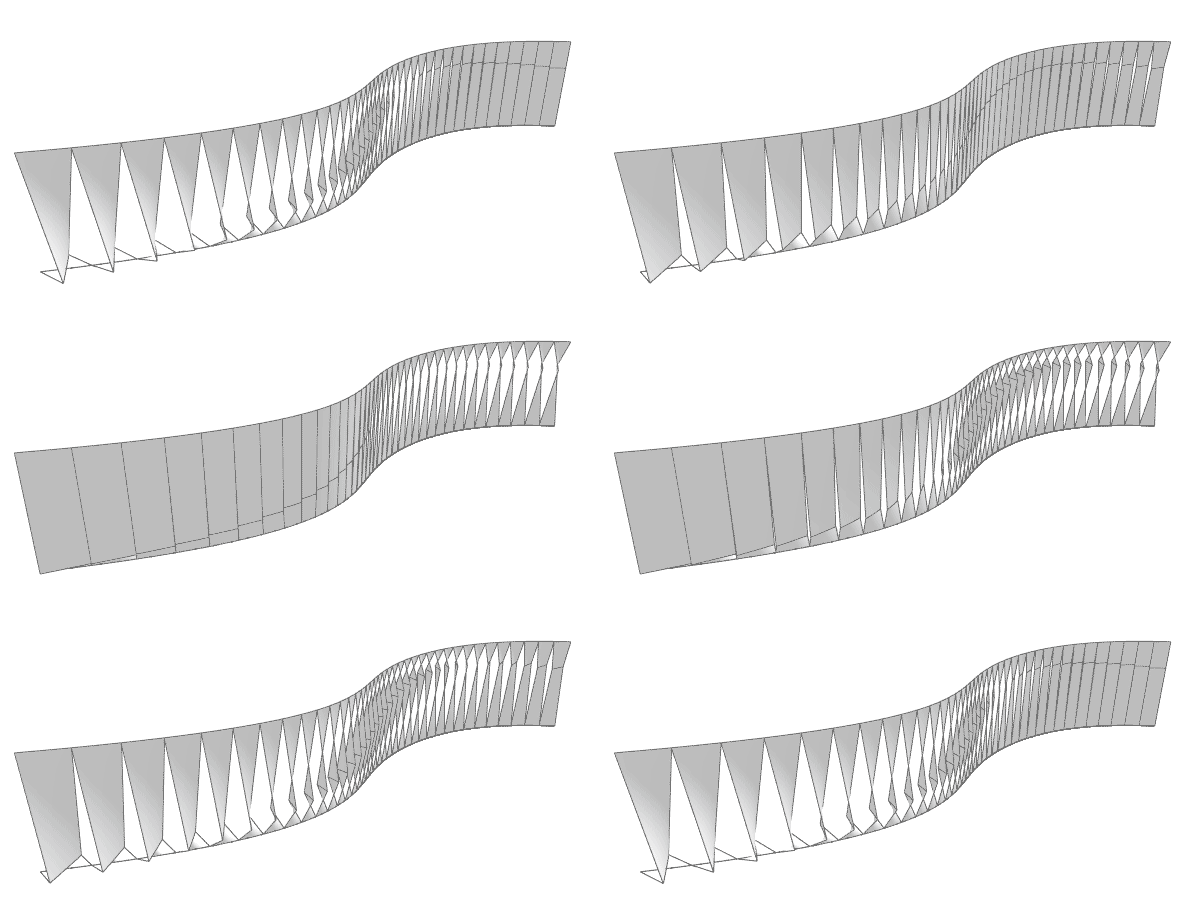
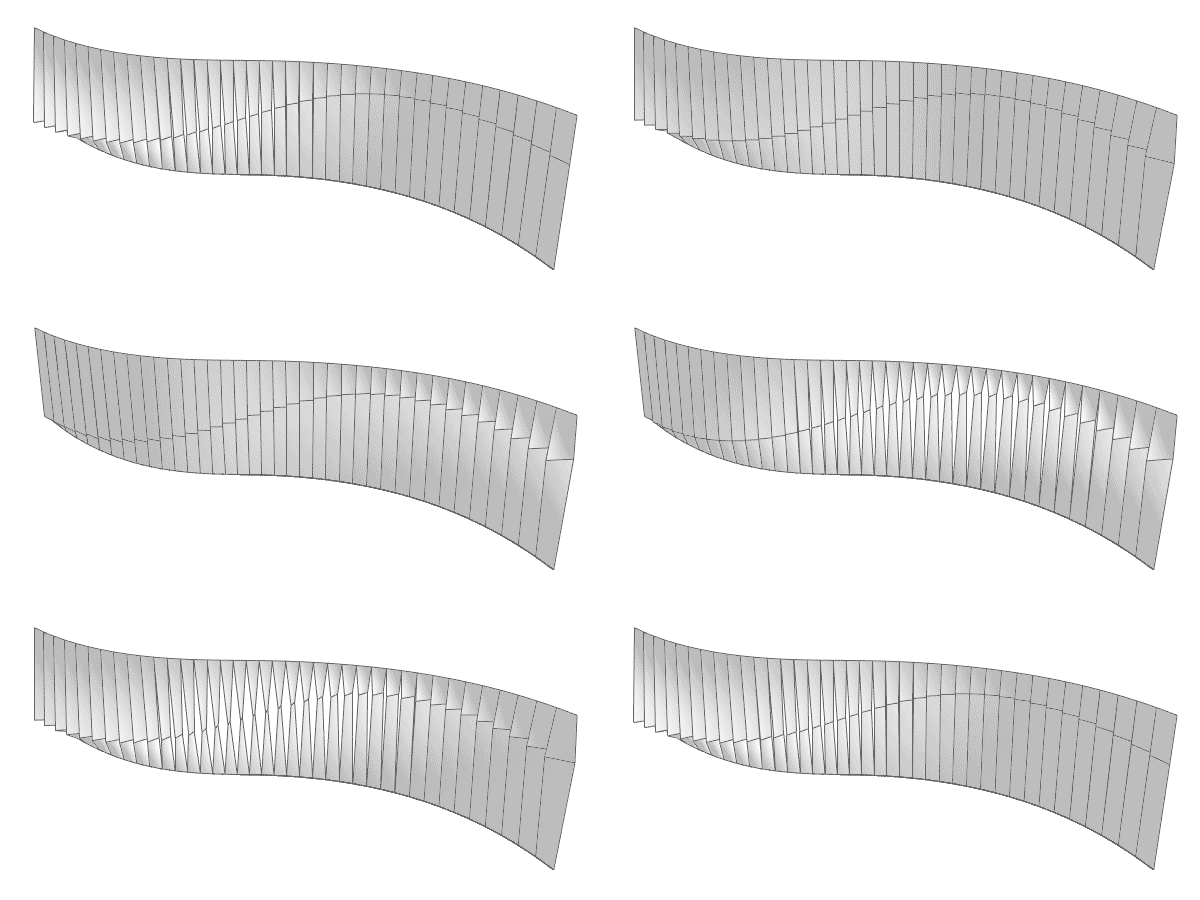
I have always loved minimal Gh codes that make such sketches. If I were a student and wanted to learn Gh, I would try to understand these first. Now, a great goal could be to run and advance these old codes in the new Grasshopper 2.0 version as well. Lately, as I think more in terms of symbols and focus on them, I cannot help but wonder whether we are missing out on something. In the future, I might develop these ideas further by considering productions in other media (such as music or painting).
Cite this post
Related Posts
Precast Parapets in Grasshopper
November 13, 2026
I found the Grasshopper code I wrote in 2014 while helping a friend with a construction detail project. These structures were cigar-shaped and featured quite challenging interior layouts. A significant part of the detail design phase was the facade study. Such a waveform was requested for the balcony railings, wrapping around all the building’s facades. As you can guess, Grasshopper was a tailor-made tool for this exact job. I revised the code in 2020. Unfortunately, I couldn’t find the version…
Point Waves
May 29, 2023
Here is another basic exercise in Grasshopper. This exercise “Point Waves” creates wave-like deformations on the grids of points. The major function of the definition is to calculate the distances from every point of a grid to an attractor point, with the help of Distance (Dist). Then it sorts them from the smallest to the largest (= closest to farthest) with the Sort List (Sort) component. This component takes and matches two lists of the same size, called key (K)…
Wave Generator
April 17, 2024
Here is a wave generator code I developed using Grasshopper and Python. While searching for a solution to the realistic water simulations, I came up with the Gerstner Waves. I tried to implement it. However, I came up with this final result, which is not a Gerstner Wave generator, but a much simpler one. It combines many user-fed wave components and calculates the resulting single wave. I played with this code for hours with different components. So, it is worth…
Rhombus Facade
June 4, 2023
This is the continuation of a very old parametric model of a building facade, presented here. I will introduce the basic Grasshopper definitions of several alternative designs. The first one is the rhombus facade. The first part of the algorithm deals with the necessary data collection. We reference a polyline from the Rhino model as the path that the facade will follow. After that, we create vertical lines around the path. Then, we shatter these lines by using a Graph…
Facade Studies
April 11, 2015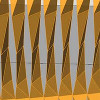
Some facade studies as early sketches of an architectural project; all of them are utilizing a similar Grasshopper approach. My favorite “Graph Mapper” generates the overall gridal deformation, then some of them are drawing geometry for membranes, while others are generated to be realized from sheet metal. Hopefully, one or two of these could be further studied: “Below, I am sharing my favorite among these codes. I had to pull off some geometric acrobatics to affect all four facades of…