designcoding
About Table of Contents Keywords Monthly Archive
Support designcoding!

November 2026

18 posts

Precast Parapets in Grasshopper

November 13, 2026

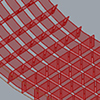
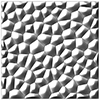
I found the Grasshopper code I wrote in 2014 while helping a friend with a construction detail project. These structures were cigar-shaped and featured quite challenging interior layouts. A significant part of the detail design phase was the facade study. Such a waveform was requested for the balcony railings, wrapping around all the building’s facades. As you can guess, Grasshopper was a tailor-made tool for this exact job. I revised the code in 2020. Unfortunately, I couldn’t find the version…
Polyhedra Library

November 11, 2026

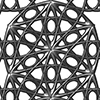
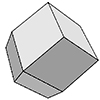
I would like to share my Polyhedra library, which I have used in many projects. Initially, I wanted to build this code based on the geometric constructions of polyhedra. However, because I urgently needed it for projects I was working on at the time, I took a simpler route and hardcoded the vertex coordinates directly inside. Yes, that wasn’t quite in the spirit of designcoding, which is why I called it a “library” rather than a “Polyhedra Generator.” Currently, the…

Voronoi Bubbles

November 11, 2026

Informal use of Voronoi diagrams can be traced back to Descartes in 1644 Peter Gustav Lejeune Dirichlet used two-dimensional and three-dimensional Voronoi diagrams in his study of quadratic forms in 1850. British physician John Snow used a Voronoi-like diagram in 1854 to illustrate how the majority of people who died in the Broad Street cholera outbreak lived closer to the infected Broad Street pump than to any other water pump. Voronoi diagrams are named after Georgy Feodosievych Voronoy who defined…

More Scary Patterns

November 11, 2026

I had previously shared a few pattern animations (here, here, and here) from 2023 that felt a bit unsettling. Here, I am presenting the last four remaining in the archive of Grasshopper 1.0. To me, they feel a bit eerie, and I don’t even know why I made them this way. But I am sharing them anyway, thinking that maybe they could be useful to someone for a completely different, cheerful purpose. It is possible, but difficult, to create these…

Adaptive Waffle System

November 10, 2026

Since I still haven’t been able to upgrade to Windows 11, I am continuing with Rhino 8 and Grasshopper 1. But I think, hopefully, I’ll be able to sort it out soon. In the meantime, I’ll be publishing the last pieces of my remaining archive related to GH 1. Regarding interlocking (waffle) systems, I finally learned how to use the Region Slits component in GH 1, which I had never been able to use until now. I’ve been doing various…

Frege and Logicism

November 7, 2026

Today’s Digital Culture reading was on Frege. After the historical process shaped by thinkers like Hobbes and Leibniz, and by the effects of capitalism, I thought reading Frege would provide a good foundation before moving on to Wittgenstein. Gottlob Frege (1848-1925) was a German mathematician and logician. He spent most of his academic life at the University of Jena. Regarded as one of the founders of modern logic and analytic philosophy, Frege argued that the foundations of mathematics should be…

Guitar Shape

November 2, 2026

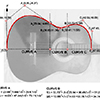
Traditionally, when shaping a guitar form, a luthier relies on a combination of craftsmanship and precise geometric tools. This process involves mastering wood-bending techniques around rigid molds, guided by physical templates to achieve the desired acoustic and aesthetic curves. Curves, once more I love talking about this so much. Could my obsession with Bézier curves be OCD? The history of curved shape construction reflects a transformative journey from physical craftsmanship to sophisticated digital computation, primarily driven by the demands of…

Butterfly Curve

November 2, 2026

The Butterfly Curve is a special planar curve consisting of elegant functions, first described in 1989 by the American mathematician Temple H. Fay in Mathematics Magazine. Its polar-coordinate form is commonly used, though it can also be defined by two parametric functions in Cartesian coordinates. In Praise of Useless Things The Butterfly Curve has no functional role or practical application in modern technology or theory (it is frequently confused with the Lorenz Attractor, to which it is totally unrelated). It…

« 1 2
  • Chapters

    • Algorithms
    • Discourses
    • Escapes
    • Fabrications
    • Studios
  • Explore

    • Table of Contents
    • Monthly Archive

    • All Keywords
    • #responsive
    • #arduino
    • #kuka-prc
    • #shape-grammars
    • #spiral
    • #euclidean-construction
    • #relief
    • #maxscript
    • #golden-ratio
    • #simulation
    • #grid
    • #mosque
    • #parakeet
    • #paneling
    • #hyperbolic-paraboloid
    • #text
    • #platonic-solid
    • #escher
    • #koch
    • #regulations
  • Search

  • Support designcoding!

  • Enjoying designcoding? Support me on Patreon to keep it growing. Thank you!

  • copyright 2026 designcoding.net | about | privacy policy | end user license agreement