
Seamless Patterns
In this exercise, we asked students to develop a method to produce custom tessellations. This is based on the analysis of what is called “Islamic patterns”. We have discussed Eric Brough‘s famous book “Islamic Geometric Patterns”, regarding geometric relationships and linear connectivities via underlying tessellations (such as regular square and hexagonal). Thus, this geometry and drawing exercise is called “Seamless Patterns” in the Design Geometry course at İstanbul Bilgi University.
By taking this brief, students generated patterns along with their step-by-step explanations. Students designed the patterns and at the same time, they started learning how to use the CAD software Rhinoceros. I believe that the “Seamless Patterns” exercise is still a good one because of its balance between technical and designerly skills for the freshman students. Here are some results from our 2012 Fall semester students;
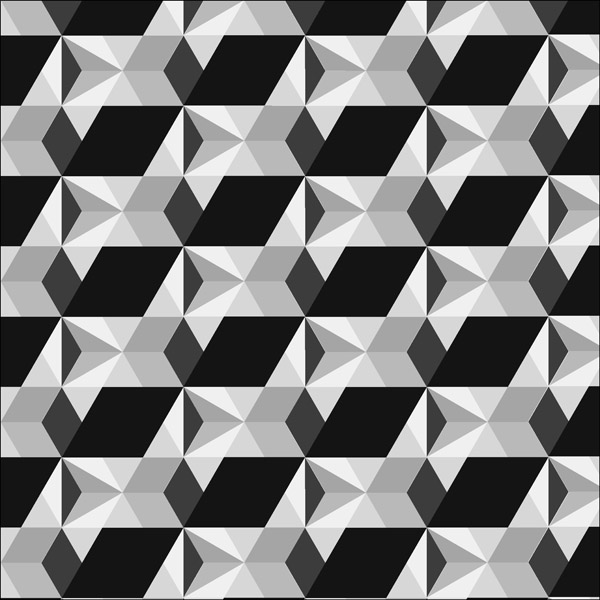
Adnan Faysal Altunbozar
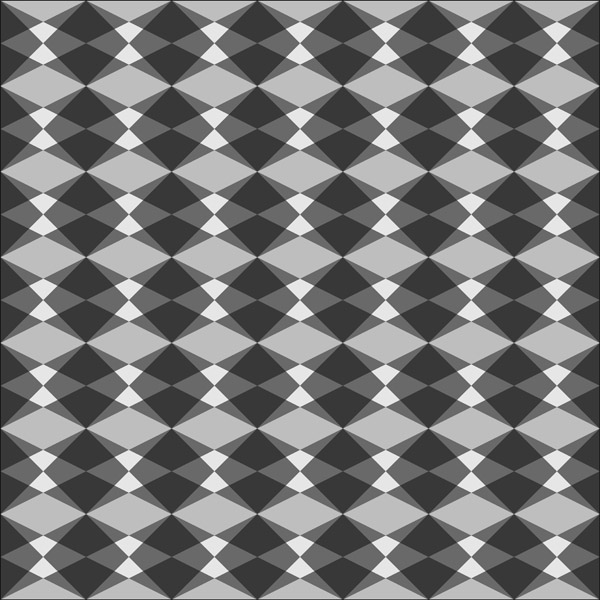
Bahar Kaplan
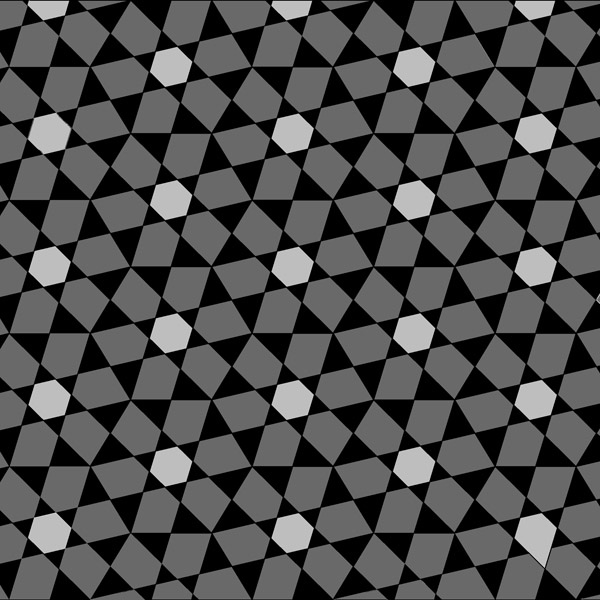
Cenk Toksöz
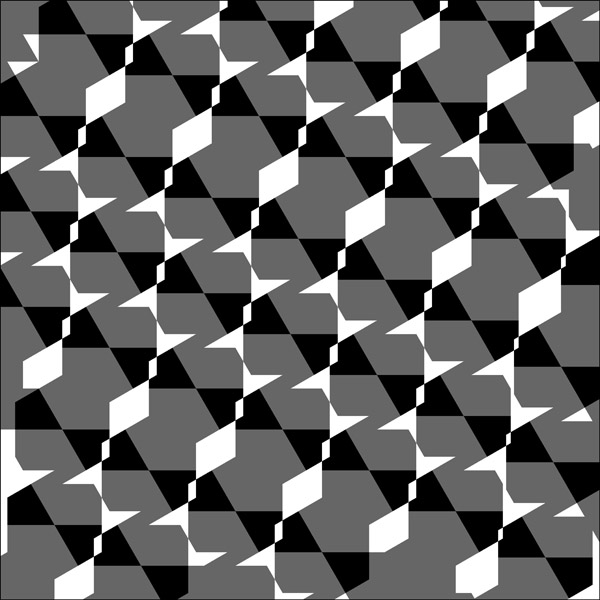
Nilüfer Durmaz
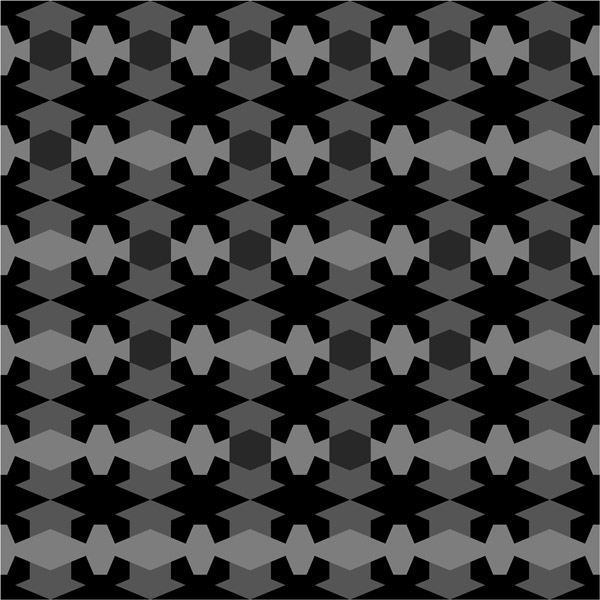
Nurseli Yorgancı
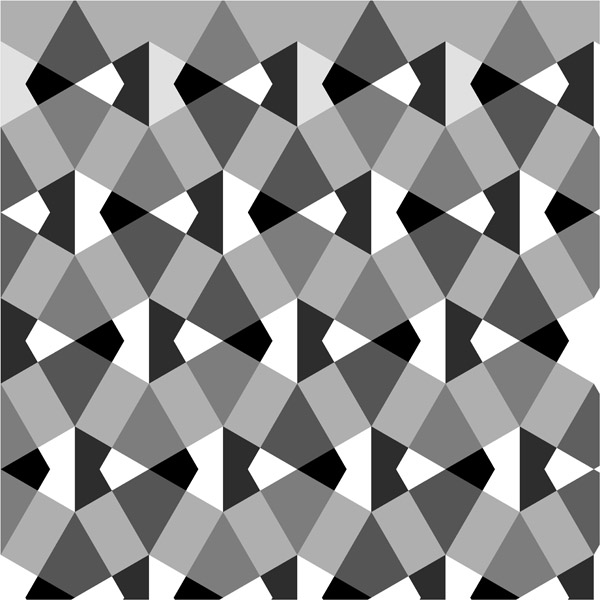
Zeynep Albaş
Cite this post
Related Posts
Escher Patterns in the Classroom
August 22, 2017
Here is one of the exercises I tested with a few students in Architectural Geometry. The exercise is about creating Escher-like patterns. It is an introductory topic on the designerly utilization of regular tessellations. We use square, hexagonal, or triangular tessellations as underlying structures of complex patterns. Below are some of the student works from this exercise. I think the black-and-white coloring helps in terms of reducing the requirements. Although the patterns designed in this exercise are not Escher patterns,…
Some more Patterns
February 16, 2014
While preparing the Geometry yearbook, I picked these four patterns from the 4th week’s assignment, “Seamless Patterns”. I still love to see how these patterns are generated by students with very limited knowledge of computers and geometry. There are other posts about this assignment here and here. Below are four from this semester; Ceren Atik Zeynep Dutipek Ceren Atik Meltem Bayrak
Pattern Deformations Student Works
November 18, 2013
Below is some student works from this year’s Architectural Geometry / Pattern Deformations assignment. Students developed their own pattern deformation sequences mostly on regular tessellations. Based on the classical Parquet Deformation exercise, we tried to implement a rule-based approach in order to explore emergent patterns. The exercise seems to reveal endless improvisation potential. The exercise requires students to design a pattern deformation on a 28cm by 28cm area. It should include at least 100 cells. First, we explained several classical…
3D Pattern Deformation
December 12, 2012
These are examples of 2.5D exercises in the design geometry course in my freshman year of architecture. We asked students to create extruded or referenced solids referenced from their previous exercise of pattern deformations, (examples are here and here). We also started to inject some of the most used concepts of design computing here, by perceiving each tessellation cell as the variation of a predefined algorithm, such as a relationship with an attractor object (a distance value with a point)….
Pattern Deformations Exercise
November 17, 2012
Last week, the first-year architectural geometry course was about pattern deformations. Students are expected to familiarize themselves with 2d drawing, transformation, and control point editing commands while trying to design a deformation. After studying regular and semi-regular tessellations of the plane, they are expected to develop reasoning on the rule-based and iterative processes. This also constructed an underpinning for Basic Design’s “Metamorphosis” study, where they have discussed more conceptual frameworks derived from such systems. Below are some of the results…