
Wall-e3
Here is one of the student’s works from this semester’s parametric modeling elective course. We refer the first couple of hours in molding of concrete as its “alive” phase. During this phase, due to various reasons concrete sweats, respires and in a way contains an inner circulation of forces. This phase ends when concrete dries and hardens, creating a kind of its fossil. Air bubbles are frozen inside and some even are seeable from on surface. Just like human lung structure, concrete wall contains patterned random porous elements. We refer them as the “alveoli” of the wall. Other than porous surface, color of the cement is noticeably changed due to the exposure of cement to some various factors. For these reasons, every concrete wall has its own traces –habits -, its own microstructure just like a living organism
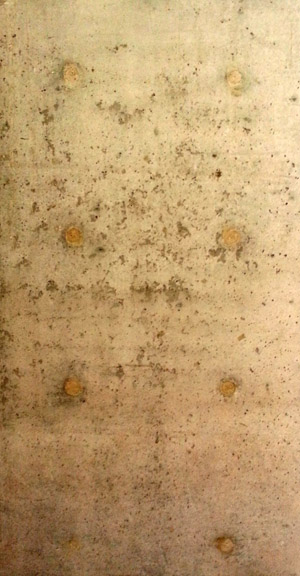
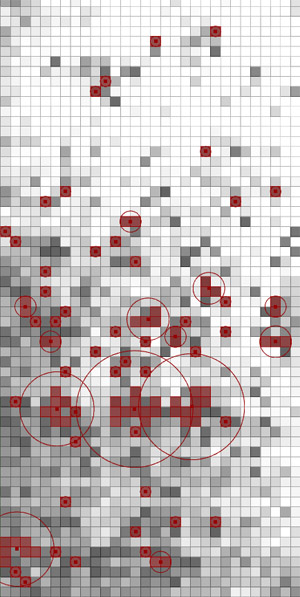
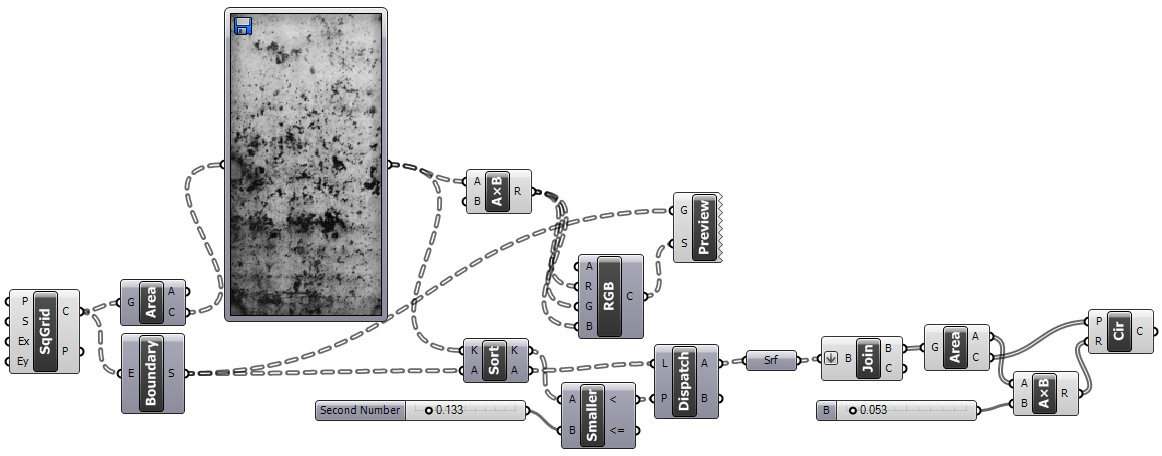
Then, they designed a material system on the wall, resembling the wall as a living being. They developed a pulley system in order to actuate multiple screws without a need for one servo at every point. It is possible to move an entire wall with only one or two servos. This project could be developed way more. However, it is interesting to see this half-crippled, half-experimental design process.
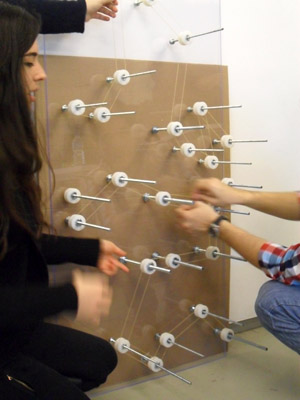
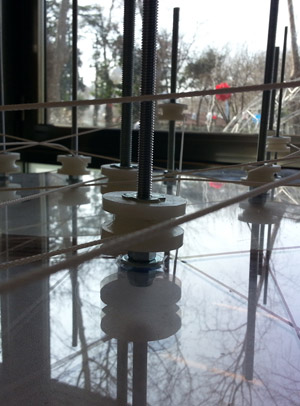
Students: Özgüç Bertuğ Çapunaman, Ömer Kirazoğlu, Selim Göral, Ece Emanetoğlu, Ekin Arslan
Cite this post
Related Posts
Parametric Wall Student Works
April 19, 2013
Here are some student works about the parametric wall exercise I briefly explained here along with a Grasshopper implementation of the core wall definition. Students are expected to design their own brick and compose it in a way that generates a seamless wall surface. Ömer Kirazoğlu Osman Can Sözüneri Seda Öznal (slightly out of requirement but very interesting) Adnan Faysal Altunbozar Özgüç Bertuğ Çapunaman
Parametric Wall Exercise
April 19, 2013
This is a first-year design computing problem we studied last month. It is a simple parametric wall exercise introduced by Mete Tüneri. Creating a simple definition of a building brick to be placed on a straight path, and then manipulating the path to reform different variations of the brick. This aims to introduce a fundamental concept of associativity in contemporary architectural geometry and design computing. Students are then encouraged to develop their own parametric brick to be tested in different…
Parametric Muqarnas
March 13, 2012
This was an interesting topic in design computing class. Geometric constructions based on strict relationships are becoming exciting in parametric modeling environments. I think muqarnas includes such a relationship. There is a primary method of modeling this shape, introduced by Mete Tüneri. His solution to a simple parametric muqarnas object includes a surface with six reference points, with two boolean differences (one cylinder and one box) creating the component. In Grasshopper, I tried to simulate his process by adding real-time…
Robotic Earthcrafts III
August 16, 2026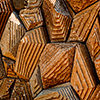
Last month, we completed the third edition of the Robotic Earthcrafts workshop series, which I co-organized with Fulya Akipek, following the first in 2018 and the second in 2023. An earthen mixture composed of clayey soil, lime, fibers, and cement was rammed into molds produced via robotic hot-wire cutting. The geometry of the fabricated wall is based on a hexagonal grid and features a Truchet-like variation. Constructed using four different block types, the wall was completed within 5 days and…
Contouring Student Works
April 7, 2014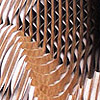
Design Computing classes conducted a “voluntary” assignment; a “contouring” fabrication, that outputs physical prototypes of the previous parametric wall assignment. They worked very well with the corrugated cardboard in fact and extended the simple contouring exercise in Rhinoceros into a design study of patterning and transparency. It seems that corrugated cardboard is a perfect material to study the shift from digital to the material. Below are some of the student works that study various angles of contouring on different seamless surface…