designcoding
About Table of Contents Keywords Monthly Archive
Support designcoding!

#parametric-wall

16 posts

Parametric Wall Student Works

April 19, 2013
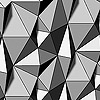
Here are some student works about the parametric wall exercise I briefly explained here along with a Grasshopper implementation of the core wall definition. Students are expected to design their own brick and compose it in a way that generates a seamless wall surface. Ömer Kirazoğlu Osman Can Sözüneri Seda Öznal (slightly out of requirement but very interesting) Adnan Faysal Altunbozar Özgüç Bertuğ Çapunaman
Parametric Wall Exercise

April 19, 2013

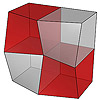
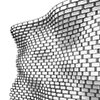
This is a first-year design computing problem we studied last month. It is a simple parametric wall exercise introduced by Mete Tüneri. Creating a simple definition of a building brick to be placed on a straight path, and then manipulating the path to reform different variations of the brick. This aims to introduce a fundamental concept of associativity in contemporary architectural geometry and design computing. Students are then encouraged to develop their own parametric brick to be tested in different…

Parametric Brickwork

January 7, 2013

You might recall this type of parametric brickwork from architectural classics, such as the Programmed Wall by ETH Zurich and Gramazio Kohler Research, or the facade of the Mulberry House by SHoP Architects. Initially, I explored the simplest method for placing boxes on a surface, but this approach didn’t yield the correct layout. To improve it, I introduced gaps, which not only liberated the wall’s design but also opened up exciting possibilities for manipulating the “gap” parameter and brick sizes….

Parametric Muqarnas

March 13, 2012

This was an interesting topic in design computing class. Geometric constructions based on strict relationships are becoming exciting in parametric modeling environments. I think muqarnas includes such a relationship. There is a primary method of modeling this shape, introduced by Mete Tüneri. His solution to a simple parametric muqarnas object includes a surface with six reference points, with two boolean differences (one cylinder and one box) creating the component. In Grasshopper, I tried to simulate his process by adding real-time…

Tumbler Brick Wall

January 8, 2012

There are a couple of experiments in different schools about organizing free-form surfaces (walls here) with a composition of modular elements (bricks). Even though they created robots to make such brick walls, I still couldn’t understand why. Although creating a parametric model that calculates the exact locations of bricks, seems very easy at first sight, there came severe problems to solve in order to achieve a correct layout without using helpers such as physics engines. Of course, it’s possible to…

Recording History in Rhinoceros

December 24, 2011

Recording History in Rhinoceros3D has interesting potential. You might utilize it in the process of design exploration. We’ll try to show its concept and limitations; First, build two surfaces; one is planar at the world XY plane, and the other represents the “initial” form of your design. Put another surface on the planar one, as if it’s an ideal “component” of the finished geometric composition. Activate the “Record History” button at the bottom of the Rhinoceros window, then array your…

« 1 2
  • Chapters

    • Algorithms
    • Discourses
    • Fabrications
    • Studios
  • Explore

    • All Keywords
    • Table of Contents
    • Monthly Archive
    • #tensegrity
    • #ice-ray
    • #revit
    • #minimal-surface
    • #tiling
    • #galapagos
    • #responsive
    • #regulations
    • #cube
    • #parametric-curve
    • #tangent
    • #hyperbolic
    • #attractor
    • #muqarnas
    • #solar-analysis
    • #aluminium
    • #noise
    • #buckminster-fuller
    • #dürer
    • #permaculture
  • Search

  • Support designcoding!

  • Enjoying designcoding? Support me on Patreon to keep it growing. Thank you!

  • copyright 2026 designcoding.net | about | privacy policy | end user license agreement