
From Intuition to Precision
Below is another cult article written by Robert Aish in 2005;
Design has been described as making inspire decisions with incomplete information. True, we may use prior knowledge, we may even think we understand the causalites involved, but what really matters is exploration: of new forms, of new materials, and speculation about the response to the resulting effects. Essentially, this exploration has its own dynamics, involving intuition and spontaneity, and without which there is no design. But of course we all know that this is not the whole story. Design is different to ‘craft’; to directly ‘making’ or ‘doing’. It necessarily has to be predictive in order to anticipate what the consequence of the ‘making’ or ‘doing’ will be. Therefore we inevitably have to counter balance our intuition with a well developed sense of premeditation. We have to be able to reason about future events, about the consequence of something that has not yet being made. There is always going to be an advantage if this reasoning can be achieved with a degree of precision. So how can we progress from intuition to precision? What abstractions can we use to represent, externalize and test the concepts involved? How can we augment the cognitive processes? How can we record the progression of ideas? And, how do we know when we have arrived? Design has a symbiotic relationship with geometry. There are many design issues that are independent of any specific configurations. We might call these “pre-geometric” issues. And having arrived at a particular configuration, there may be many material interpretations of the same geometry. We might call these “post-geometric” issues. But geometry is central to design, and without appropriate geometric understanding, the resulting design will be limited. Geometry has two distinct components, one is a formal descriptive system and the other is a process of subjective evaluation.
You can read the article here. (You have to be a member of CUMINCAD)
In 2006, I translated this article as part of my phD study;
Tasarım, tam olmayan bilgi ile sezgisel kararlar vermek şeklinde tanımlanmaktadır. Gerçekten, tasarımda eski bilgi kullanılabilir, hatta olgudaki tesadüfilikleri bile anladığımızı düşünebiliriz, ancak burada önemli olan yeni biçimlerin, yeni malzemelerin keşfedilmesi, ve sonuç üründe gözlenen etkiler hakkında spekülasyon yapılabilmesidir. Özellikle bu keşifte sezgisellik ve kendiliğindenlik gibi tasarımın önemli dinamikleri vardır. Fakat hepimizin bildiği gibi bu, hikayenin tamamı değildir. Tasarım, doğrudan doğruya “yapmak” olan zanaatten farklıdır. Tasarımın, “yapmak” ve “etmek” neticesinde oluşacaklar hakkında öngörü içermesi gerekir. Bu yüzden kaçınılmaz olarak sezgimizi belirli bir öngörü hissiyle dengesizleştiririz. Geleceğe dair, henüz olmamış bir şeyin sonuçları hakkında muhakeme yapabiliyor olmamız gerekir. Her zaman bu muhakemenin belirli bir kesinlik derecesini yakalaması bir avantaj sağlayacaktır. Bu durumda sezgimizi nasıl kesinleştiririz? Kavramları temsil etmek, dışsallaştırmak ve test etmek için hangi soyutlamaları kullanabiliriz? Bilişsel süreçleri nasıl değerlendirebiliriz? Fikirlerin gelişim sürecini nasıl kaydedebiliriz? Ve, sonuca vardığımızı nasıl anlayabiliriz? Tasarımın geometri ile yakın ilişkisi olduğu söylenebilir. Belirli kurgulardan bağımsız olan pekçok tasarım meselesi vardır. Bunları “pre-geometrik” meseleler olarak tanımlayabiliriz. Belirli bir kurguya varıldığında, aynı geometrinin farklı malzemelerle yorumu yapılabilir. Bu durumu da “post-geometrik” olarak adlandırabiliriz. Her durumda geometri, tasarımda merkezdir, belirli bir geometrik anlayış olmadığında sonuç tasarım kısıtlı kalır. Geometrinin iki elemanı vardır, birisi biçimsel tanım sistemi, diğeri de sübjektif değerlendirme sürecidir. Bu ikilik paradoks içerir ve aşağıdaki etkileşimi doğurur: …
Read the rest of the translation here. Devamını buradan okuyabilirsiniz: [PDF File]
Cite this post
Related Posts
A Programmable World
October 1, 2026
The mandatory course Readings on Digital Culture in the Graduate Program in Architectural Design at Istanbul Bilgi University began with the introductory chapter of Charlie Gere’s Digital Culture. We will write a response paper every week. I have completed my response to the first reading. The reading begins with the parallel development of the Industrial Revolution and capitalism. It then follows this history up to the emergence of today’s computers. It looks at how money gradually became a more abstract…
3D Printing Research Area
September 26, 2026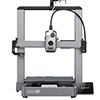
Over the past few months, I bought a cheap and affordable 3D printer, and I am quite satisfied with it. The Creality Hi model printer has advanced features and its quality is not bad at all. Compared to the Ultimaker printers we used in the past, technology has naturally evolved over the years, and certain processes have become much easier. With this occasion, I wanted to share the literature review I conducted for a project. Maybe it will be useful…
Intra)/value
August 16, 2026
The group exhibition 2 Years 10 Meters, curated by Natalia Schmidt, opened on April 24, 2024, at the Cité Internationale des Arts in Paris. My name was also included in the exhibition due to the projection graphics in Didem Yalınay’s artwork Intra)/value. This was another step in Didem’s long-term project. She hated being called a “Digital Artist.” She produced wonderful works with Seçkin Maden. I was fortunate enough to accompany her as a modest collaborator on one of her pieces….
A New Chapter
August 1, 2026
The logic of computer programming has fascinated me since childhood. The same way of thinking also lies behind design mathematics, which is now my main field of interest. Searching for the simplicity behind things, looking for the fundamentals, and identifying the most meaningful basic elements has always been my greatest challenge. With this intention, Designcoding went online in 2011. I tried to share my research, some student work, and news. While learning computational geometry, I wanted to teach it as…
Digital Design Topics in Architecture
January 8, 2018Scientific publications are expected to relate to all areas of science they sprawl. For this, the scientific publication is associated with several keywords that are thought to be related. For proper access to scientific publications in literature research, keyword assignment is as important as the publication title. This study aimed to map the usage patterns of the concepts related to the field of digital design research through keyword analysis. The questions that motivate the research, focus on which concepts are…