
Earthbound
Rammed earth is an unpredictable, labor-intensive building material, and far less durable than concrete. It cannot deliver the standard strength expected by engineering academia. And perhaps it is for the better that it cannot. Because it tells us an entirely different story. It reminds us architectural thinking that dares to look outside the box. What I want to share here, is not just a simple studio project, but a profound life lesson for many of us here, lived in the last six months.
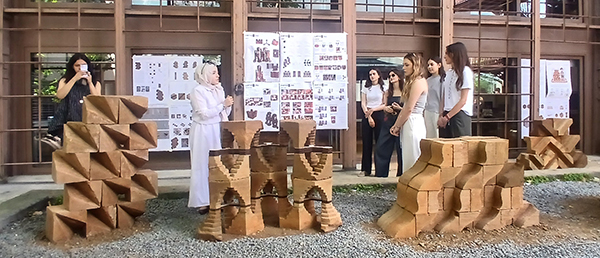
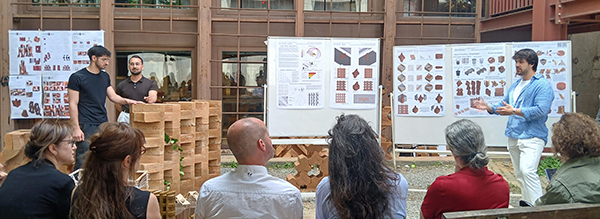
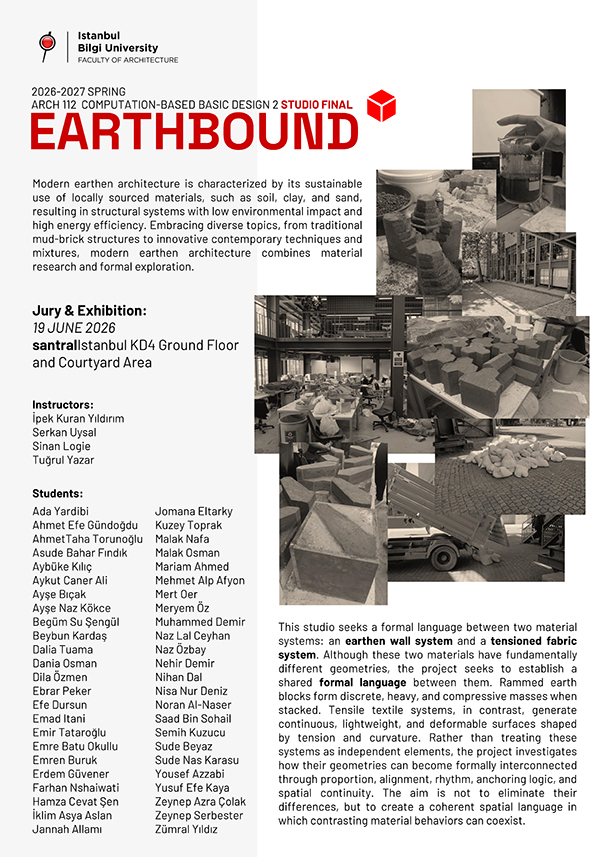
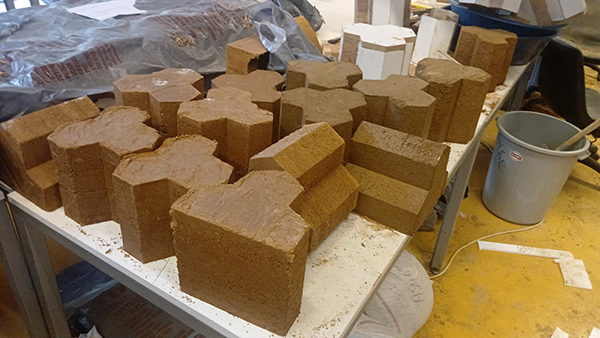
Last semester, for the final project of the Basic Design studio I coordinated, we asked the students to build a rammed earth wall system with voids. Together with Serkan Uysal, İpek Kuran, and Sinan Logie, this was a “farewell studio” for all of us. The outcome was a student achievement far beyond expectations. We could not have been prouder of all our students.
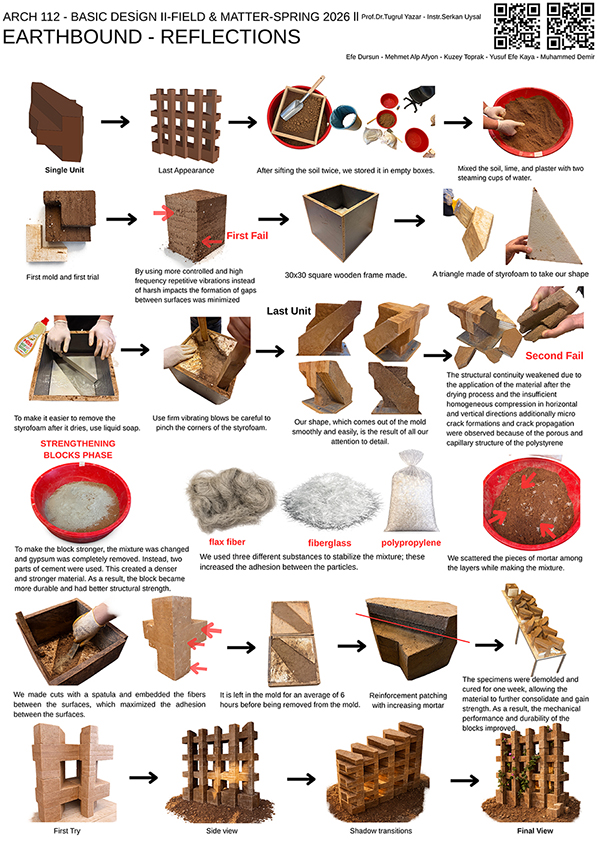
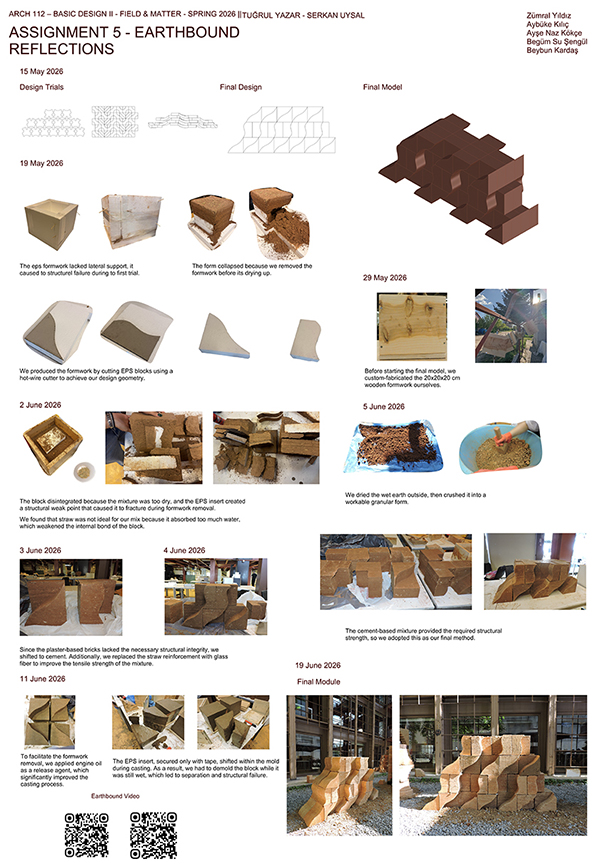
The studio finale was a 5-week project, requiring student groups of five to complete work packages covering design, formwork fabrication, mix design, and block production. In my view, “materiality” one of the most prominent concept in computational design found its truest, most fundamental grounding in this project.
Just a week into the project, an unfortunate decision regarding our university was announced, informing us that we could no longer continue our classes. We now live in a world, where such things happen. Over the next 48 hours, our students stood at the campus gates demanding their school and classes back. That taught all of us a great deal. Eventually, the decision was acknowledged as a mistake, and our school was reopened. I will never forget one student’s response when I said, “We are continuing with the earthen walls”:
Professor, we became a human wall for our school; we can certainly build an earth wall.
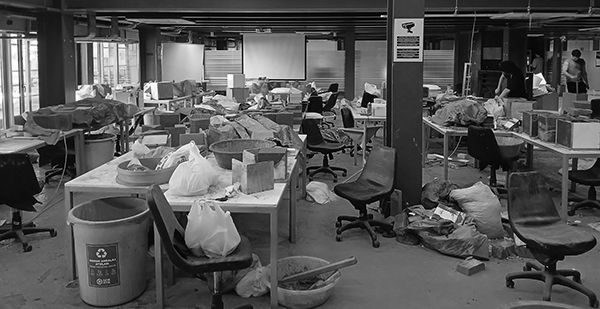
The weeks that followed were among the most remarkable of my life as an educator. Despite all the obstacles, the students successfully completed their projects. I am sharing only a small fraction here. The walls are still standing firmly at the garden of the faculty building. The students pushed our studio space to its absolute limits (earning our faculty a formal warning, also). To the experts who claimed that building porous wall systems with earth was nearly impossible, they proved that through material experiments, careful geometric logic, and sheer perseverance, it could be possible. This was the last Basic Design studio I coordinated.
True, we may not be able to build skyscrapers with earth. We cannot get massive project fundings, or produce sterile student projects. The failures; the chipped corners, the cracks, the crumbling pieces, the blocks stuck in formwork, were more than enough to let us experience what it truly means to understand nature and a material, to refine it, and to design alongside its sensitivity and relationship with time. That was the beauty of it.
Cite this post
Related Posts
Robotic Earthcrafts III
August 16, 2026
Last month, we completed the third edition of the Robotic Earthcrafts workshop series, which I co-organized with Fulya Akipek, following the first in 2018 and the second in 2023. An earthen mixture composed of clayey soil, lime, fibers, and cement was rammed into molds produced via robotic hot-wire cutting. The geometry of the fabricated wall is based on a hexagonal grid and features a Truchet-like variation. Constructed using four different block types, the wall was completed within 5 days and…
Robotic Earthcrafts Student Project: ZOM
November 6, 2018
This project is developed in the summer workshop titled Robotic Earthcrafts conducted at İstanbul Bilgi University Architectural Design graduate program. Students call this project “ZOM”. Students are Murat Sökün, Zeynep Çakmak, and Özlem Güven. We organized the workshop together with Fulya Akipek and Hülya Oral. You can find more details about the workshop here. In this project, a simple robot code created the EPS molds of the rammed-earth module. Below are some of the photos of the design and construction…
Robotic Earthcrafts Workshop
July 18, 2018
Can digital design and robot technology be integrated with an ecological design approach? The robotic earthcrafts workshop at Istanbul Bilgi University attempts to relate to biological parameters and digital design and fabrication processes. Thus, the summer school will include seminars and practices on computational design, robotic fabrication, rammed-earth construction techniques, and permaculture design principles to discuss and experience the relationships between technology and ecology. So, the results will be the proposals for micro-permaculture systems, constructed from rammed-earth blocks, with plantings….
Robotic EarthCrafts II
April 1, 2025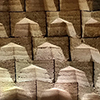
Robotic EarthCrafts II occurred in the summer of 2024 at Istanbul Bilgi University, seven years after the first. Together with Fulya Özsel Akipek, Nilüfer Kozikoglu, Abdullah Mallah, and Halit Mallah, we experimented with the robotic fabrication of molds for rammed-earth structures. The focus shifted toward a human scale based on the experience gained from Robotic EarthCrafts I. At the workshop’s core were spatial systems resembling muqarnas, which incorporated non-planar geometric transitions. Unlike the first workshop, we utilized a parametric model to design and generate robot…
Hydrophilic Structures
June 6, 2019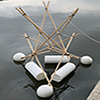
Hydrophilic Structures is the 2018-2019 Spring Semester Graduate Studio of the Architectural Design Program. The studio aims to increase the public interaction with water, while being sensitive to the ecological and historical context of the shores of İstanbul. Students will be encouraged to design sustainable, floating modules and structures, which can be integrated into semi-open architectural programmes. A full-scale prototype will be fabricated and tested at the Santral Campus coast to Haliç. The main conceptual framework of the studio consists…