
Cesaro Fractal
In this study, I explore Cesaro Fractal, generated by Grasshopper. Usually, it is not possible to code recursive algorithms in Grasshopper. With the help of the Anemone add-on, these fractal curves are easy to model. I studied similar fractal algorithms here before. This one is very similar to the Koch’s snowflake. The only difference (as far as I understood) is the side of the spikes. Koch’s Snowflake generates triangular spikes pointing to the outside of the polygon. Cesaro Fractal does it pointing to inside. You can see some of the generations below. Therefore, the Grasshopper implementation is similar. One can modify this code to generate fractal-like shapes from any given polygon or polyline, not only the regular polygons.
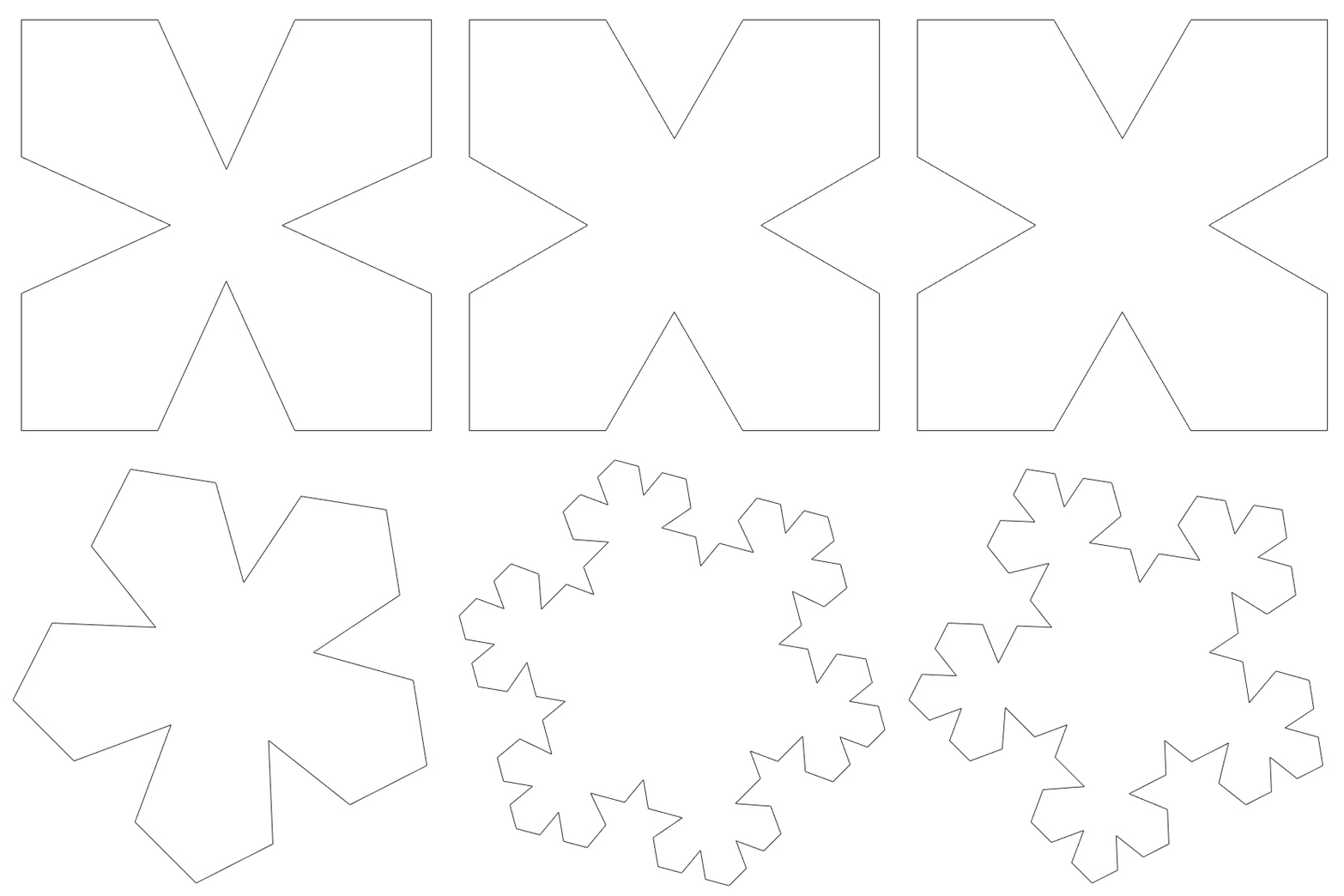
This Grasshopper definition generates Cesaro Fractal with several input parameters. The number of sides in the initial polygon, the symmetry and size of the spikes, and the number of iterations to process. It is possible to re-generate the classical Cesaro Fractal and also explore new designs as well. The resulting shape is a closed polyline. Therefore, it is ready for laser cutting. I made the definition with the help of the Anemone components in Rhinoceros 7.

Cite this post
Related Posts
Dragon Curve Fractal
December 25, 2023
This week’s fractal is the famous Dragon Curve. Dragon Curve exhibits self-similarity, meaning parts of the curve resemble the overall shape, regardless of scale. It’s fascinating because a relatively simple construction process generates a complex and visually captivating fractal pattern. The Dragon Curve is often used to demonstrate fractal properties in mathematics and is popular in recreational mathematics due to its intricate and beautiful patterns. It has applications in computer graphics and is interesting in studying chaos theory, self-similarity, and…
Koch Snowflake Fractal
April 12, 2023
This is an implementation of the famous Koch Snowflake Fractal in Grasshopper. We will be using the Anemone add-on to handle the iterations. In this fractal, we start from an equilateral triangle. Then, we form new equilateral triangles, one-third of the side. So that each repetition protrudes in the middle of all the sides. In summary; The Preparation for Koch Snowflake Fractal Now let’s follow the Grasshopper application step by step. We start Koch Snowflake Fractal by creating a triangle…
Gosper-Peano Curve in Grasshopper
August 19, 2017
Anemone components are still working great, extending the abilities of Grasshopper. Here, I studied a space-filling (or plane-filling) fractal called the Gosper-Peano Curve. You should be very careful about the number of iterations (the N input). Because it can crash your Rhino if you change it to more significant numbers. Also, you should have Anemone components installed in order to run this definition. The generator curve is a special one. This website explains the generation of the curve from the…
Arc Tree Revisited: Anemone Update
April 26, 2015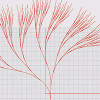
This is a classical method of generating tree-like forms utilizing a simple command “Arc SED”. The idea is simple, as the command draws arcs using an input direction vector, so this could easily be implemented creating a “smooth” composition of curves just by iteration. Actually, this has been a previous study, discussed before here, using Hoopsnake. Now, this time I’m implementing the same algorithm using Anemone and a couple of other changes. Here is the Grasshopper definition (Anemone Components should be…
Ice-Ray Lattices Revisited
April 9, 2015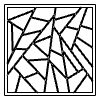
Further studying iteration in Grasshopper, this time, inspired by George Stiny’s “Chinese Ice-Ray Lattice” subdivisions with Aneome, instead of the Hoopsnake add-on I tried in the previous work. As you know, loops add various ways of usage to Grasshopper. In future versions, loops may cease to be just an add-on and become native components of Grasshopper. Until then, loop plugins like Anemone take on this task. In the example here, we create an application by throwing random lines to divide…