
Age of Digerati
Here is an interesting six-year-old quote from Rivka Oxman, telling us about a potential class of designers. The particular character, type, class or whatever we call could be more sophisticated people than we imagine today. It tells me that, advances in design computing does make high-end techniques available for large communities, and re-define basics of architectural geometry for everyone in digital age, but always there seem to remain a small group of avant-garde. If Ms. Oxman is right, then the question is, where will the balance be between “design” and “computation”?
Beyond any doubt digital design appears to be becoming a mainstream phenomenon and the theory of digital design appears to be one of the most active and significant subjects of theoretical discourse. This is particularly true of architectural design, but the digital revolution is increasingly influencing all of the fields of design. If we speak of new models of design and novel processes of digital design thinking, are these valid for the majority of the design community, or is there emerging a digital design elite?
As digital design media become more complex and more demanding with respect to knowledge of multiple types of software, knowledge of scripting languages, and the manipulation and maintenance of complex data models, a new generation of digital design specialists is emerging. This is particularly the case today with parametric systems all of which require specialist knowledge in order to operate and maintain them. The thought of the designer as digital toolmaker reflects both the potential for customizing digital design media as it does the necessity for specialist knowledge needed to operate such media. So presently the idea of a class of ‘digerati’, or digital literati as advanced digital systems designers appears to be an accurate description of the contemporary situation.
Oxman, R., (2006), “Theory and design in the first digital age”, Design Studies 27, 229-265
Cite this post
Related Posts
A Programmable World
October 1, 2026
The mandatory course Readings on Digital Culture in the Graduate Program in Architectural Design at Istanbul Bilgi University began with the introductory chapter of Charlie Gere’s Digital Culture. We will write a response paper every week. I have completed my response to the first reading. The reading begins with the parallel development of the Industrial Revolution and capitalism. It then follows this history up to the emergence of today’s computers. It looks at how money gradually became a more abstract…
3D Printing Research Area
September 26, 2026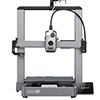
Over the past few months, I bought a cheap and affordable 3D printer, and I am quite satisfied with it. The Creality Hi model printer has advanced features and its quality is not bad at all. Compared to the Ultimaker printers we used in the past, technology has naturally evolved over the years, and certain processes have become much easier. With this occasion, I wanted to share the literature review I conducted for a project. Maybe it will be useful…
Intra)/value
August 16, 2026
The group exhibition 2 Years 10 Meters, curated by Natalia Schmidt, opened on April 24, 2024, at the Cité Internationale des Arts in Paris. My name was also included in the exhibition due to the projection graphics in Didem Yalınay’s artwork Intra)/value. This was another step in Didem’s long-term project. She hated being called a “Digital Artist.” She produced wonderful works with Seçkin Maden. I was fortunate enough to accompany her as a modest collaborator on one of her pieces….
A New Chapter
August 1, 2026
The logic of computer programming has fascinated me since childhood. The same way of thinking also lies behind design mathematics, which is now my main field of interest. Searching for the simplicity behind things, looking for the fundamentals, and identifying the most meaningful basic elements has always been my greatest challenge. With this intention, Designcoding went online in 2011. I tried to share my research, some student work, and news. While learning computational geometry, I wanted to teach it as…
Digital Design Topics in Architecture
January 8, 2018Scientific publications are expected to relate to all areas of science they sprawl. For this, the scientific publication is associated with several keywords that are thought to be related. For proper access to scientific publications in literature research, keyword assignment is as important as the publication title. This study aimed to map the usage patterns of the concepts related to the field of digital design research through keyword analysis. The questions that motivate the research, focus on which concepts are…